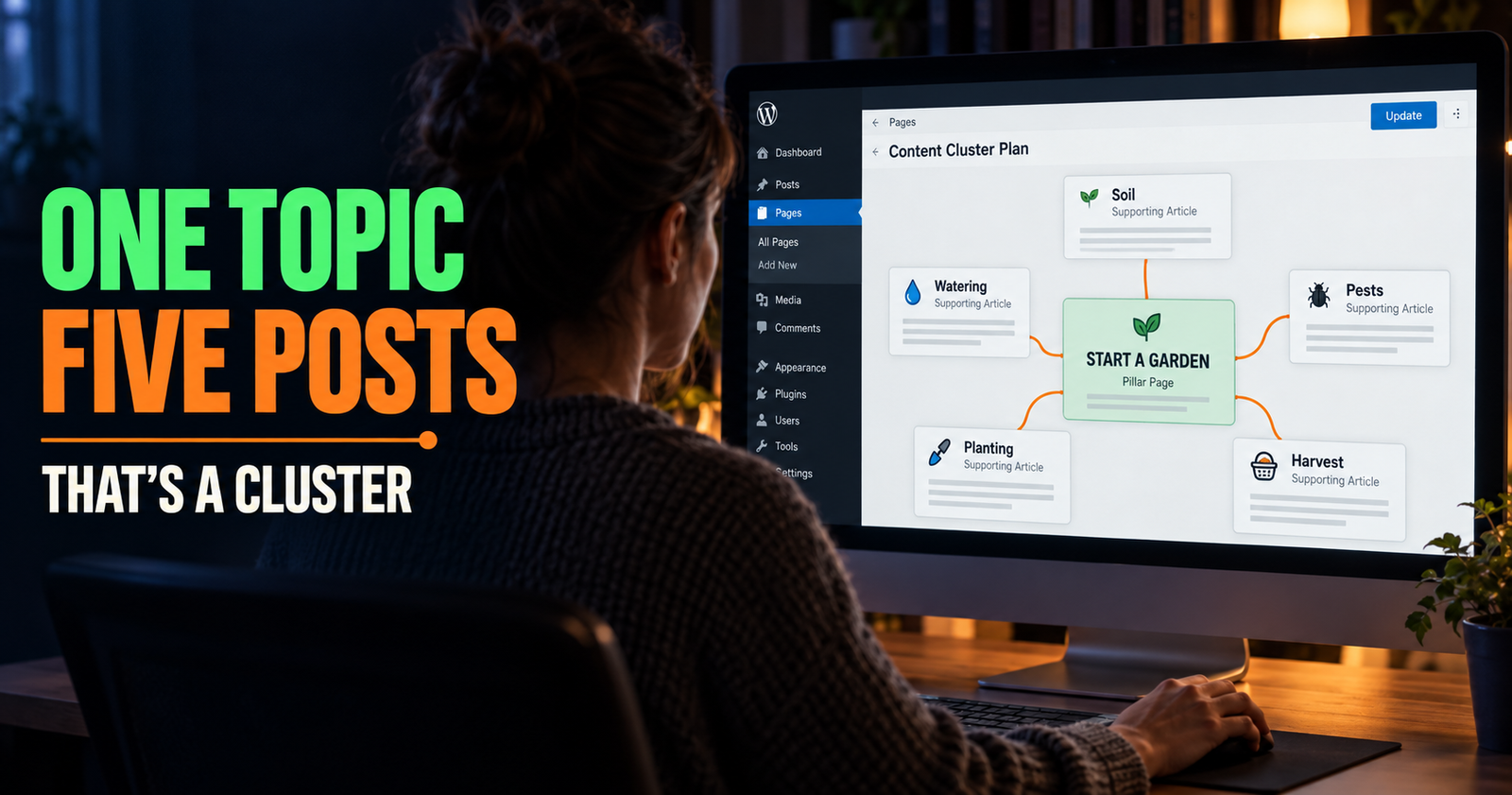
A content cluster is a group of articles that work together to help the same reader solve one larger problem.
That is the simple answer. The more useful answer is that a content cluster stops a new website from feeling like a garage full of unrelated stuff. Instead of writing whatever topic sounds interesting that day, you build a clear path for a specific person who has a specific problem.
For a new site, that matters more than most people realize. You do not have the history, brand recognition, or pile of backlinks that large websites have. What you can have is focus. You can make it obvious that your site is built to help a certain kind of reader with a certain kind of problem.
That is how a small website starts becoming worth returning to.
A good SEO content cluster is not a trick to fool Google. It is a better way to organize useful information. Google’s own guidance encourages site owners to create people-first content with a clear focus, rather than publishing lots of unrelated pages in the hope that something happens to rank.
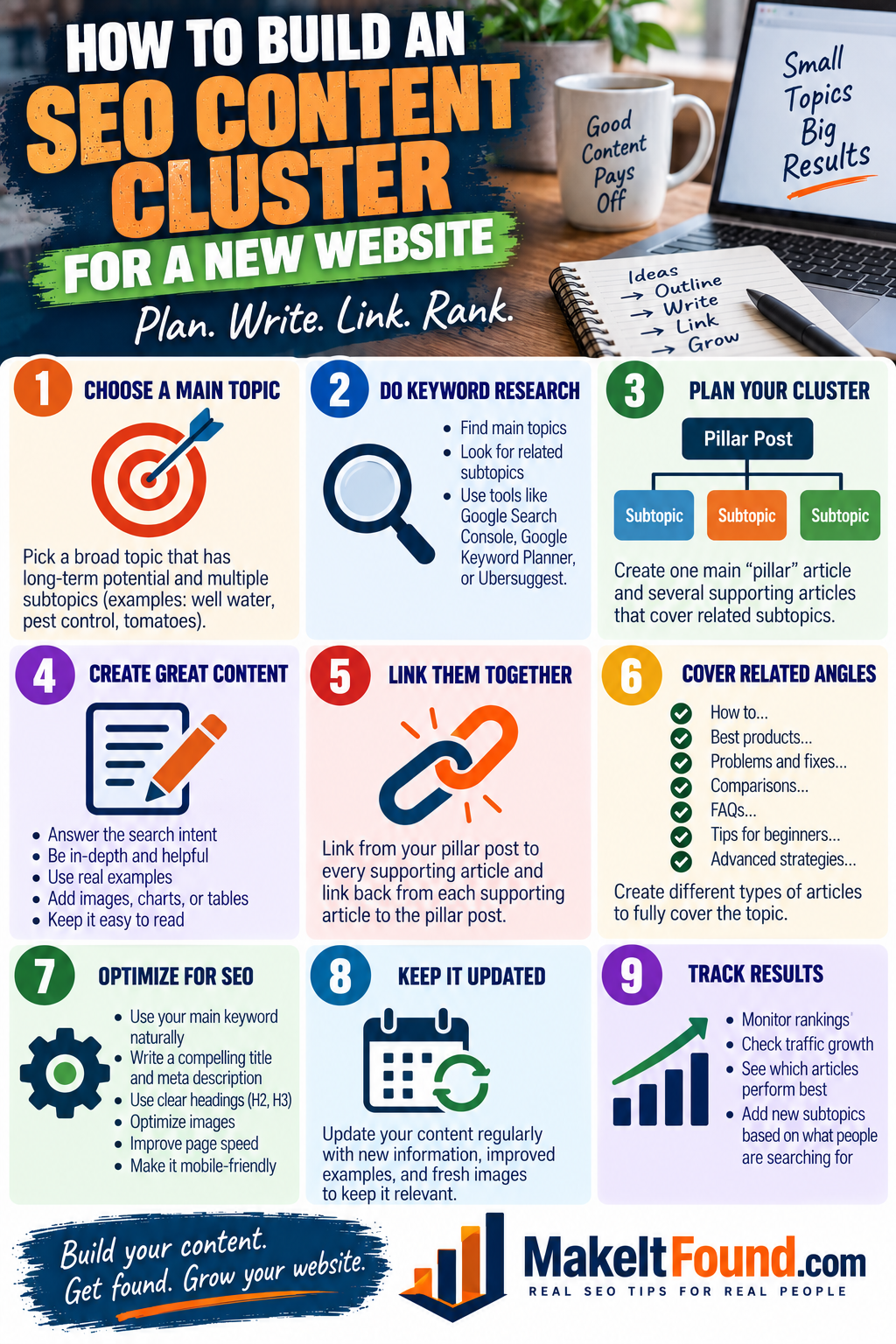
What an SEO content cluster is
An SEO content cluster has three basic parts:
- A broad main topic that matters to your audience.
- Several supporting articles that answer the smaller questions around that topic.
- Natural internal links that help readers move between those pages when they need the next answer.
Think of it like helping somebody learn a practical skill.
A person who wants to understand DIY SEO does not only need a definition of SEO. They may need to know how long it takes, how Google finds a new website, how to find keywords, whether backlinks are necessary, and why an indexed page still does not show up near the top of results.
Those are all separate questions, but they belong together because they serve the same person at different moments.
A content cluster lets you answer each question properly instead of cramming everything into one enormous article or scattering the answers all over your site with no connection between them.
Why random posting makes a new site harder to grow
Random posting feels productive because every new article gives you a fresh chance to rank. The problem is that it can make the site hard for readers to understand and even harder for you to manage later.
You might publish an article about beginner SEO on Monday, a post about the best laptop for writers on Wednesday, a guide to social media captions on Friday, and a roundup of AI tools the next week. Every topic may have search volume, but the site does not have a clear reason to exist.
A visitor who finds one article may not see another page worth reading. You also lose the chance to build on what you have already written.
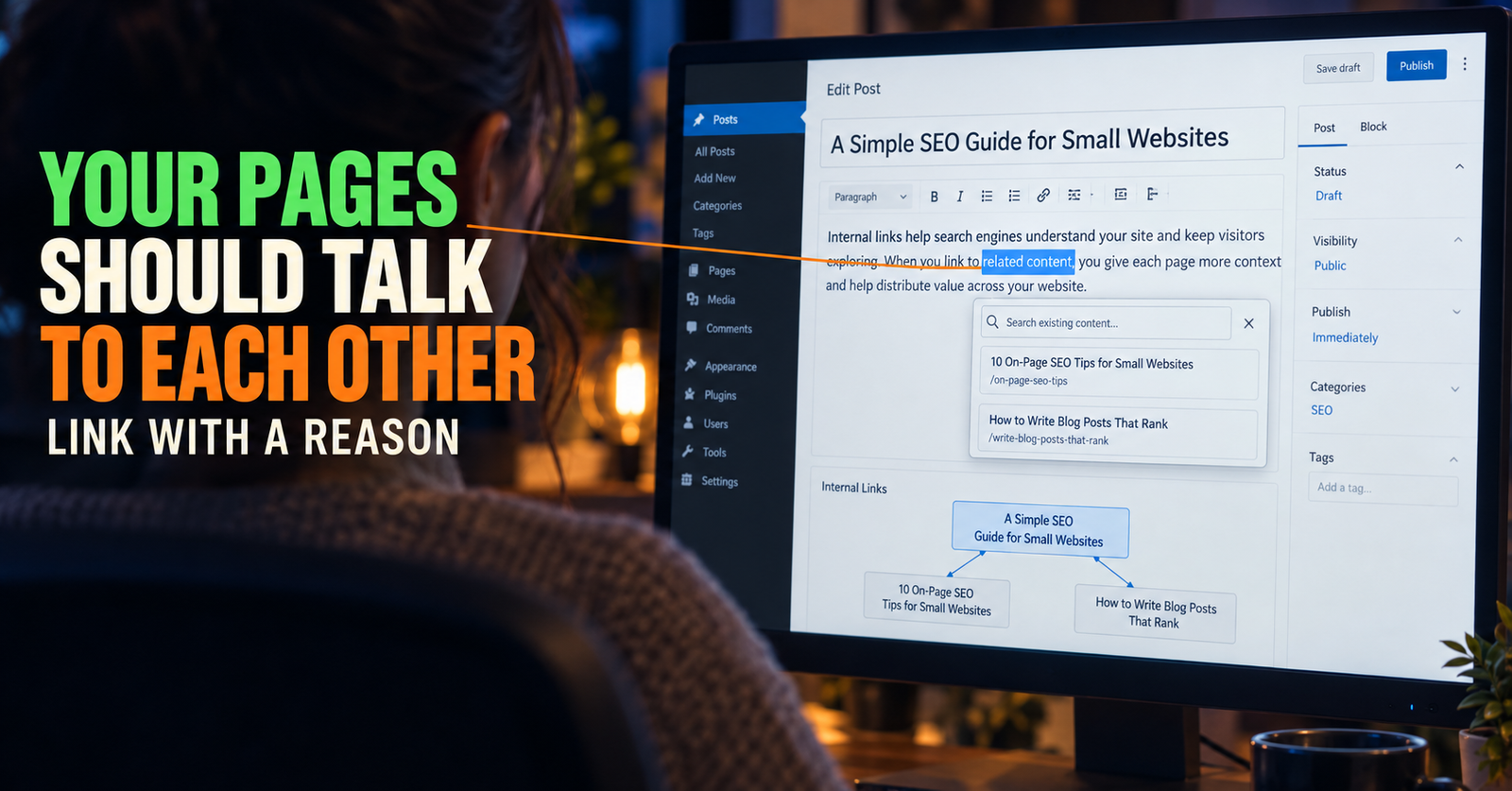
A focused cluster solves that problem. Every new article strengthens the work that came before it. Your research gets easier. Your internal links become more natural. You start noticing the questions readers ask before they ask them.
That last part is where good content starts to feel different.

Start with the audience, not the keyword tool
Keyword tools can help, but I would not start there.
Start with the person you want the site to help and the problem that keeps bringing them to search. That gives you a better foundation than a list of phrases with estimated traffic.
For Make It Found, the reader is not an enterprise marketing department with a full SEO team. It is more likely a small business owner, blogger, creator, or first-time website owner trying to get found without paying an agency to explain everything in another language. That audience is central to what Make It Found is built to do.
That person is not searching for abstract information just to learn SEO vocabulary. They are worried because their site is new, their pages are not showing up, or they do not know what to write next.
That gives the cluster a natural center:
Help new website owners understand the practical steps that make their site easier to find in search.
Once you have that center, a lot of good article ideas become obvious. More importantly, you can recognize which ideas do not fit yet.
Choose a main topic broad enough to grow, but narrow enough to mean something
The main topic is sometimes called a pillar topic. It should be broad enough that you can create several useful supporting articles around it. But it should not be so broad that you are trying to compete with every website in the world.
“SEO” is too broad for a new site’s first cluster.
“DIY SEO for beginners with a new website” is much better.
It has a clear audience, a clear stage of experience, and a clear outcome. A beginner can see themselves in it. You can build dozens of useful articles around it without drifting into unrelated subjects.
Here are some examples of weak and stronger starting topics:
- Weak: Marketing.
- Stronger: Simple online marketing for local service businesses.
- Weak: Gardening.
- Stronger: Growing tomatoes in a home garden.
- Weak: Technology.
- Stronger: Easy Roku fixes for people who just want their TV working again.
- Weak: SEO.
- Stronger: DIY SEO for new small-business and blog websites.
The stronger version is not necessarily smaller forever. It is simply clear enough to begin.



Find the questions underneath the main topic
Once you know the main topic, list the questions a beginner asks before, during, and after they try to solve the problem.
Do not worry about perfect keywords at first. Think like the reader.
If somebody just launched a website, their questions may sound like this:
- What is SEO, really?
- How does Google find a new website?
- Why is my website not showing up on Google?
- How long does SEO take?
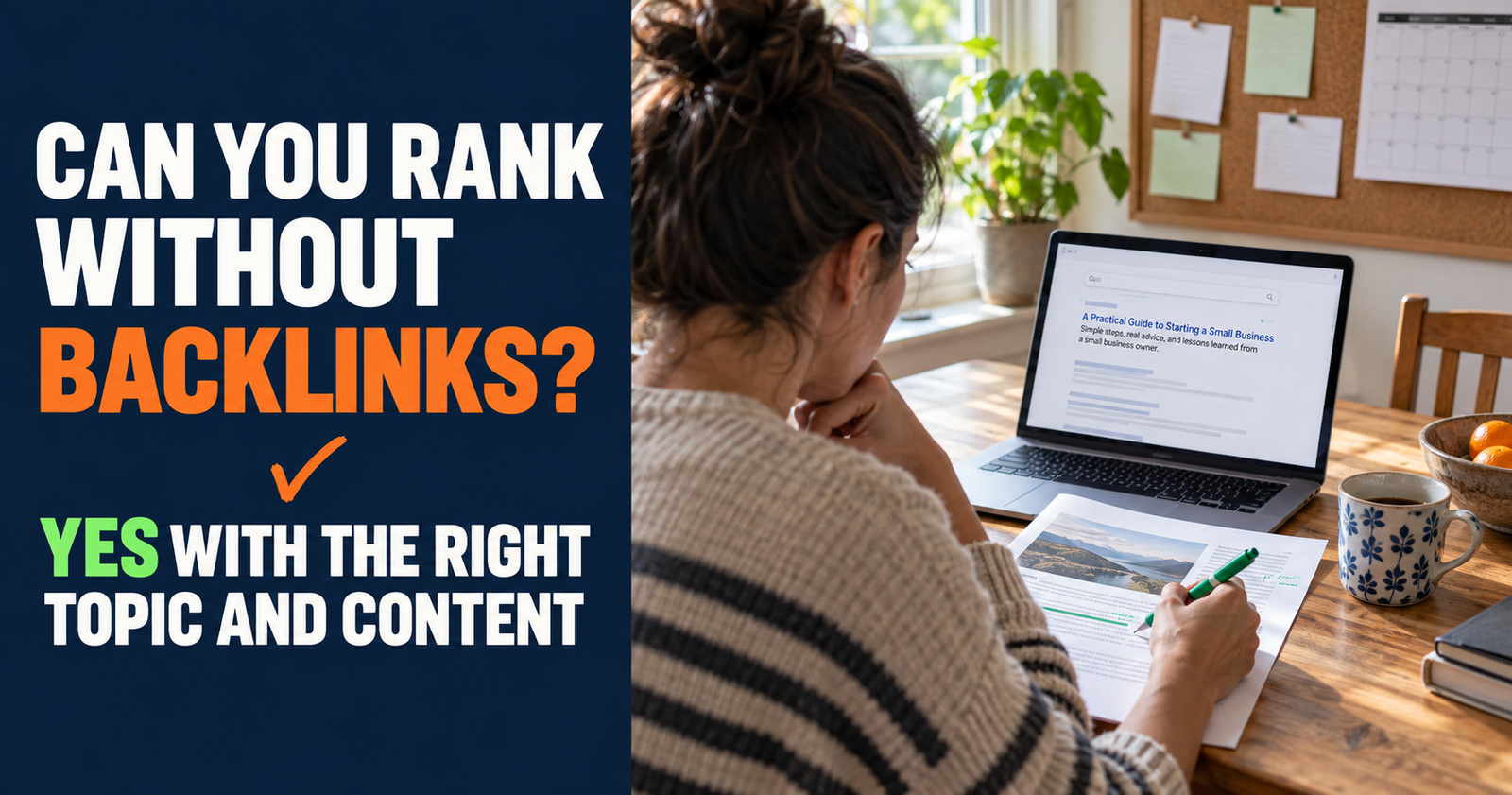
- Do I need backlinks before I can rank?
- How do I find topics people search for?
- How do I know if a keyword is too hard?
- What does search intent mean?
- Why is my page indexed but still not ranking?
- How often should I publish?
- Should I update old posts or write new ones?
Those questions are the beginning of a real content cluster. They are not just titles. Together, they describe the journey from “I have no idea what I am doing” to “I understand what to work on next.”
That is why your first Make It Found cluster has a strong foundation already. The pages do not repeat one another. Each one handles a separate point of confusion.

For example, a person asking why a new website is not showing up on Google needs troubleshooting help. A person asking how long SEO takes for a new website needs realistic expectations. Those are related concerns, but they are not the same search intent.
Give every article one clear job

The biggest content-cluster mistake is creating several articles that all answer nearly the same question. A WordPress site with many posts may also benefit from related content suggestions when deciding which pages belong together.
When that happens, readers do not know which page to trust. You may not know which one to improve. And the pages can end up competing against each other instead of supporting one another.
Before you write an article, finish this sentence:
This article exists to help a reader ________.
Here are useful examples:
- This article exists to help a reader understand why their new site may not appear in Google yet.
- This article exists to help a reader find realistic keyword ideas without buying software.
- This article exists to help a reader decide whether a keyword is worth pursuing.
- This article exists to help a reader understand why an indexed page can still have no rankings.
- This article exists to help a reader choose between updating old content and publishing a new post.
If two article ideas finish that sentence in almost the same way, they probably belong in one stronger article.
A cluster is not about covering every tiny wording variation. It is about covering every genuinely different need.
Build the broad guide first, but do not try to put everything inside it
Your pillar article should answer the big question and introduce the important areas underneath it. It should be useful on its own, but it should not try to replace every supporting article.

For this site, the broad guide is the DIY SEO for beginners guide. It can give readers a plain-English look at the whole process: keywords, search intent, indexing, content quality, internal links, and patience.
Then the supporting articles take over when the reader needs a real answer in depth.
That is a better experience than giving somebody one short paragraph on a complicated problem and telling them to figure out the rest. It also gives you room to make the supporting articles genuinely helpful instead of writing watered-down versions of the same general guide.
A good broad guide should make a reader think, “Okay, now I understand the big picture.” A good supporting article should make them think, “That answered the exact thing I came here to figure out.”
Plan the cluster in the order readers need it
You do not have to publish everything in the exact order a reader sees it. But planning the order helps you avoid gaps.
For a new website SEO cluster, I would usually build in this order:
- Start with the broad beginner guide.
- Answer the early worries about Google finding and indexing the site.
- Teach keyword research and search intent.
- Explain how to judge competition realistically.
- Cover common setbacks, such as being indexed but not ranking.
- Help readers build a sustainable publishing and updating routine.
- Add higher-level articles about topical authority, internal links, and site structure once the basics are in place.
This order matters because it respects where the reader is. A new website owner does not need advanced content-planning advice before they understand why their site cannot be found at all.
It also helps you as the publisher. Every new article gives you more useful places to link from and more context to build on.


Use internal links as the bridge between real questions
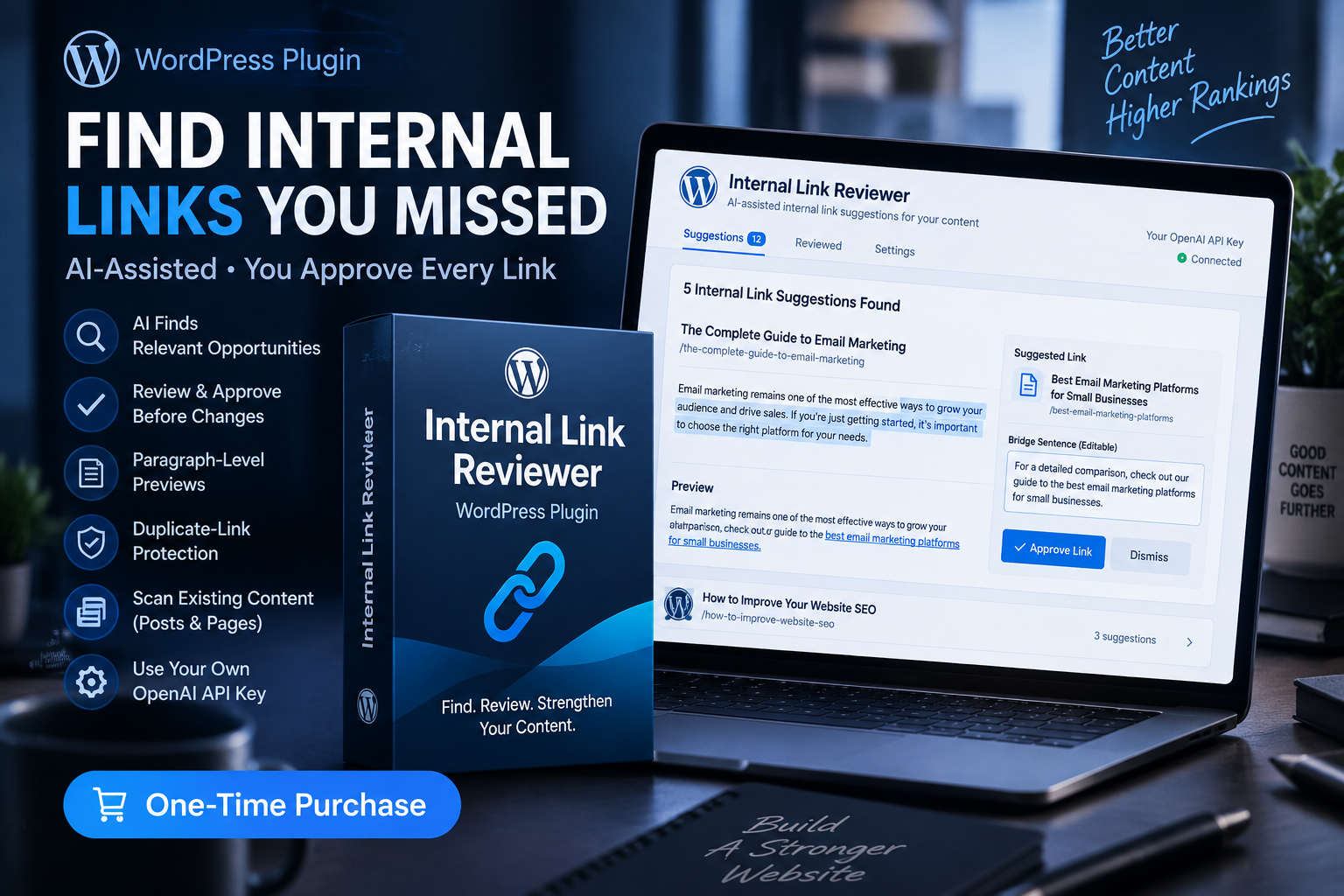
Internal links are one of the most useful parts of a content cluster, but they work best when you quit thinking of them as an SEO chore. For sites with many related pages, a tool to review internal links can support a more deliberate linking process.
A good internal link appears because the reader is likely to need the next page.

If you explain that a page can be indexed and still not rank, it makes sense to point toward a more complete guide on what to check first when an indexed page is not ranking. If you explain that keyword research is not only about finding phrases, it makes sense to lead into the deeper article on how search intent affects SEO.
The best internal links do one of three things:
- They explain a term that the reader may not understand yet.
- They take the reader from a broad answer to a more specific fix.
- They help the reader make the next decision after finishing the current page.
Do not stack links just because you have them. One useful link in the right paragraph is better than three links that interrupt the reader.
Use different types of articles inside one cluster
A useful cluster has variety. People search in different moods and with different needs.
Some need a basic explanation. Some are worried something is wrong. Some need a step-by-step process. Some are choosing between two options.
That gives you several article types to work with:
- Beginner explainers that define an important idea without jargon.
- Troubleshooting articles for a specific problem.
- Step-by-step how-to articles that move a reader through a process.
- Decision articles that help them choose between two reasonable options.
- Expectation articles that explain timing, difficulty, or what results are realistic.
- Myth-busting articles that correct bad advice without sounding smug.
- Tool-free alternatives for readers who do not want to buy software yet.
The key is that every type still serves the same audience.
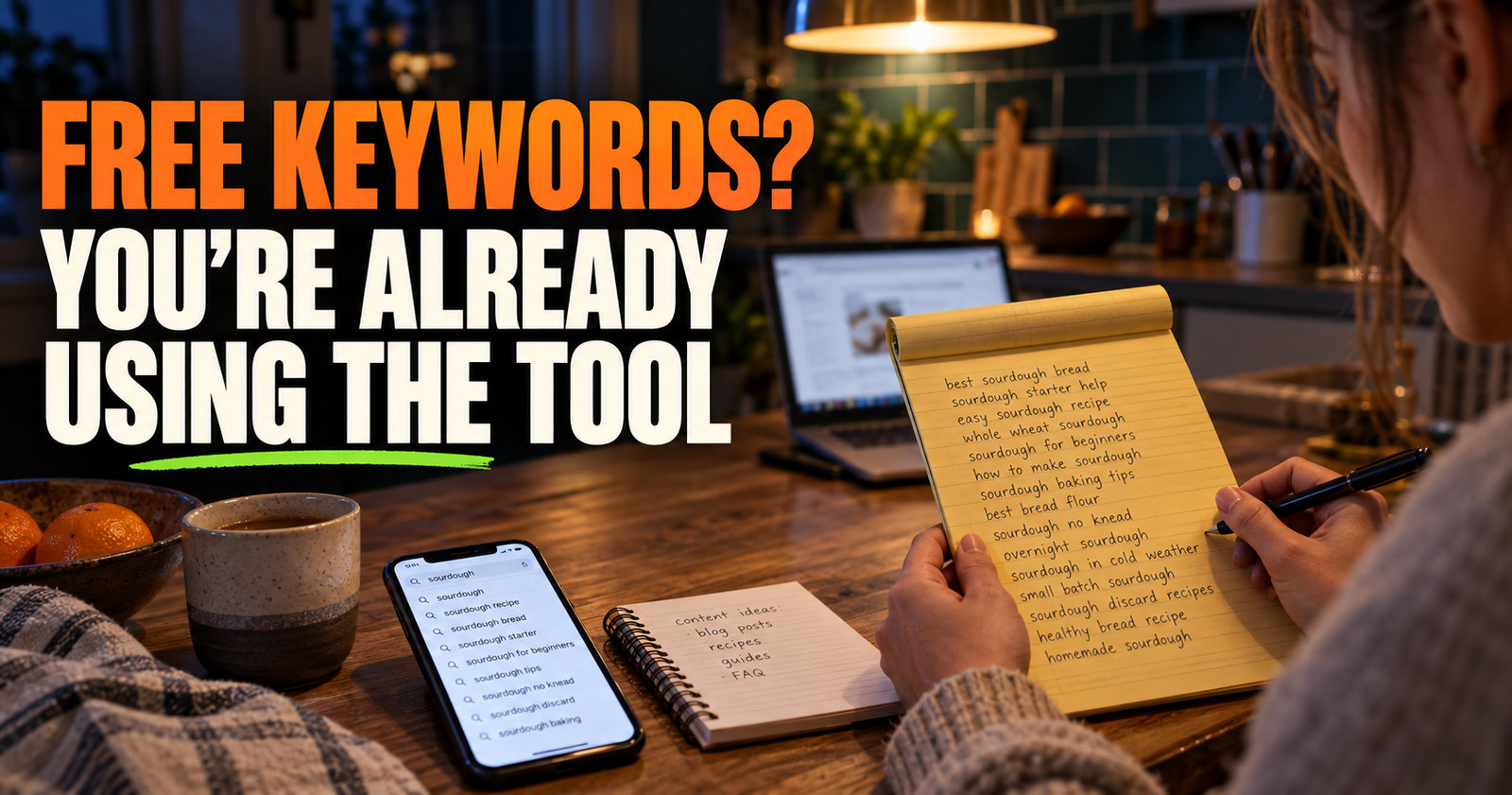
A tool-free keyword guide belongs in a beginner SEO cluster because it helps the same site owner make progress. A random article about the best office chair does not, even if that reader might also own a website.
Let search results teach you what the page needs to do
Search intent is not a fancy phrase for adding a keyword to a headline. It is the reason behind the search.
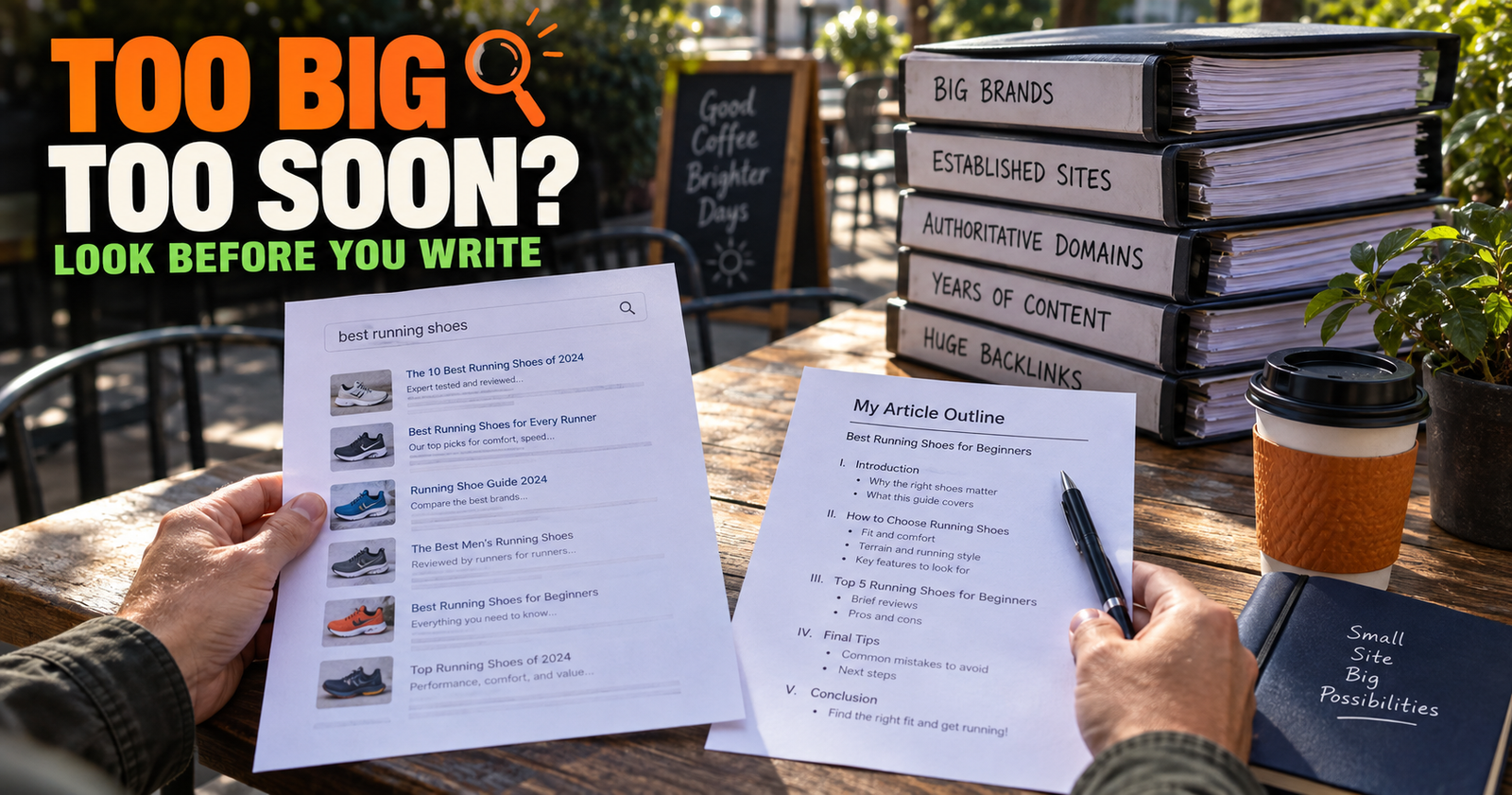
Before you choose a topic, search it yourself. Look at the kinds of pages that appear. Are they beginner guides, product pages, local businesses, videos, definitions, or troubleshooting articles? What question are they actually answering?
Then ask what is missing for your specific reader.
Sometimes the existing search results are too generic. Sometimes they give quick answers but do not explain what to do next. Sometimes they assume the reader already understands a basic term. That gap is where a small site can become more helpful.
Do not copy the first-page outline and swap a few words around. Add useful judgment. Explain the decision. Name the mistake. Tell the reader what they can ignore for now.
That is how you make the content feel like it was written for a person instead of a search engine.
Avoid keyword cannibalization before it starts
Keyword cannibalization is when two or more pages on your own site chase the same searcher and answer the same question. It is not always a disaster, but it can create a mess on a smaller site.
The warning signs are usually easy to spot:
- Two titles make nearly the same promise.
- The articles have almost identical outlines.
- You would use the same examples and advice in both.
- You cannot clearly explain why one page exists separately from the other.
- You are only splitting them because the wording of the keyword is slightly different.
If that happens before publishing, combine the ideas and write one better article.
If it happens after publishing, do not panic and delete things blindly. Look at which page is stronger, which one has relevant impressions or links, and which version gives the reader the better answer. You may be able to update one page, redirect one to the stronger page when appropriate, or clarify the intent so each article has a separate job.

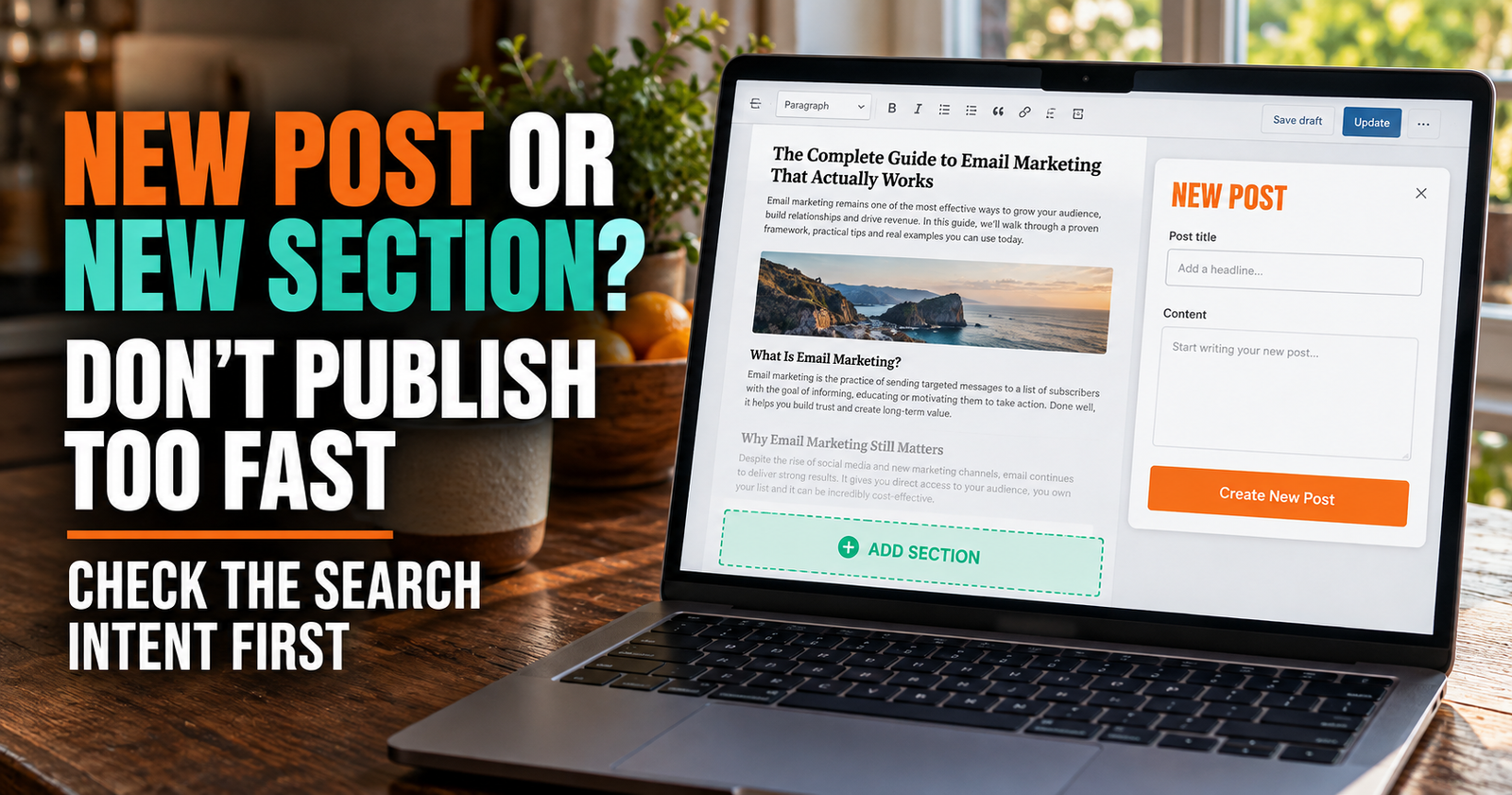
The article on whether to update old blog posts or write new ones can help you make those calls without treating every low-traffic post like a failure.
Add depth without turning every article into a textbook
Longer content can help when the subject needs explanation. It does not help when the extra words only repeat the same point in five different ways.
Depth comes from practical details.
A deep article explains what the reader should check first, why that step matters, what result they might see, and what to do if the obvious fix does not work. It explains the difference between a normal delay and a real problem. It tells them which advice is worth taking seriously and which advice can wait.
For example, “write better content” is shallow advice.
A better explanation is: make sure your article answers the same problem the searcher has, provides enough detail to help them act, uses a title that honestly describes the answer, and gives them a logical next page if their question changes.
That is still simple. It is just useful.
Keep a list of cluster gaps as you publish

You do not need to invent 50 posts on day one. In fact, I would rather see a site publish 10 strong connected articles than rush out 50 thin ones. A sustainable publishing pace can help you build those connected articles without sacrificing their usefulness; see how often to publish connected articles.
As you work, keep a running list of questions your current articles mention but do not fully answer. Those are often your best next topics.
Maybe your keyword article mentions Google Search Console but does not show a beginner how to use it. That could become a future supporting article. Maybe your internal linking guide explains what a link is but not how to organize navigation for a small site. That may deserve its own page later.
You can also notice gaps when readers leave comments, send emails, or search your site using the search bar. Questions that keep appearing are valuable because they come from real confusion, not a generic content calendar.
The best clusters grow from that kind of observation.
Know when a topic belongs in a different cluster
A focused site can have more than one content cluster. The important thing is to make the connection clear.
For Make It Found, beginner SEO is a natural starting cluster. Later, the site can expand into related areas such as Google Search Console, local SEO, internal linking, YouTube SEO, Etsy SEO, and small-business marketing.
Those topics all still fit the larger promise of helping people get found online. They simply serve readers with a different need.
What you do not want is a site where every new traffic opportunity gets forced into the same category. If a topic does not help your existing audience or connect naturally to the site’s purpose, it may be better saved for another website.
Being selective is not leaving money on the table. It is protecting the reason readers should trust your site in the first place.
A simple publishing standard for every new article
Before publishing a new page, ask yourself these questions:
- Does this article help the same person my cluster is built for?
- Does it answer a question my existing pages do not already answer well?
- Can I clearly describe its one job?
- Does it naturally connect to at least one useful page already on the site?
- Would a reader leave with a clearer next step than they had before?
- Is the title honest about what the article actually delivers?
- Does the article add useful insight, not just another version of advice already everywhere?
If the answer is yes, the article probably strengthens the cluster.
That is the real goal. Not publishing more often just to look active. Not treating every keyword as a separate post. Build a library that helps people move from one question to the next without getting lost.
Frequently asked questions
How many articles should an SEO content cluster have?
There is no required number. A small, well-built cluster may start with 8 to 12 useful articles. Add more only when you can identify a real question the reader still needs answered. Ten strong pages with clear purposes are better than 50 thin posts.
Should every article link back to the pillar page?
Often, yes, when it helps the reader understand the broader topic. But do not force it into every page. The link should make sense in the sentence and lead to a useful next step.
Can one article belong to more than one content cluster?
It can, especially if it genuinely helps readers in both areas. Just make sure its main purpose is still clear. A page that tries to be the center of five unrelated clusters usually ends up being vague.
How long does it take for a content cluster to work?
There is no exact timeline. Search visibility can take weeks or months, especially for a new site. The work is still valuable because you are building a stronger site structure, better reader experience, and a clear foundation for future articles.
Should I build a cluster before I publish any articles?
You do not need to wait until the full cluster is finished. Start with a broad useful guide and a few important supporting articles, then expand carefully. Planning the cluster first simply helps you avoid random posting and overlapping pages.
Alden Whitaker writes practical, plain-English SEO guides for Make It Found that help small website owners make smarter content decisions without getting lost in agency jargon.