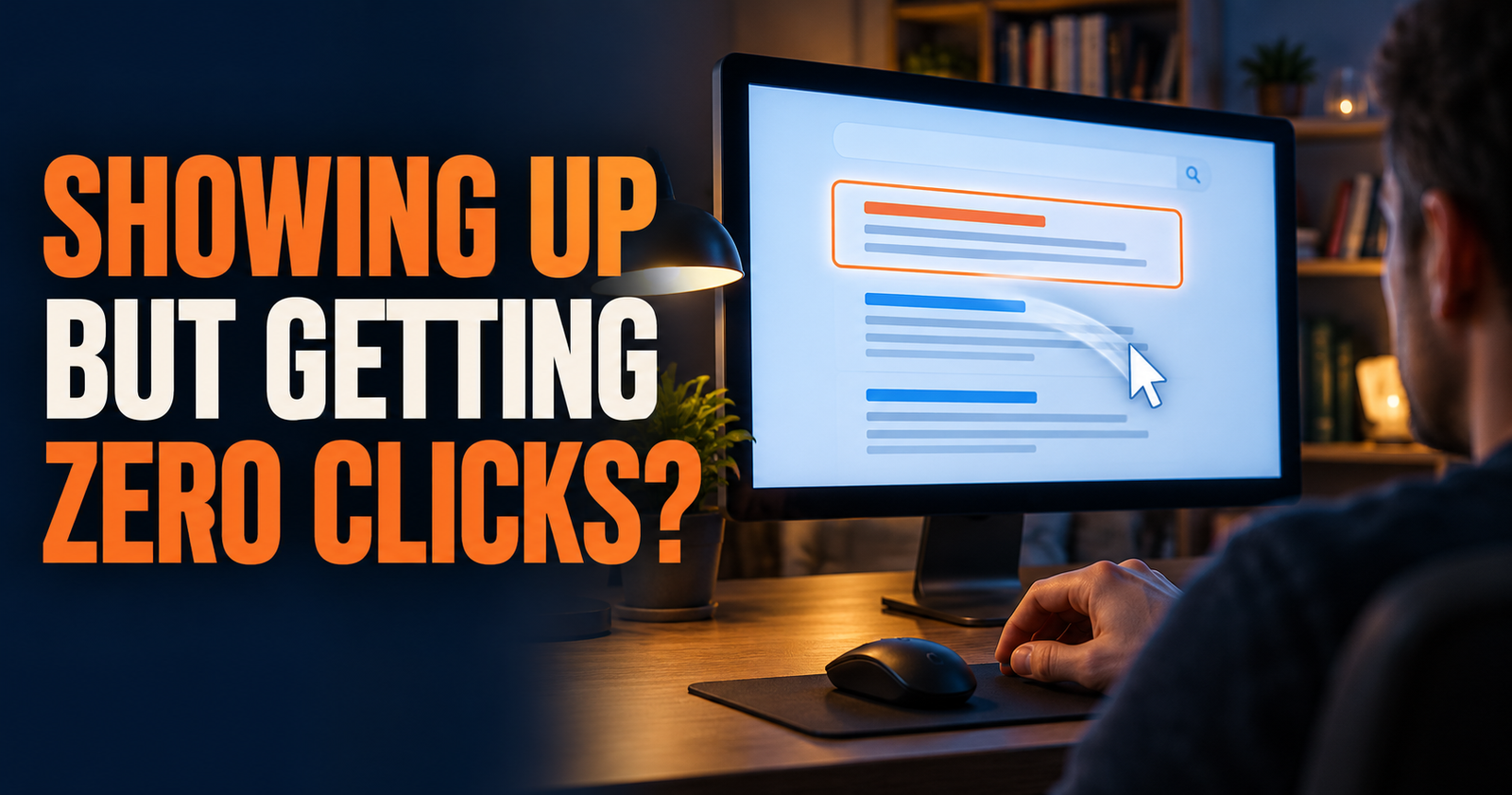
Getting impressions without clicks can feel like standing outside a packed store while everyone walks past the door.
Google is showing your page. That is better than being invisible. But something is stopping searchers from choosing it.
Usually, the issue is not one dramatic SEO mistake. It is a mix of ranking position, search intent, headline strength, competition, and the fact that a very small number of impressions can look more meaningful than it really is.
First, make sure you are reading the number correctly
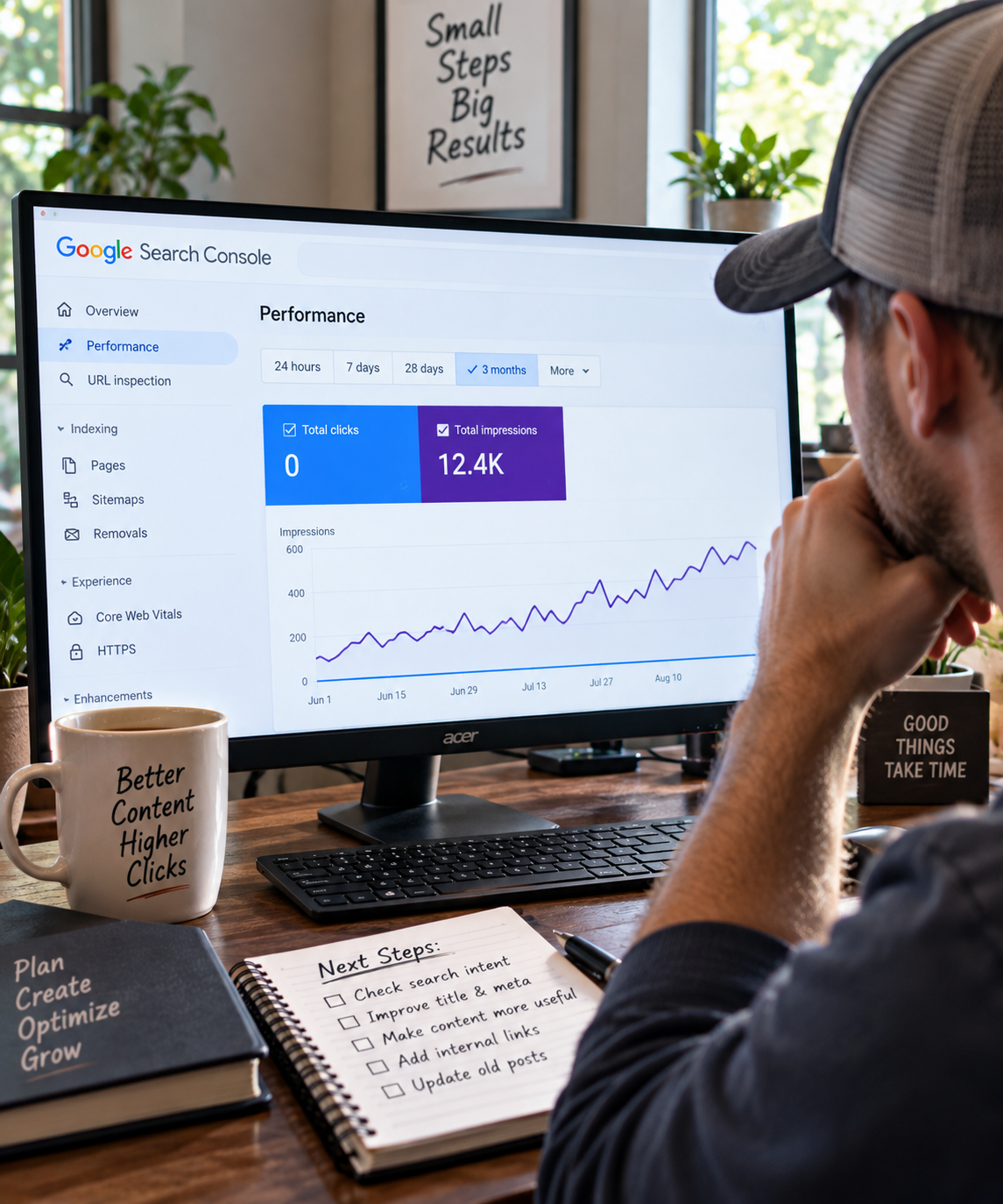
An impression means your page appeared in a Google search result. It does not mean the searcher noticed it, read it, or had a realistic chance of clicking it.
A result can technically appear low on the page, behind ads, map packs, shopping cards, videos, featured snippets, and several stronger organic results. That still counts as an impression.

If you need the full breakdown of what Google is measuring, start with what impressions mean in Google Search Console. The short version is that impressions are visibility, not traffic.
Your page may be ranking too low to earn clicks
This is the most common reason.
A page can receive impressions while sitting in position 35, 58, or 81. Google is showing it, but most people never reach it. No title rewrite can fully solve a page that is simply not close enough to the top results yet.
Before changing anything, look at the average position for the specific query and page. Do not rely only on the sitewide average.
If the page is far down the results, focus on making the article more useful and more clearly matched to the searcher’s question. You may also need better internal connections from related pages.


Your title may not give people a reason to choose you
Searchers make fast decisions. They scan titles looking for the answer that sounds most useful, specific, and trustworthy for their situation.
A weak title often sounds generic:
“SEO Tips for Websites”
A stronger title makes a clear promise:
“Why Your New Website Is Not Showing Up on Google”
The better title is not just more dramatic. It tells the searcher exactly what problem the page solves.
I would not rewrite every title just because a page has a low click-through rate. But if the title is vague, repetitive, or less specific than the results around it, that is worth fixing. Before changing the title, use judge a page’s click-through rate alongside ranking position and search intent.
Your page may be appearing for the wrong searches
Sometimes Google is showing a page for a phrase that only partly matches what the page covers.
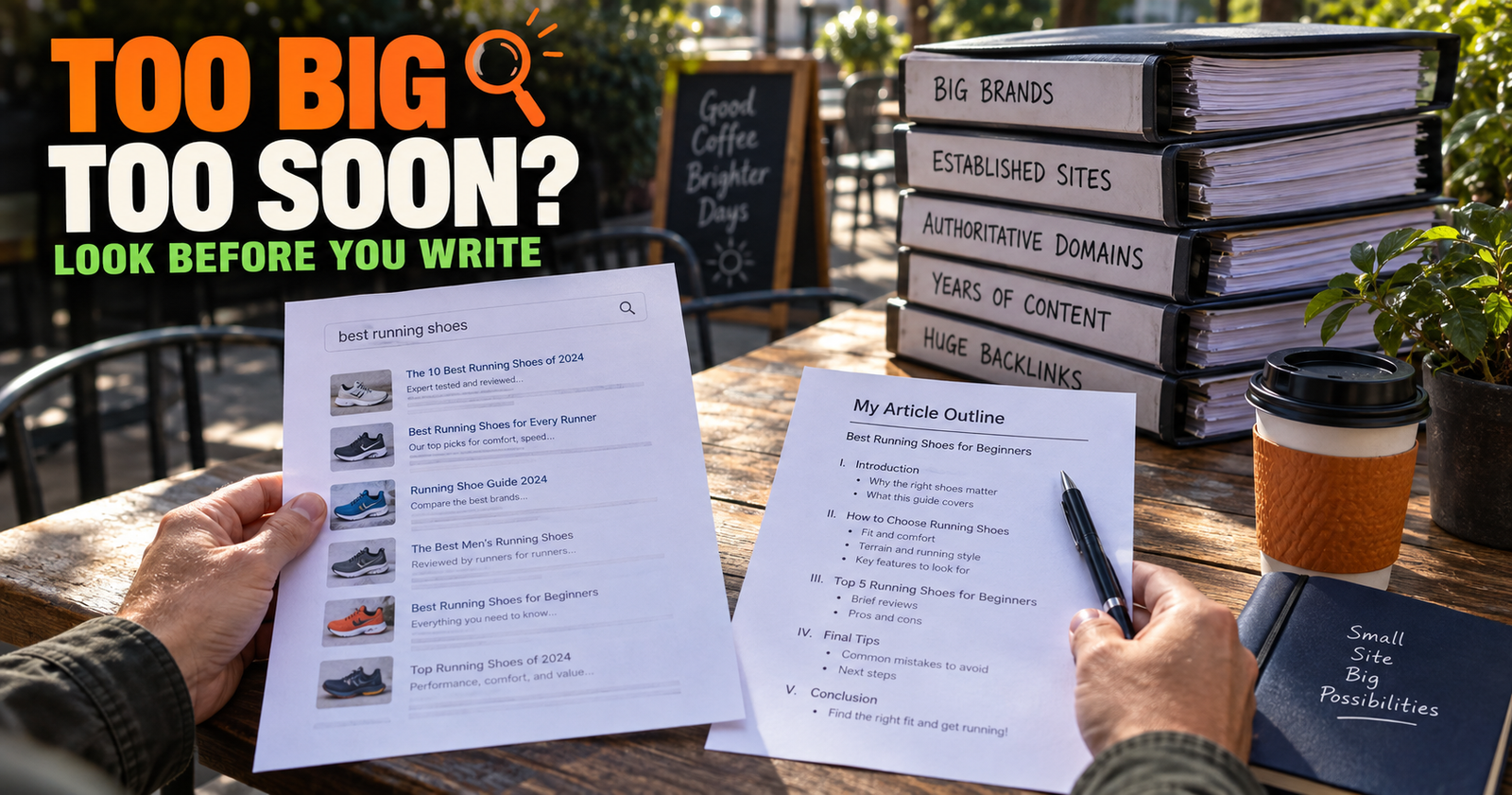
For example, an article about finding keywords without paid tools might appear for a broad search like “best keyword research tool.” That searcher may want product comparisons, not a free process. Your article can be good and still not earn the click.
Open Search Console, choose the page, then review the queries producing impressions.
Ask yourself:
- Does the page directly answer this search?
- Is the searcher looking for information, a product, a comparison, or a quick fix?
- Does my title make the page’s actual value obvious?
- Would this person be satisfied after reading the article?
When the answer is no, do not force the page to target that query. Let the page stay focused, or create a separate page only if the new question deserves its own complete answer.

Search intent can quietly ruin click-through rate
A page can use the right words and still miss the reason someone searched.
That is search intent.
Someone searching “how long does SEO take” usually wants realistic timing and expectations. They probably do not want a sales pitch, a keyword list, or a giant technical checklist.
Someone searching “website indexed but not ranking” wants troubleshooting. They are trying to figure out what is wrong and what to check first.

When your title and opening match the problem behind the search, people are more likely to click and stay. Search intent is what keeps a page from being technically relevant but practically wrong.
Your page may need more time
Very low numbers can mess with your head.
If a page has 12 impressions and zero clicks, there is not enough data to make a strong judgment. The page may have appeared in low positions. It may have shown up only for a few unusual searches. One click could change the rate completely.
I would avoid making big changes based on tiny data. Give the page time to collect a meaningful pattern, especially on a newer website.
This is not an excuse to ignore weak content. It is a reminder not to turn every early number into an emergency.
The search results may be crowded
Some searches are packed with ads, maps, shopping results, videos, Reddit threads, giant brands, and featured snippets.
Your page may be doing better than it looks. It might rank in a respectable organic position but still get fewer clicks because the visual results above it take up most of the screen.
This is one reason I do not obsess over click-through rate without looking at the actual search results. Search the query yourself in a private browser window. See what the person sees before deciding the title is the whole problem.
What I would check before changing a page
When a page has impressions but no clicks, I would review these things in order:
- The exact queries creating impressions.
- The page’s average position for those queries.
- Whether the article matches the likely search intent.
- Whether the title clearly promises the answer.
- Whether the opening confirms that promise quickly.
- Whether stronger related pages can link naturally to this one.
- Whether the article is actually better or more useful than what already ranks.
That last question matters. Searchers have choices. A page needs to offer a clear reason to pick it.

Improve the page without turning it into a rewrite frenzy
The best updates are usually focused.
You might tighten the title, improve the opening, add the missing step that readers need, clarify the answer, update old information, or connect the page to a related article. You do not need to throw away a whole post because it has not earned clicks yet.
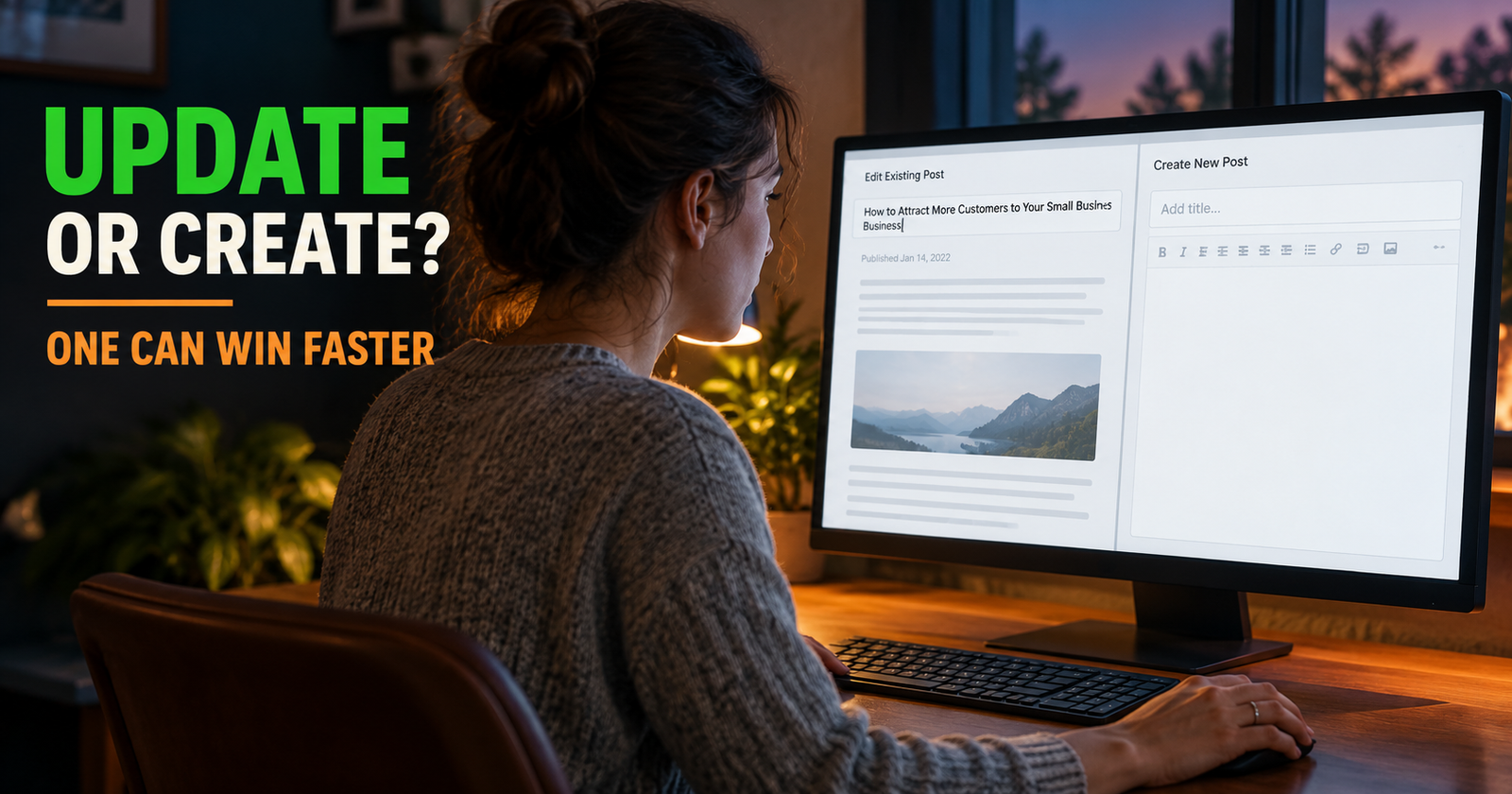
For an existing page that is close but underperforming, deciding whether to refresh an old post or write a new one can keep you from creating another overlapping article by mistake.
One good page with a clear purpose is stronger than two almost-identical pages competing for attention.
Internal links can help the right people find the page
Google Search is not the only way someone can reach a useful article.
A well-placed internal link can put your page in front of a reader who already trusts the site enough to keep learning. It also helps define how the page fits within the bigger topic.
If your article is about ranking without backlinks, link to it from relevant pages about new-site SEO, content quality, and competition. Do not bury it in a random list of links at the bottom of a post.
A small site becomes easier to use when every strong article has a logical way in and a logical next step out.
Frequently asked questions
Are impressions with no clicks bad?
Not necessarily. They show Google is displaying your page. The next step is figuring out whether the page is ranking too low, showing for the wrong searches, or failing to make a strong enough promise.
How long should I wait before improving a page?
If the page is new and has very little data, give it time. If it has a steady stream of relevant impressions but no clicks over several weeks, review the title, intent, and page quality.
Should I change my meta description to get more clicks?
It can help, but Google may choose different text from your page for the search snippet. Start with the title and the page’s ability to answer the query clearly.
Can a page get impressions before it ranks well?
Yes. Google can show a page at low positions or test it for different searches long before it becomes a strong result.
Alden Whitaker writes practical, plain-English SEO guides for Make It Found that help small website owners make smarter content decisions without getting lost in agency jargon.