After selling on Etsy for more than nine years and generating over $273,000 in sales, I have watched Etsy title advice change a lot.
For a long time, sellers were encouraged to use every possible word, variation, occasion, recipient, and gift phrase in a title. The result was titles that were technically stuffed with search terms but hard for a real person to read.
That approach is not where I would put my energy now.
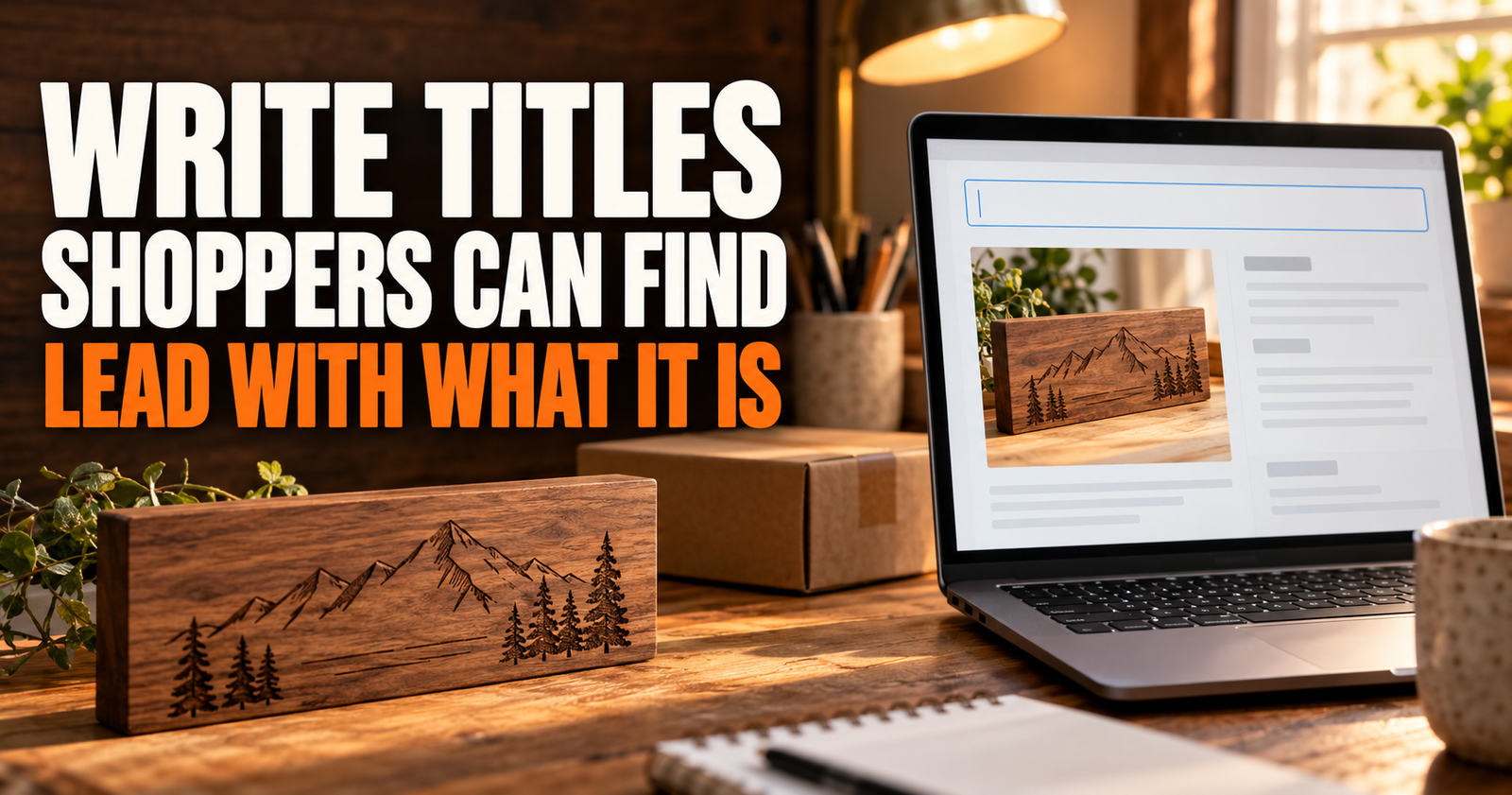
A listing title still matters. It helps Etsy understand the item, and it helps a shopper decide whether to click. But a title should first make it obvious what you are selling and what makes it different.
The best title is not the longest title. It is the one that helps the right buyer quickly say, “Yes, that is what I was looking for.”
Start With the Actual Item
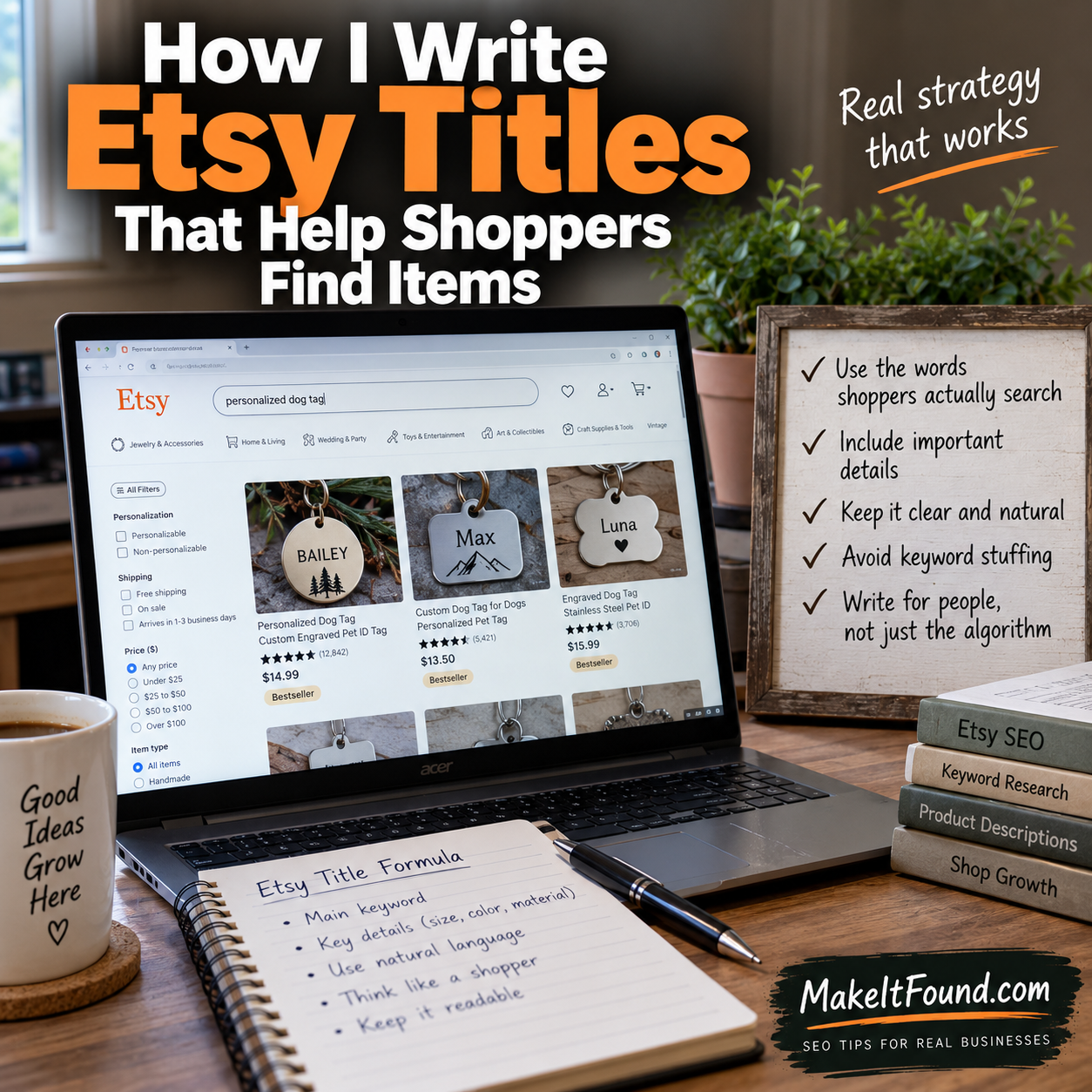
The first words of an Etsy title should usually tell the shopper what the item is.
That sounds almost too basic, but it is where many listings go wrong.
I see titles start with vague phrases like “gift for her,” “unique gift,” “must have,” or “beautiful handmade.” Those words may describe the item in a loose way, but they do not identify the product.
A shopper does not need to guess whether they are looking at a necklace, a printable planner, a wooden sign, a candle, or a digital invitation.
Start with the noun.
For example:
- “Personalized Dog Memorial Ornament”
- “Editable Wedding Welcome Sign Template”
- “Handmade Walnut Cutting Board”
- “Printable Weekly Meal Planner”
- “Custom Teacher Name Sign”
The product comes first because it gives the title a clear foundation. Everything after that should help explain the item, not bury it.
Use the Details That Actually Separate Your Item
Once the product is clear, add the most useful details.
I do not try to cram every possible detail into one title. I focus on the things that make the buyer stop and realize this listing is different from the next ten results.
That could be:
- Material, such as leather, walnut, sterling silver, or reclaimed wood.
- Format, such as printable PDF, instant download, editable template, or physical sign.
- Personalization, such as custom name, engraved, photo upload, or birth flower.
- Style, such as minimalist, rustic, modern, vintage, or farmhouse.
- Size, color, or another concrete feature that matters to the buyer.
- A use or recipient only when it is truly part of the item’s purpose.
A handmade walnut cutting board is different from a generic cutting board. An editable wedding welcome sign template is different from a finished printed sign. A custom pet memorial ornament has a different buyer purpose than a regular dog ornament.
Those details belong in the title because they help shoppers understand the offer.
Do Not Repeat the Same Word Over and Over
Repeated words make titles harder to scan and waste room you could use for something helpful.
A title like this does not make the product clearer:
“Personalized Gift for Her, Custom Gift, Unique Gift, Gift for Mom, Best Gift”
The shopper still does not know what it is.
A stronger version might be:
“Personalized Birth Flower Necklace, Custom Name Jewelry for Mom”
That title includes the actual item, the personalization, and the intended person without repeating “gift” five times.
This matters because shoppers are moving fast. They are looking at small product thumbnails, short titles, prices, and photos all at once. The title needs to earn attention quickly.
I think of every word as needing a job. If a word does not identify the product or make the offer clearer, I question whether it belongs there.
Use Gift and Occasion Words Only When They Fit
Gift phrases can help when the product is genuinely designed around a recipient or event.
A memorial ornament, a graduation gift, a wedding keepsake, or a teacher appreciation item may need that context in the title because it explains why someone would buy it.
But I do not force gift language onto everything.
“Gift for him” is not a product type. “Birthday present” is not a product type. Those phrases can be useful supporting details, but they should not replace the actual item.
If you sell a custom leather wallet, “Personalized Leather Wallet for Dad” is clear because it tells the buyer what it is and who it may be for.
If you sell a printable budget sheet, “Best Gift for Mom” makes no sense unless the item is truly packaged and marketed as that kind of gift.
I have found that relevance beats wishful thinking. The words should describe the item the buyer will actually receive.

Match the Title to the First Photo
Your title and first photo should tell the same story.
If the title says “personalized farmhouse family sign,” the first photo should show a finished personalized farmhouse-style sign clearly enough that the buyer can understand it right away.
If the title says “editable meal planner PDF,” do not lead with a pretty mockup that makes the buyer think they are purchasing a printed binder.
The title earns the click. The photo either confirms that click or creates doubt.
When I review a listing, I ask whether a stranger could understand the item from the title and first photo alone. If the answer is no, I know the listing still has work to do.
This is one reason Etsy titles are connected to more than search. A clear title can lead to a better click. A better click can lead to a more qualified buyer. A more qualified buyer is more likely to understand the item and feel good about buying it.
Put the Important Search Phrase Near the Front
I still put the clearest product phrase early in the title.
Not because I believe moving one word three spots forward is a magic ranking trick, but because shoppers scan from left to right. Etsy’s own current guidance makes the same practical point: putting the important words first can help buyers quickly see what the item is, which can lead to more clicks and sales. etsy.com
If a shopper is looking for an editable birthday invitation template, that idea should be easy to spot near the beginning.
If the item is a handmade brass bookmark, do not make the buyer read through “Gift for Book Lovers, Unique Present, Reader Gift” before they ever see “brass bookmark.”
The clearer product phrase belongs up front. Supporting information can come after it.
Let Tags Handle More Specific Variations
A title does not have to carry every keyword you found.
That is what your tags, category, and attributes are for.
Your title should make the product understandable. Tags can help cover more specific relevant search phrases. Attributes can add details around color, material, occasion, size, and style. Your description can answer the questions a serious buyer needs before ordering. When you need help turning those product facts into buyer-focused copy, prompts for clearer product descriptions can provide a practical starting point.
This is why keyword research should happen before title writing. Once you have a list of real buyer phrases, you can decide which one belongs in the title and which ones are better saved for tags or listing details.
My article on finding Etsy keywords without paying for tools explains how I build that list without turning the listing into a mess.
A Simple Etsy Title Formula That Stays Human
I do not use one rigid formula for every product, but this basic order works well:
Main product + key detail + personalization, format, or purpose
Here are a few examples.
“Custom Pet Memorial Ornament, Personalized Dog Loss Keepsake”
“Editable Baby Shower Invitation Template, Instant Download”
“Handmade Walnut Cutting Board, Engraved Family Recipe Gift”
“Printable Cleaning Schedule, Weekly Home Reset Planner PDF”
“Custom Teacher Name Sign, Personalized Classroom Door Decor”
Notice that the titles do not try to say everything. They communicate the main item and the details that matter most.
The tags, category, photos, variations, and description can handle the rest.
Avoid Subjective Words That Do Not Explain Anything
Words like beautiful, perfect, amazing, adorable, stunning, best, and high-quality may feel useful while you are writing, but they do not help a shopper understand what the item is.
Those words are better proven through photos, materials, reviews, and the product itself.
I would rather use a real detail.
“Beautiful wooden sign” tells me very little.
“Handmade cedar porch sign with raised lettering” gives the buyer something they can picture.
“Perfect gift for her” tells me very little.
“Personalized birth flower necklace with name engraving” tells me what the item is and why it may be meaningful.
Clear details beat empty praise every time.
Do Not Put Price, Shipping Claims, or Sale Language in the Title
The title is not the place for “free shipping,” “sale,” “fast delivery,” “cheap,” or price information.
Those things can change. Etsy may already show relevant pricing, shipping, and sale details in the search results. More importantly, they take attention away from the product itself.
I want the title to stay useful even when a sale ends or my shipping profile changes.
The item should be the star of the listing. The price and shipping information should be clear in the places Etsy provides for them.
Rewrite Old Titles Carefully, Not All at Once
If you have a shop full of old titles that look like keyword piles, do not panic and rewrite everything in one night.
I would start with listings that already get views, favorites, or sales. Those listings give you a better chance to see how a clearer title affects buyer behavior.
Make a measured change. Keep the core product phrase clear. Remove repeated words and vague filler. Add the specific detail that makes the item easy to identify.
Then give it time and watch the results.
I would pay attention to:
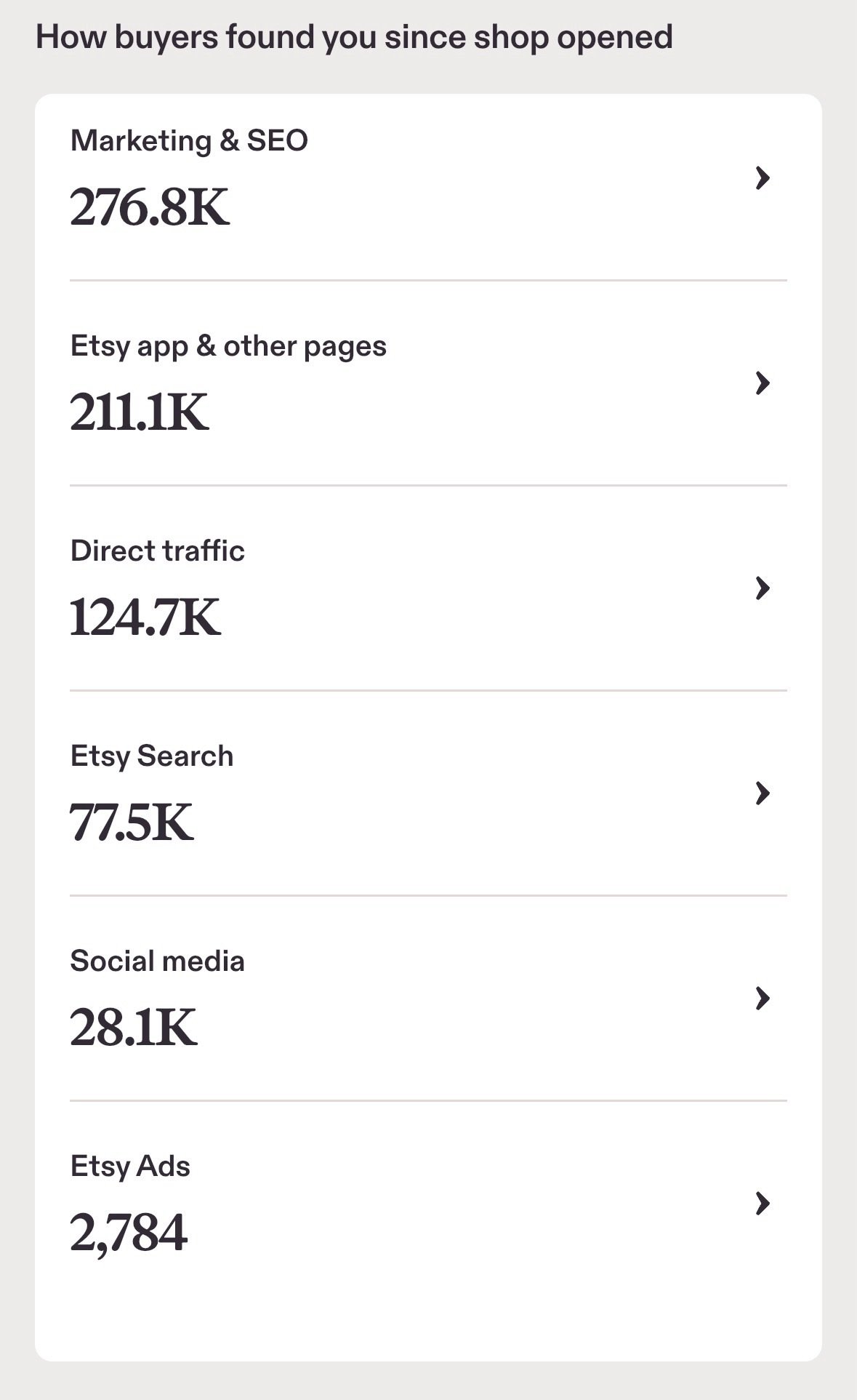
- Whether the listing still receives Etsy Search views.
- Whether shoppers click the listing.
- Whether favorites or sales improve.
- Whether the listing begins attracting the wrong buyer.
- Whether the new title matches the photos and description better.
This is a cleaner way to improve a shop than changing every title at once and hoping for a miracle.
The Title Cannot Fix a Weak Listing by Itself
A strong title can help Etsy match the listing and help shoppers understand it. But it cannot rescue weak photos, confusing personalization instructions, unrealistic processing times, poor customer service, or an offer that does not make sense next to competing products.
I have learned to treat the title as the front door, not the entire house.
The title helps the right shopper arrive. The photo gets their attention. The listing details answer their questions. The product and customer experience earn the sale.
That is why the previous article on how Etsy search actually works matters. Etsy looks at the full listing and how real shoppers respond to it. The title is important, but it works best when every other part of the listing supports the same promise.
My Final Title Check Before Publishing
Before I publish or update an Etsy listing, I read the title as if I know nothing about the product.
I ask myself:
- Can I tell what the item is in the first few words?
- Does the title include the most important real detail?
- Is the title easy to scan on a phone?
- Did I repeat words that could be removed?
- Did I add a gift, occasion, or recipient phrase that truly fits?
- Does the title match the first photo?
- Would the right buyer feel like they found what they searched for?
If the title passes those questions, I do not keep adding words just because there is more room.
A title does not need to sound clever. It needs to make the shopper feel certain they are looking at the right thing.
Daxon Weaver is an independent publisher and longtime Etsy seller who has generated more than $273,000 in Etsy sales. He writes practical, plain-English guides for Make It Found to help creators and small business owners get found online.