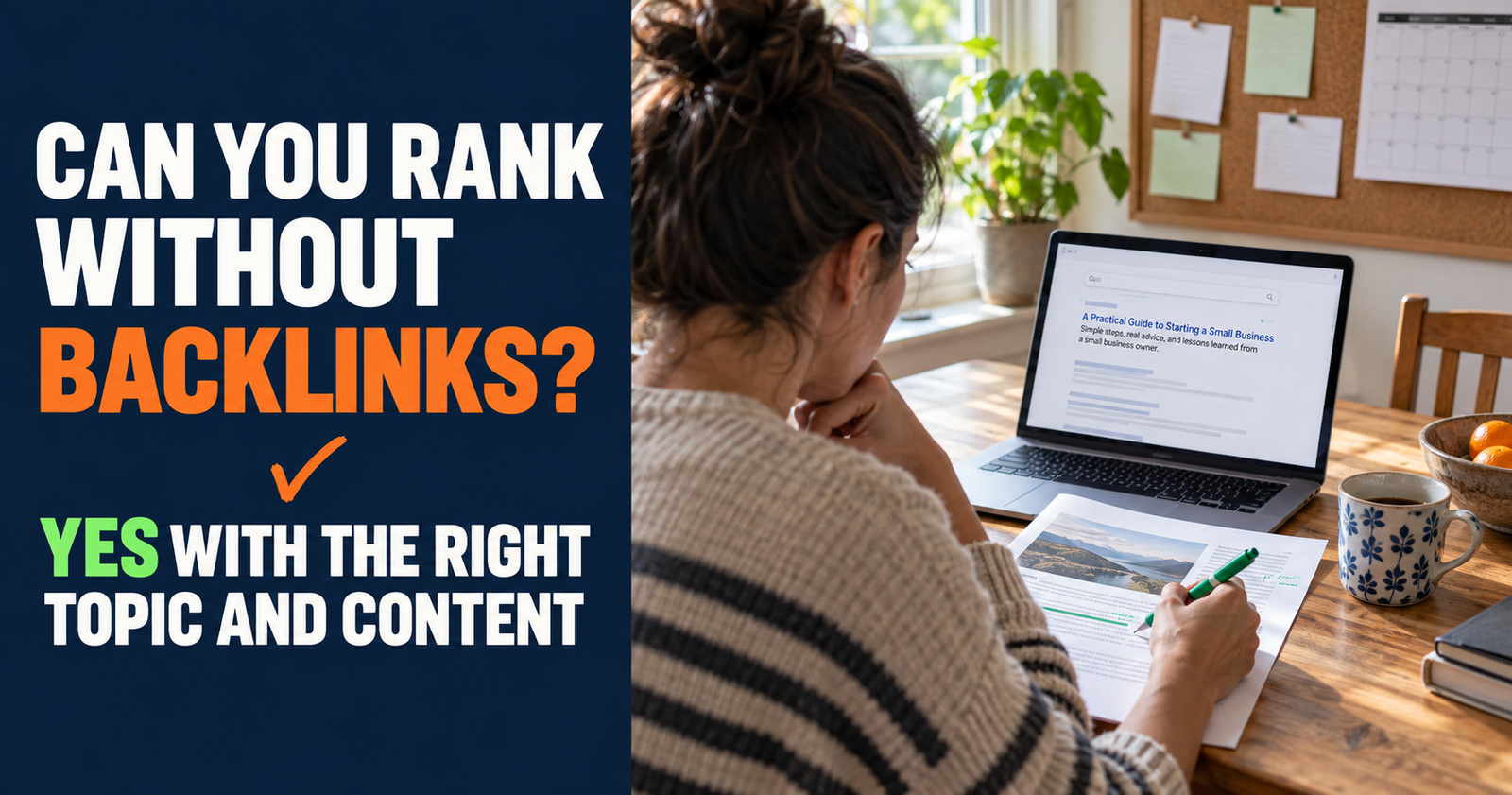
Yes, a new website can rank without backlinks.
That answer may sound surprising if you have spent any time around SEO advice. Backlinks are often presented like the price of admission. You launch a new site, and within a day, somebody emails to offer “real authority links,” “guest posts,” or 1,000 backlinks for the low price of a decent set of tires.
Here is the part they usually skip: backlinks can help, but buying a pile of them is not the same thing as building a site that deserves to rank.
A new website can earn impressions, rankings, and real traffic without chasing paid links. It is much more likely to happen when the site answers specific questions well, chooses realistic topics, makes pages easy to understand, and builds useful connections between related articles. One way to make those pages more useful is to shape each answer around answers the searcher needs.
What a Backlink Actually Is
A backlink is simply a link from another website to your website.
If a local newspaper links to a roofing company’s storm-repair page, that is a backlink. If a gardening blogger mentions a helpful seed-starting guide and links to it, that is a backlink too.
Google uses links in more than one way. Links can help Google discover pages, and they can give context about how pages relate to each other. A relevant link can be a useful signal because it is someone else pointing readers toward a page they believe may help.
But a backlink is not a gold star that automatically pushes a website to the top of Google.
The quality, relevance, context, and reason for the link matter. A real link from a relevant site because your page helped someone is very different from 500 strange links placed on websites nobody visits.
Why New Websites Get So Worried About Backlinks
A brand-new site has no history, few pages, and usually no one talking about it yet. That makes backlinks feel like the missing piece.
Sometimes, though, backlinks become an easy thing to blame because they are visible. You can open an SEO tool, see a competitor has hundreds of referring domains, and think, “Well, that settles it. I cannot rank until I have the same.”
That is not how it works.
You are not competing with the entire internet in one big contest. You are competing page by page, search by search, for the chance to be a useful result.
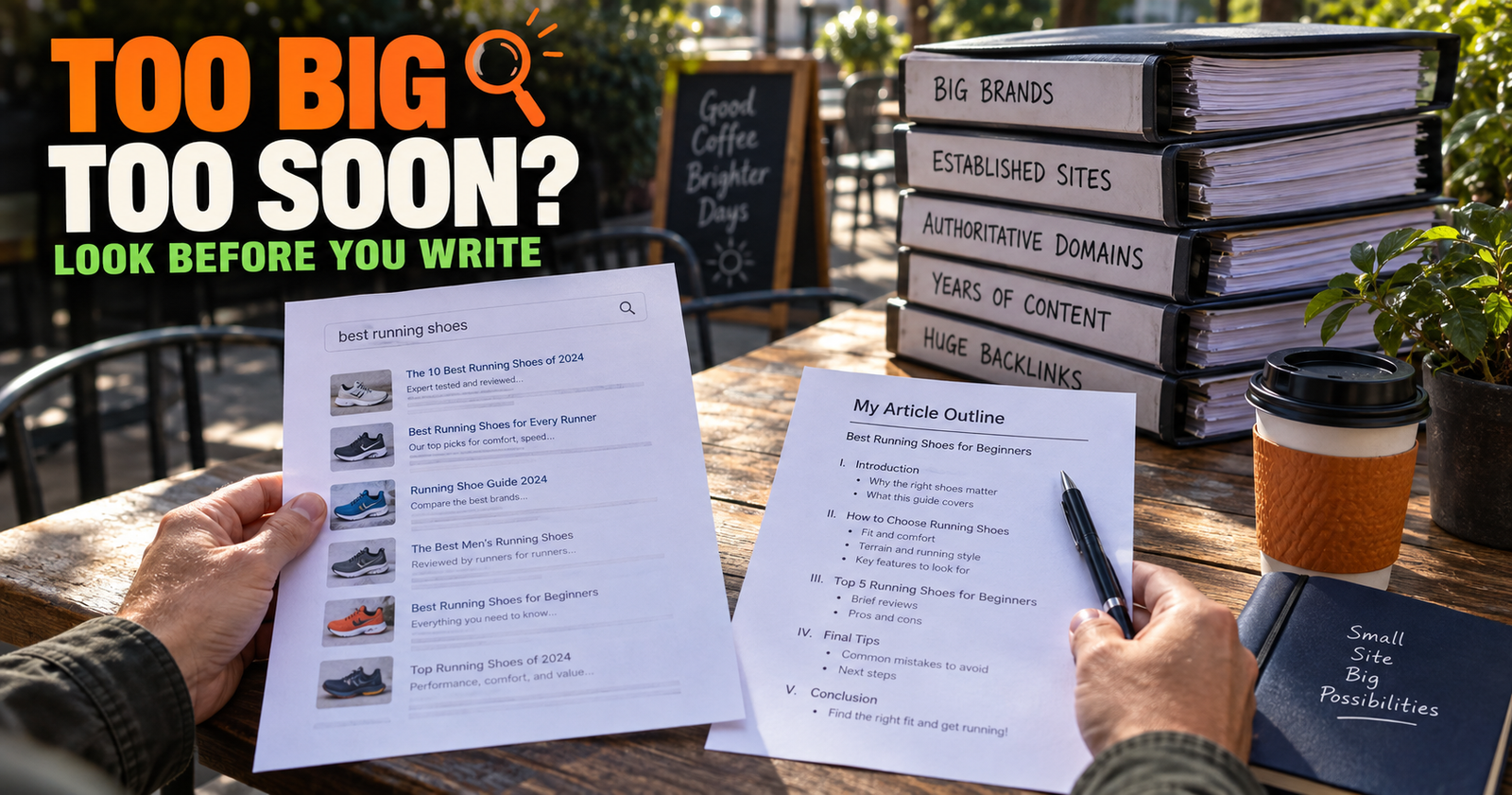
A new website trying to rank for “best credit card,” “home insurance,” or “SEO” has a very steep hill to climb. Those results are crowded with major companies, experienced publishers, and pages that have earned attention over a long time. A practical way to move from those difficult terms to a more sensible target is finding a better starting keyword.
A new website answering “Why Does My Well Pump Run Every Few Minutes?” or “How Do I Know if My Tomato Seedlings Are Underwatered?” has a more realistic opening. The search is more specific, and the reader needs a direct, useful answer. Finding those realistic topics often starts with specific search questions that reveal the questions a specific audience is already asking.
That is why topic choice matters so much early on.
What Backlinks Can Help With
Backlinks are not worthless. Good ones can be valuable.
A legitimate link can send real visitors to your website. It can help people discover a useful page. It can also give Google another route to find that page and some context about why it may matter.
For a small local business, a link from the chamber of commerce, a local event site, a supplier directory, or a community organization may make perfect sense.
For a blogger, a natural mention from another writer, a cited resource page, an interview, a podcast show-note link, or a genuinely useful tool someone recommends can all be worthwhile.
Notice what those links have in common: they make sense even if Google did not exist.
That is a good filter. If the only reason for a link is to manipulate rankings, it is not the kind of link you should build your strategy around.
Google defines link spam as creating links primarily to manipulate search rankings. Its spam policies specifically warn against buying or selling links for ranking purposes and other artificial link schemes.
What Backlinks Cannot Fix
A backlink cannot rescue a page that does not answer the search.
It cannot make a vague article suddenly specific. It cannot make a confusing page easy to use. It cannot make a broad keyword realistic for a brand-new site. It cannot turn copied, thin, or generic content into something readers trust.
That is where some SEO advice gets backwards. People spend money trying to send authority toward a page before they have made the page worth sending people to.
If you have a limited budget, start with the page itself.
Make it clear. Make it useful. Make it focused. Make it better than the article a reader would otherwise click.
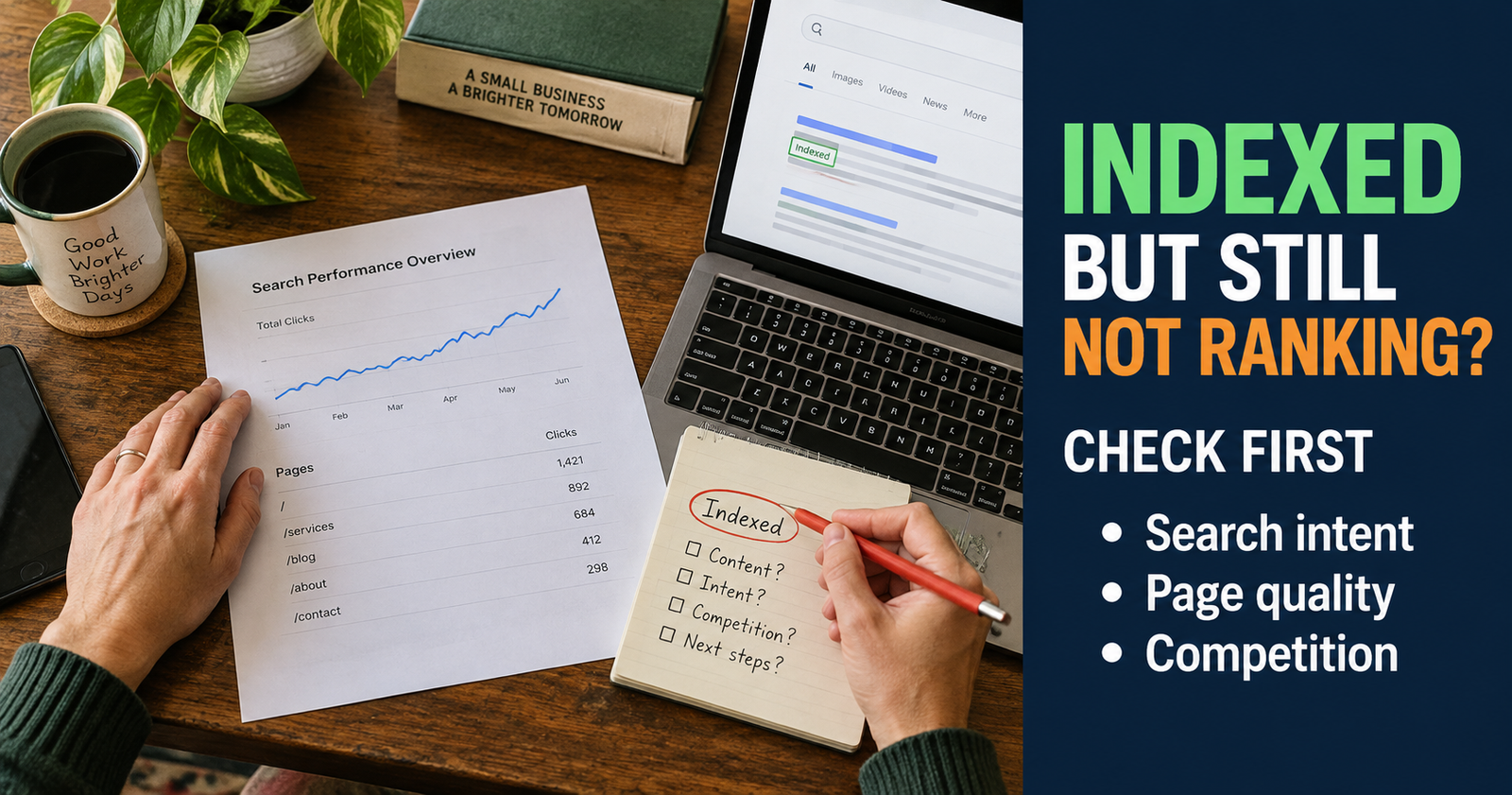
The article on why an indexed page may still not rank walks through that side of the problem. Google may already know your page exists, but it still needs a reason to show it ahead of other pages.

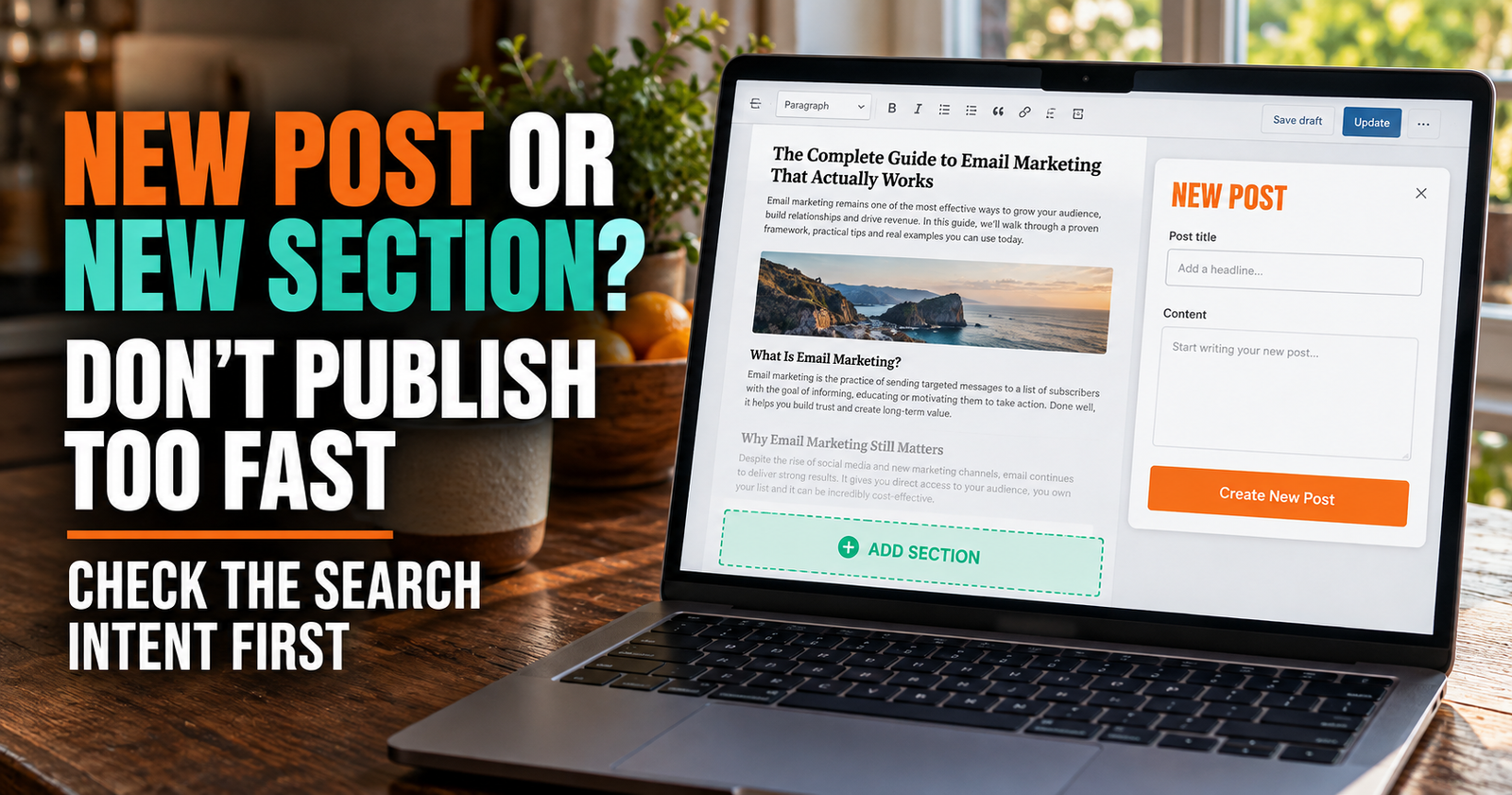
A New Site Can Start Ranking Before It Has Links
There is an important difference between “ranking for every keyword you want” and “ranking at all.”
A new site can begin earning impressions and clicks without a backlink campaign, especially when it publishes useful pages around specific searches.
Google can discover pages through your sitemap and internal links. It can understand the topic through your titles, headings, content, and the way related pages connect. It can test a page for searches where the answer may be helpful.
That early visibility is often small. It might be a few impressions. Then a few clicks from long, specific searches. Then more as you add related content and improve the pages you already have.
That is normal growth. It is not flashy, but it is real.
The goal is not to wait for someone to hand your new site authority. The goal is to give the site enough useful work that people and search engines can understand what it is good at.
The Best First “Link Building” Is Usually Internal Linking
Internal links are links between pages on your own website.
They are not the same as backlinks, but they are one of the best things a newer site owner can control. They help visitors continue learning, and they help Google find and understand the relationship between your pages.

For example, this article fits naturally with the broader DIY SEO beginner guide. Someone learning the basics may wonder whether backlinks are required before they even begin. This page gives them the honest answer without making them chase a shortcut.
The same reader may need a realistic expectation for how long progress takes. That is why a page about the early SEO timeline for a new website is also relevant.
Internal links work best when they are useful, not when they are dumped into an article like a list of unrelated chores.
One helpful link in the right spot can do more for a reader than ten forced links at the end of a page.
Build a Site That Is Easy to Recommend
The easiest way to earn a natural backlink is to have something genuinely worth linking to.
That does not mean you need a giant research report, a fancy interactive tool, or a viral infographic. Sometimes a page earns attention because it explains a frustrating question more clearly than the articles already out there.
A useful resource might be:
- A plain-English troubleshooting guide that saves someone from an expensive mistake.
- A simple calculator or checklist that helps people make a decision.
- A detailed comparison that explains who each option fits.
- A local guide that answers questions visitors keep asking.
- An article that clears up a confusing topic without making readers sort through jargon.
- A resource page that gathers information people would otherwise have to find in ten places.
The goal is not to manufacture reasons for people to link. It is to make your website easier to recommend when the right opportunity comes up.
Real Ways a Small Website Can Earn Links
You do not need to cold-email 500 strangers or beg unrelated blogs for a guest post.
Start with places where your business, work, or expertise naturally belongs.
A local service business may have legitimate opportunities through its local chamber, trade organizations, suppliers, sponsorships, community events, charities, and professional profiles.
A creator may earn links through interviews, collaborations, resource roundups, podcasts, newsletters, or original videos that other people want to reference.
A blogger may earn links when another writer finds an article useful enough to cite, especially when the article explains a topic clearly or includes an original helpful angle.
A farm, shop, or small business may be listed by local tourism sites, markets, event pages, industry groups, or organizations it is already involved with.
These are slower than buying links. They are also more believable, more useful, and less likely to create a mess you regret later.
Be Careful With Guest Posts
Guest posts are not automatically bad. Writing a useful article for a relevant publication can introduce you to a new audience and can result in a legitimate mention.
The problem starts when guest posts become a factory.
If the same generic article is rewritten and placed on unrelated websites just to squeeze in a keyword-rich link, that is not a reader-first strategy. It is a link scheme wearing a nice shirt.
A sensible guest post should make sense for the audience of the host website. The article should be worth reading on its own. The link, if there is one, should help the reader find a relevant source.
If you would be embarrassed to tell your own readers where the article was published, skip it.
Do Not Buy Cheap Backlink Packages
If a stranger promises 500 backlinks, 50 guest posts, or “high domain authority links” for a suspiciously low price, stop and ask a simple question.
Where are those links actually coming from?
Many cheap link packages rely on low-quality websites, automated comments, private networks, irrelevant blog posts, or pages created only for selling links. They might look impressive in an SEO tool while doing nothing useful for your actual business.
Some can cause bigger problems. Google’s spam policies say artificial links made primarily to manipulate rankings can violate its rules. In serious cases, spam tactics can lead to lower rankings or pages being removed from results.
You do not need to become scared of every link. You just need to avoid paying for obvious manipulation.
A good rule is this: if the seller will not clearly show you the site, the audience, the content, and why the link makes sense, do not buy it.
What to Do Instead of Buying Backlinks
If you have time or money to invest in a new website, put it where the reader will feel it.
- Improve your main pages so each one gives a clear, complete answer.
- Publish more specific articles around the same topic instead of jumping all over the place.
- Link related pages together in a way that helps visitors continue learning.
- Make sure the site works well on a phone.
- Use titles that plainly describe what each page helps with.
- Share useful pages with people who would truly care about them.
- Build genuine relationships in your community or niche without making every conversation about getting a link.
- Create a resource that makes another writer, customer, or organization think, “This would help my audience.”
This is not the fastest-looking plan. It is the one that keeps working after the latest link scheme stops working.
How to Know When Backlinks Matter More

As your site grows, you may reach a point where you have strong content, clear search intent, a healthy technical setup, and good internal links, but you are still competing against very established pages. At that stage, it may help to review whether strong content should be updated before creating another page.
That is where external mentions and links can become more meaningful.
The answer is not to panic and buy them. It is to look for the legitimate ways your website can become more visible outside its own walls.
For some businesses, that may mean local PR, community involvement, partnerships, industry participation, or helpful tools and resources. For a publisher, it may mean original reporting, cited research, helpful expert contributions, strong video content, or resources that solve a problem better than anything else available.
The best links are usually a result of doing useful work that people notice. They are not the first brick in the foundation.
A Better Question Than “How Many Backlinks Do I Need?”
Nobody can honestly tell you an exact backlink number that guarantees rankings.
A better question is, “What is the next thing that makes this page more useful or more discoverable to the right person?”
Sometimes the answer is a natural link from a relevant site. More often, especially early on, the answer is a better page, clearer topic choice, stronger internal linking, or more patience.
New websites do not need to wait for a giant backlink profile before they publish, improve, and begin earning search visibility. They need to stop treating backlinks like lottery tickets and start treating the website like a resource worth building.
Alden Whitaker writes practical, plain-English SEO guides for Make It Found that help small website owners build visibility without paying for gimmicks or chasing shortcuts.