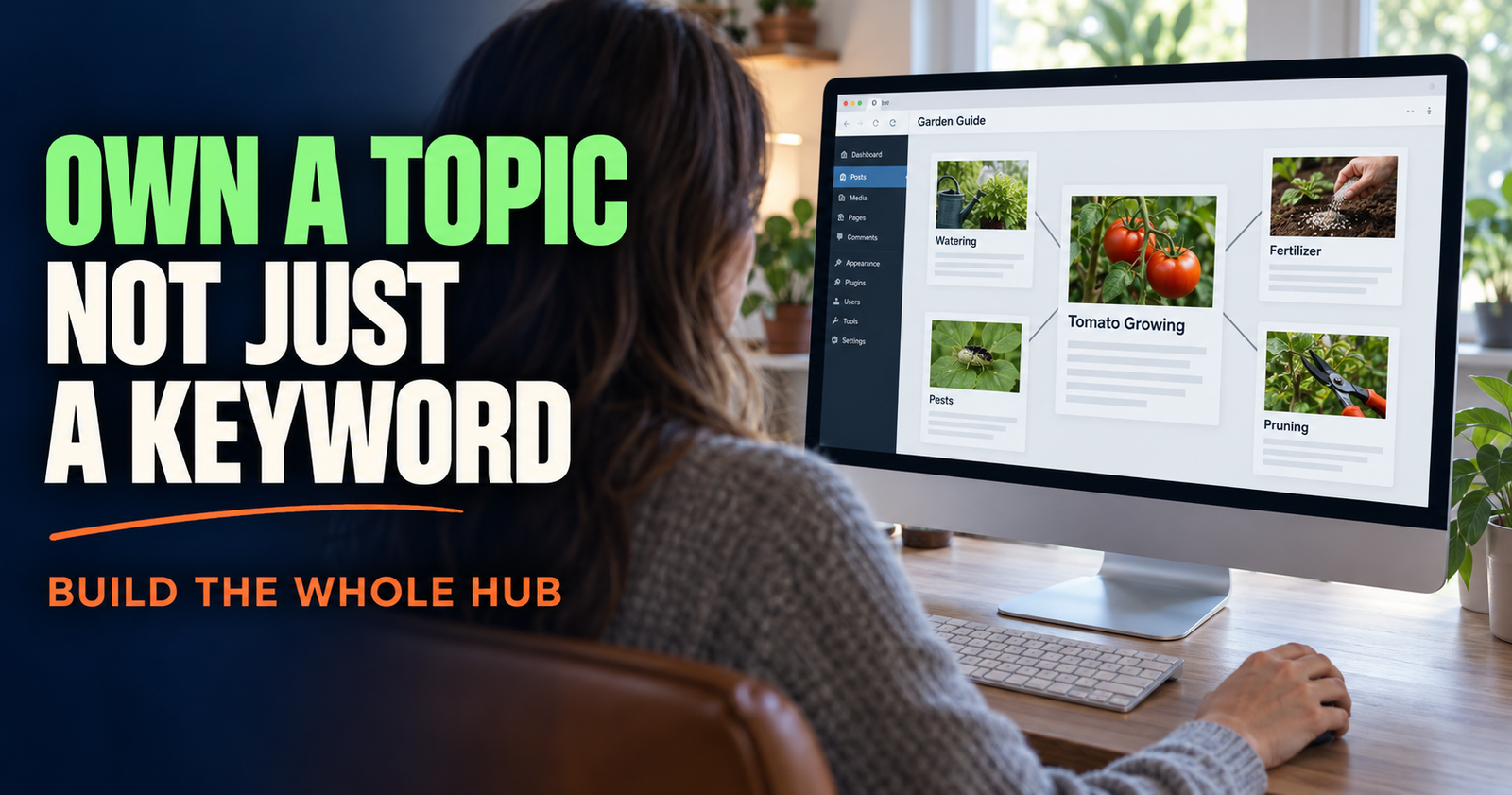
Topical authority is the idea that your website becomes genuinely useful on a subject from more than one angle. Instead of publishing one broad article and hoping it wins, you build a connected library that helps a reader understand the topic, solve related problems, and take the next sensible step. A practical way to build a connected content library is to organize related articles around one clear audience and problem.
That sounds simple, but it gets watered down fast. People hear “topical authority” and start making giant keyword lists, publishing thin posts for every phrase they can find, and linking them together like a pile of paperwork. That is not authority. It is just more pages.
For a small website, topical authority is less about covering everything and more about being consistently helpful to one clear kind of person. If someone lands on one of your articles, can they find trustworthy answers to the questions that naturally come next? Can they tell what your site is about? Can they move from confused beginner to capable decision-maker without having to leave and start another search?
That is the standard I would use.
Google does not publish a single “topical authority score” you can check in Search Console. There is no magic number of articles that suddenly makes a site authoritative. Google does say its systems aim to prioritize helpful, reliable, people-first content, and it specifically asks whether a site has a primary purpose or focus. You can read that directly in Google’s guidance on creating helpful, reliable content.
So topical authority is not a button to press. It is the result of making a site easier to understand, easier to trust, and more useful for a real audience over time.
What topical authority actually means
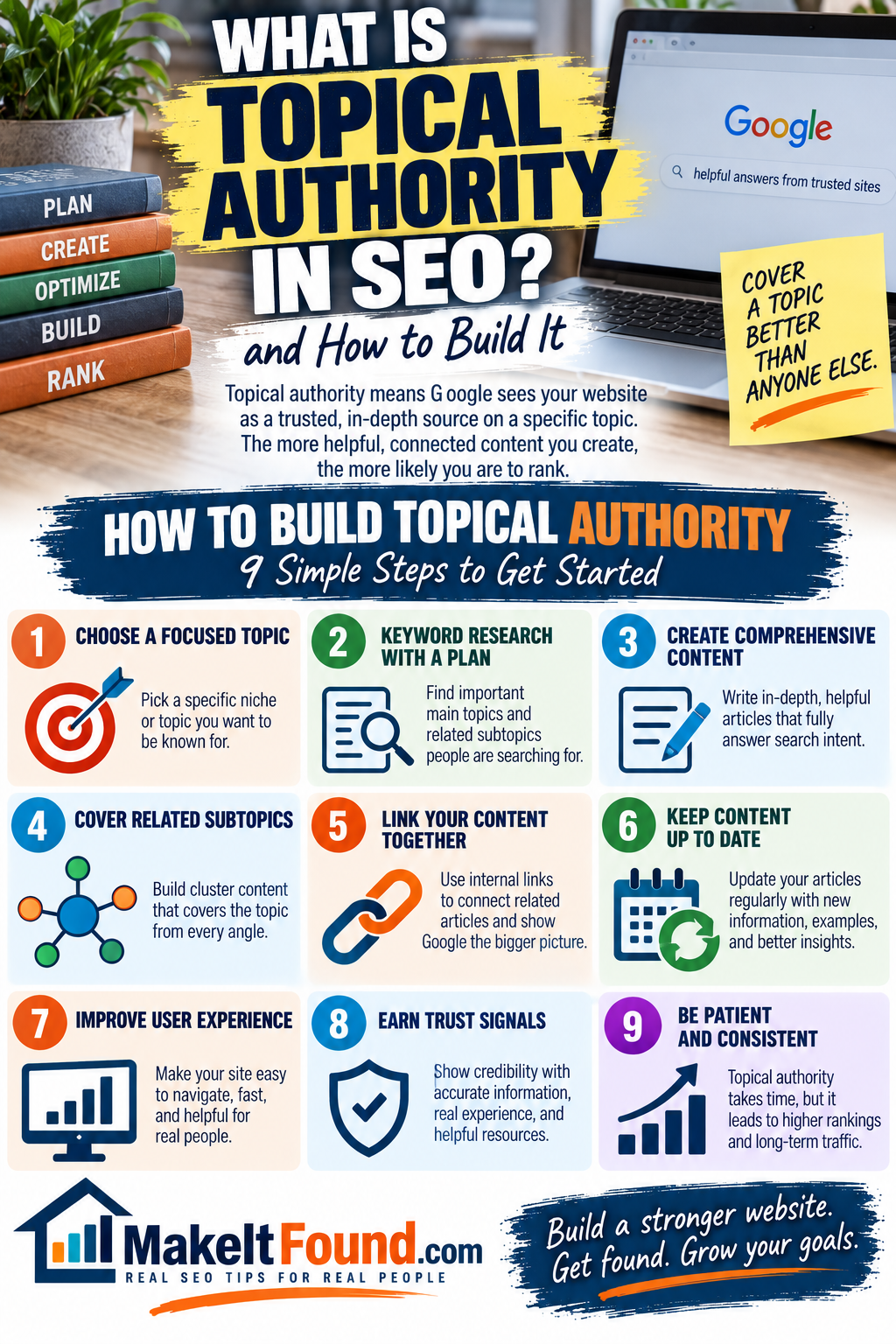
A site builds topical authority when it repeatedly proves that it understands a subject well enough to answer the main question, the smaller questions around it, the mistakes people make, and the practical decisions they face after they get an answer.
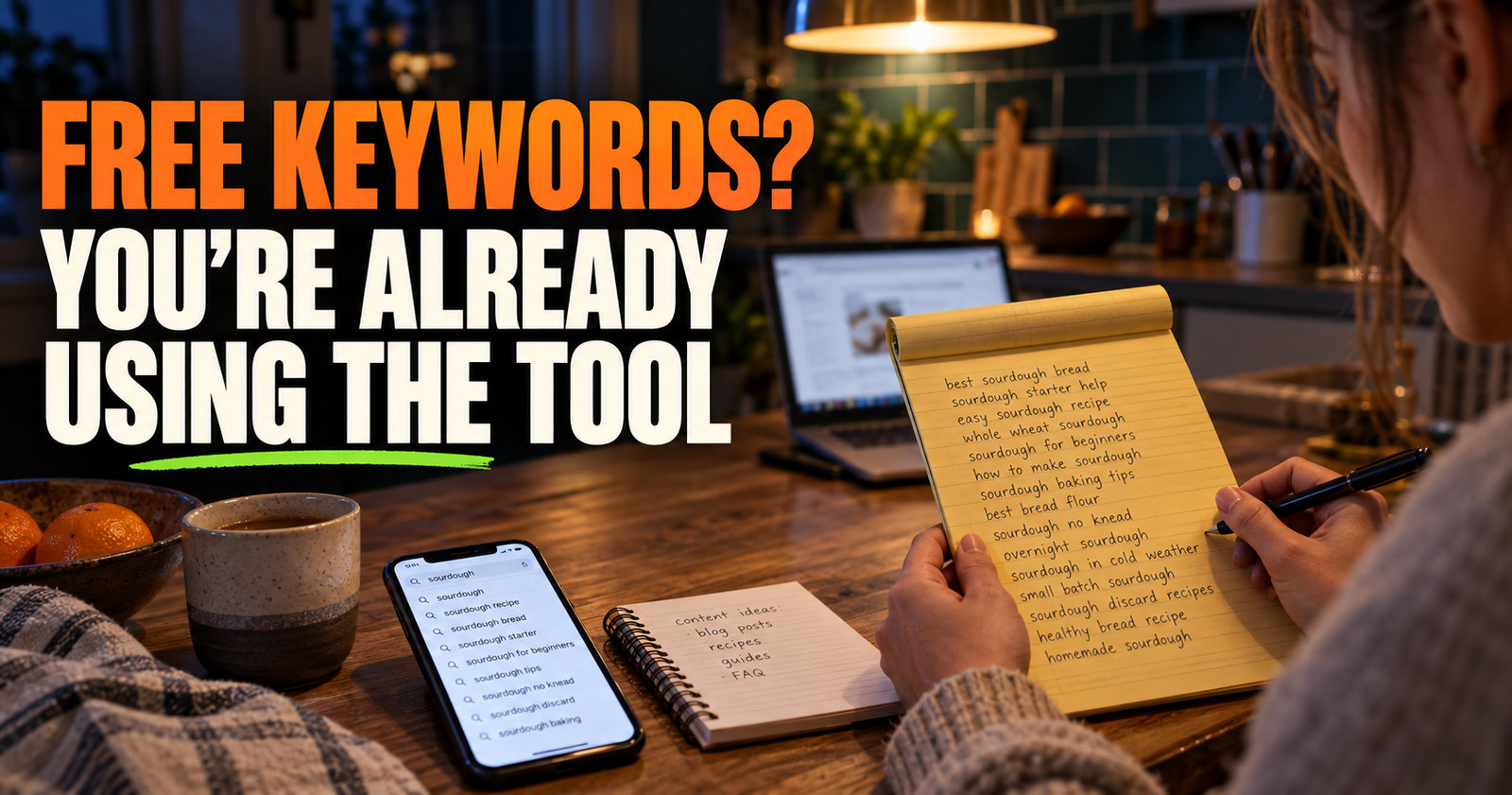
Think about someone searching “DIY SEO for beginners.” They probably will not stop after one article. They may also need to know why their new site is not appearing on Google, how long SEO takes, whether backlinks are required, how to find keywords without paying for software, and whether an indexed page should already be ranking.
A site that clearly and helpfully covers those connected questions is more useful than a site that has one beginner SEO post surrounded by unrelated articles about social media quotes, celebrity news, web design trends, and random software reviews.
That does not mean every website needs to stay narrow forever. It means each section of the site needs a reason to exist. Your articles should feel like they belong together because they serve the same audience and help with the same larger problem.
For Make It Found, the larger problem is helping normal website owners get discovered online without agency jargon or expensive tools. That gives every article a filter: Does this help a beginner understand, fix, or improve their visibility in a practical way?
If the answer is no, the topic may be fine on another site. It may not belong in this cluster.
What topical authority is not
It is worth clearing out a few bad ideas before building anything.
Topical authority is not publishing 100 articles before your first 10 have become useful. It is not repeating the same definition in slightly different posts. It is not forcing an internal link into every paragraph. It is not pretending to have expertise you do not have.
It is also not a promise that Google will rank every page. Google’s own SEO Starter Guide is clear that there are no secrets that automatically put a site first. Search results depend on the query, the competition, the page, the searcher’s location, and many other signals.
A better way to think about it is this: topical authority improves your odds because it helps you create better pages for the right audience, build a clearer site structure, and develop judgment about what to publish next.
It also makes your work less wasteful. Once you understand one subject deeply, you stop treating every article as a separate lottery ticket.
Why small websites should care about topical authority
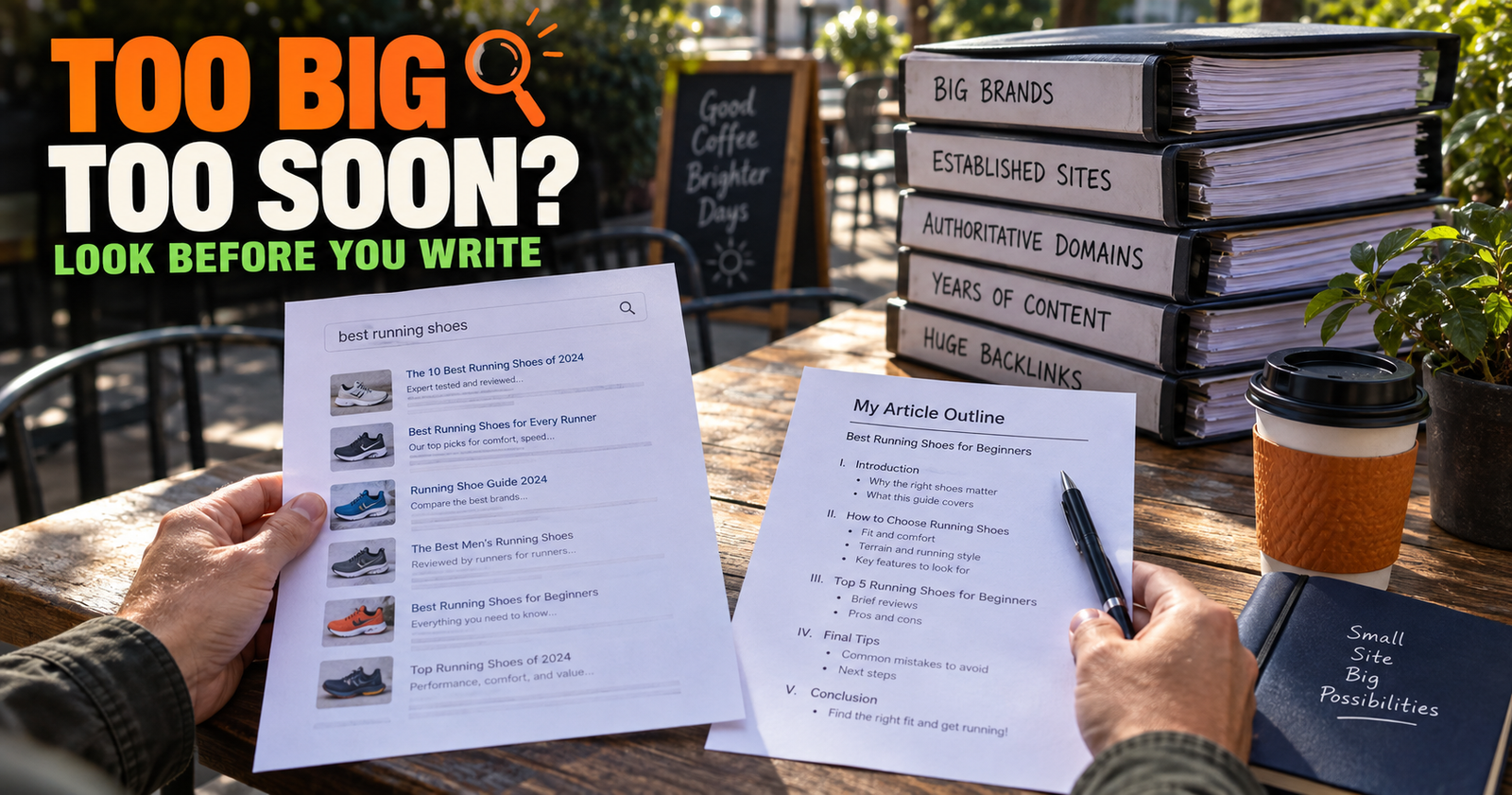
Big websites can sometimes rank because they have years of links, brand recognition, and a large technical foundation behind them. A new small site usually cannot out-muscle that kind of competition on broad, high-demand phrases.
But a smaller site can be more focused.
You may not be able to become the best answer on the entire internet for “SEO.” You can become deeply useful for a narrower promise, such as SEO for first-time website owners, local service businesses trying to show up online, Etsy sellers learning search, or beginners using WordPress.
That focus gives you three advantages.
- It helps you choose articles that support one another instead of chasing whatever keyword looks tempting that week.
- It helps readers trust that you understand their situation. Someone who enjoyed your explanation of indexing is more likely to read your guide about rankings when it answers the next question they already have.
- It helps search engines understand the relationships among your pages. Clear topics, descriptive headings, logical navigation, and relevant internal links make it easier to see how your content fits together.
The point is not to sound like the biggest expert in the room. The point is to become the site a specific reader is relieved to find.
Start with a reader problem, not a pile of keywords
Keyword research matters, but it should come after you know the problem your site is built to solve.
A useful starting sentence looks like this:
This site helps [specific person] do [specific outcome] without [major frustration].
For example:
This site helps new website owners understand practical SEO without paying an agency or getting buried in technical jargon.
That one sentence gives you a much better content compass than “I want traffic.”
Now you can map the questions a beginner actually asks.
They need to understand the basics. They need to figure out whether Google can find their site. They need to know why a page can be indexed but still invisible. They need help selecting realistic keywords. They need to learn what makes one result useful for a searcher and another result irrelevant.
Those are not disconnected keywords. They are stages of one learning path.

This is also why search intent matters so much. A phrase is not just a group of words. It is evidence of what the person hoped to accomplish. If you publish several articles that each solve a different real intent, you are building a useful body of work. If you publish five articles that all answer the same question with different wording, you are creating confusion.


Build a topic map before you start writing
A topic map is simply a plan for the questions your site needs to answer. It keeps you from publishing at random and helps you spot gaps before they become a problem.
Start with one main topic, then identify the questions underneath it.
For a beginner SEO cluster, the main topic might be “getting a new website found on Google.” The supporting questions could include:
- What SEO is and what it can realistically do.
- How long SEO takes for a new website.
- Why a new website is not showing up on Google.
- What it means when a page is indexed but not ranking.
- How to find keywords without paid tools.
- How to tell whether a keyword is too competitive.
- How search intent affects the page you should create.
- Whether a new site can rank without backlinks.
- How often a new blog should publish.
- Whether to improve old content or write something new.
That is already a useful cluster because each page has its own job. None of them needs to be a watered-down copy of another.
The strongest article in a cluster is often called a pillar page. It gives a broad, useful overview and points readers toward the deeper pages. The supporting articles answer narrower questions in more detail.
Do not make the pillar page a 7,000-word wall of every fact you know. Its job is to orient the reader, answer the main question well, and make the next step easy to find.
The difference between a pillar page and a supporting article
A pillar page and a supporting article can cover the same overall subject without competing with each other. The difference is the job each page does.
A pillar page answers the broad question. A supporting article answers one important part of that question.

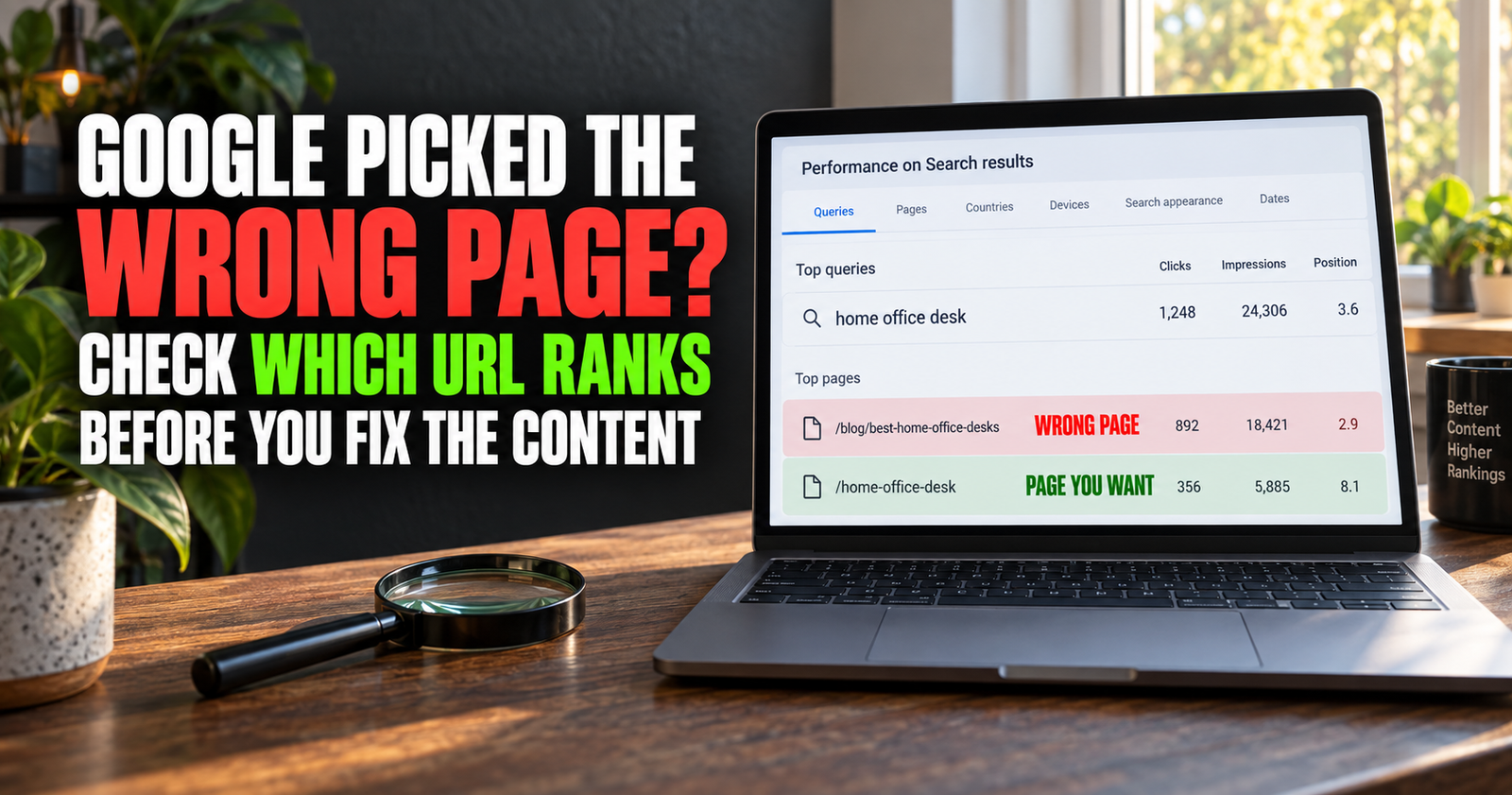
For example, “DIY SEO for Beginners” can introduce keyword research, indexing, search intent, internal links, and content quality. But a reader who is specifically worried because Google has indexed their page and it still ranks nowhere needs a focused article that deals with that problem in detail. Readers who need that foundation can begin with this practical DIY SEO starting point.
That focused page can explain what indexing means, what ranking means, what to check first, what not to panic about, and how to decide whether the page deserves more work. The broad guide should not try to do all of that in one section.
When each page has a distinct job, internal links become natural. You are not adding links because somebody told you they help SEO. You are giving a reader the next answer they genuinely need.
Use the “one page, one job” test
Before you publish an article, ask one question: what should a reader be able to do or understand after reading this page?
If you cannot answer that in one sentence, the topic may be too broad.
“Everything about SEO” is too broad for most new sites. “How to tell whether a keyword is too competitive for a new website” is focused. “Why is my site indexed but not ranking?” is focused. “How often should I post?” is focused.
A focused article can still be thorough. In fact, it should be. Thorough does not mean wandering into every related subject. It means fully answering the promise you made.
For each article, identify:
- The exact problem the searcher has.
- What they already know when they search.
- What they are likely getting wrong or worrying about.
- What a useful next action looks like.
- Which related article they should read after this one.
That last part is where a healthy cluster starts to form.
How internal links support real topical authority
Internal links are not magic votes. They are routes through your site.
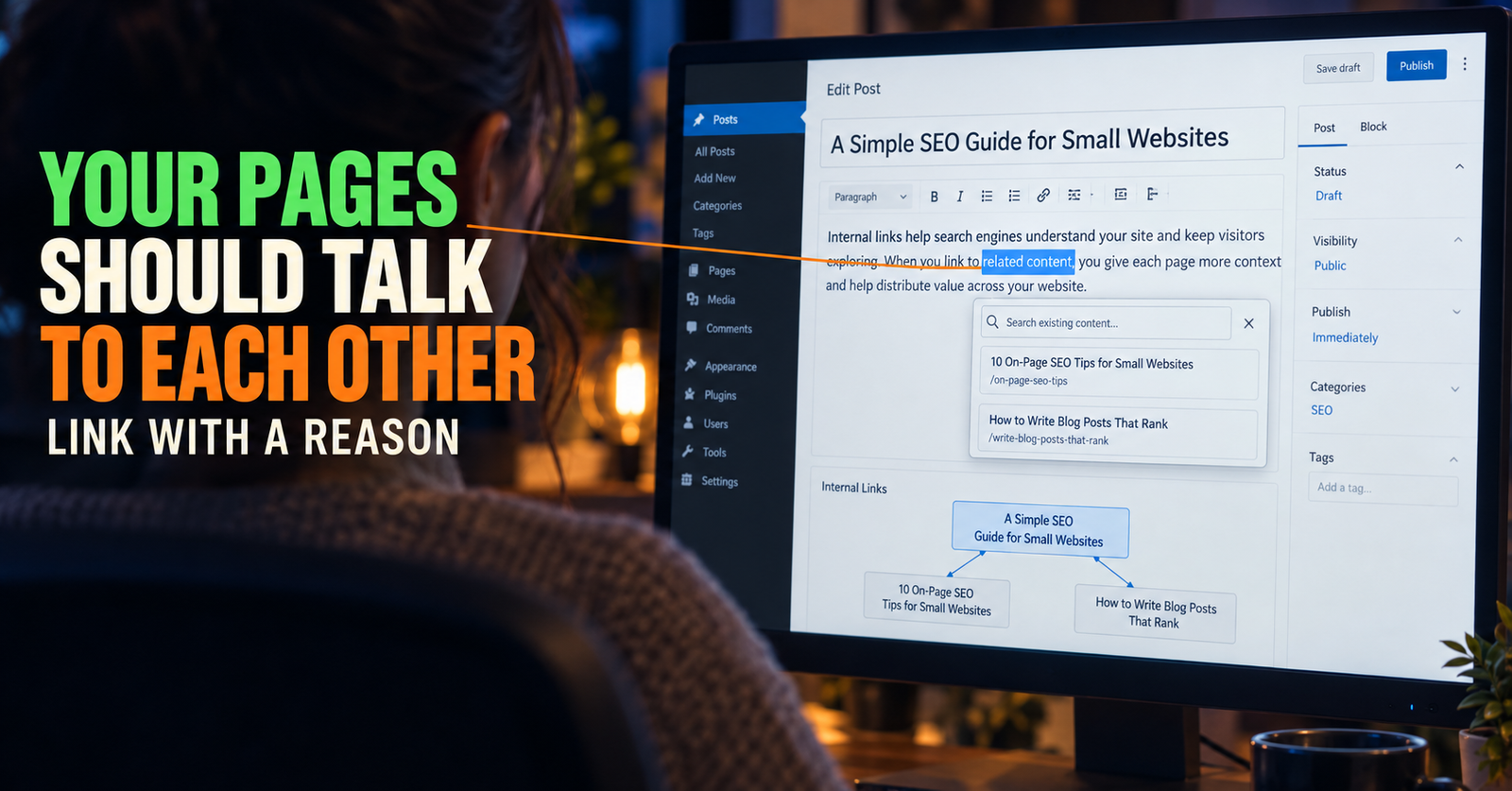
A good internal link helps a reader move from a broad question to a more specific answer, from a diagnosis to a fix, or from a beginner explanation to the next skill they need. It also gives search engines more context about which pages are related and what the linked page is about.
The most helpful internal links usually happen where a reader would naturally pause and think, “Okay, but what about that?”
For example, an article explaining that new websites can take time to gain traction can naturally point readers to how long SEO takes for a new website. A guide on finding keywords can lead to a deeper explanation of how to judge whether a keyword is too competitive.
The anchor text should describe the destination honestly. Avoid making every anchor exact-match and identical. “How to judge competition,” “is this keyword realistic,” and “whether a keyword is too competitive” can all make sense in the right sentence.
The most important rule is that the link should earn its place. If removing it changes nothing for the reader, it may not need to be there.

A simple way to organize a content cluster
| Content role | What it should do | Example for a beginner SEO site |
|---|---|---|
| Pillar page | Explain the main subject and guide readers to the right deeper answers. | DIY SEO for beginners |
| Problem page | Help someone diagnose a specific issue that is blocking progress. | Why is my new website not showing up on Google? |
| Decision page | Help a reader choose between two realistic options. | Should I update old blog posts or write new ones? |
| How-to page | Walk a reader through a repeatable process. | How to find keywords without paying for tools |
| Explanation page | Make an important SEO concept understandable before the reader acts on it. | What is search intent and why does it matter? |
Cover the whole journey, not every possible keyword
A topic cluster gets stronger when it helps a reader at different points in the same journey.
Some people are just trying to understand the subject. Others have a specific problem. Others are comparing options or ready to take action. Your content should meet them where they are without pretending every reader needs the same article.
For a new website owner, the journey often looks like this:
- “What is SEO and do I need it?”
- “Why can’t I find my site on Google?”
- “How do I choose a topic worth writing about?”
- “Why did my page get indexed but still not rank?”
- “What should I improve next?”
- “How do I keep building without burning out?”
Notice that each stage leads naturally to another. That is not a gimmick. It is how people learn.
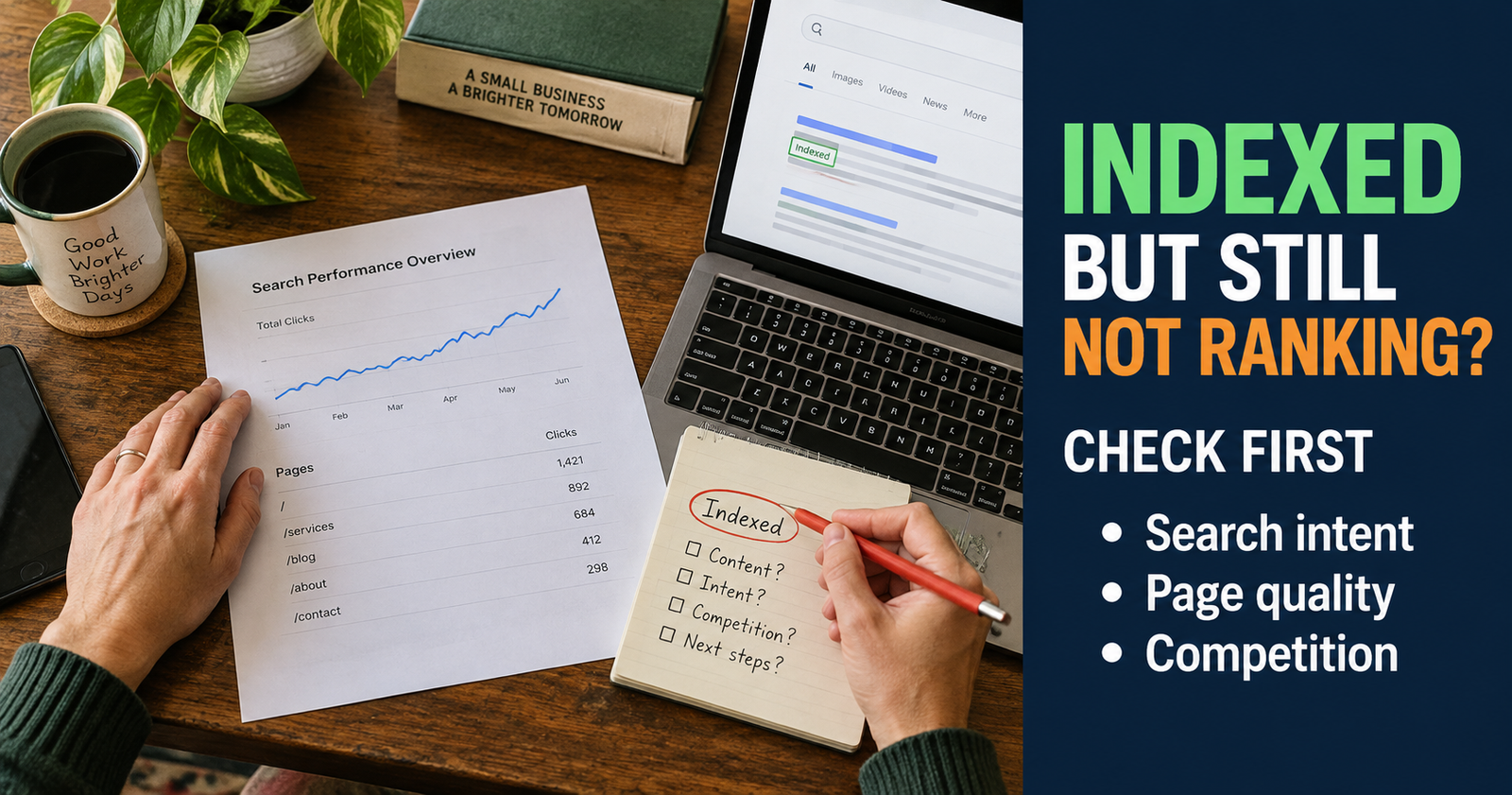
When you understand this journey, you can plan content that earns its place. A beginner does not need a post about advanced log-file analysis before they understand indexing. They do need a plain-English explanation of why an indexed page may still be weak, new, mismatched to the search, or competing against stronger results. The article on what to check when a page is indexed but not ranking answers that moment.
Go deeper by adding judgment, not padding
A longer article is not automatically a better article. Google explicitly says there is no preferred word count, and adding material just to look comprehensive can make a page less useful.
Depth comes from helping the reader make better decisions.
Instead of merely defining internal links, explain where a link belongs and why. Instead of saying “write quality content,” explain what information the current search results leave out and what a beginner still needs after reading them. Instead of saying “be patient,” explain what signs show that a new page is starting to earn visibility. For sites with a large content library, tools for finding internal-link opportunities can make that contextual linking work easier to review.
Here are a few ways to add real depth:
- Explain the tradeoff, not just the tactic.
- Name the common mistake before the reader makes it.
- Give a simple test for deciding what to do next.
- Separate what is known from what is an educated judgment.
- Tell the reader when not to do something.
- Connect the advice to the practical situation that caused them to search.
That is how an article becomes memorable instead of merely longer.
Do not create separate posts for tiny wording differences
One of the fastest ways to weaken a small site is to turn every keyword variation into a separate article.
For example, these may be one article, not three:
- How long does SEO take for a new website?
- How long does it take to rank on Google?
- When will my new website get traffic?
The wording is different, but the likely searcher has the same core concern: “I have started working on SEO. When should I expect to see movement, and what should I do while I wait?”
One strong article can answer that question much better than three thin pages that repeat one another.
Separate pages make sense when the reader needs a different answer. “Why is my website not showing up on Google?” is a troubleshooting question. “How long does SEO take?” is an expectations question. They can link to each other, but they should not be forced together.
The easiest test is to look at the page you would write. If the outline, examples, and practical next steps would be almost identical, you probably have one article. If the reader’s problem changes, you probably have two.
Use Search Console to find the next useful page
Once your site has enough data, Search Console is one of the best places to find genuine content gaps. It can show you the searches that produced impressions, clicks, and pages already appearing for related questions.
Do not use it as a machine that tells you to create a post for every phrase on the screen. Use it to notice patterns.
Maybe several pages receive impressions for a question you only mention in passing. Maybe readers find your beginner guide for “SEO without backlinks,” but your answer is not deep enough to satisfy that need. Maybe one article appears for many related searches, which suggests a useful supporting article could serve that section of the audience better.
The aim is to build from evidence, not chase noise. Google’s documentation explains that search performance changes can take time to show up, so give useful changes enough time before judging them. A page that has only been live for a few days does not need a complete rewrite just because it has not taken off yet.
Show your boundaries and be honest about uncertainty
Trust grows when a site is clear about what it knows and what it cannot promise.
No honest SEO article can guarantee rankings. No one can tell a new site exactly how many days it will take to rank, because competition, demand, site history, content quality, and search behavior all matter. No one can look at a keyword score from a tool and know with certainty what Google will do. That realistic approach is also reflected in the site’s approach to honest SEO advice.
But uncertainty does not mean the advice is useless.
You can still help readers make smart decisions. You can show them what to check, what usually matters first, what results are realistic to expect, and how to avoid wasting time on tactics that do not match their stage.
That kind of honesty is part of what makes a small site feel different from a content mill.
Keep the cluster maintained as it grows
Topical authority is not a publishing sprint. It is a working library.
As your site grows, some articles will become outdated, some will overlap, and some will need a clearer connection to the rest of the site. That is normal. The goal is not to preserve every sentence forever. The goal is to keep the best answer available on the page that deserves it.
Review your cluster periodically and ask:
- Does each article still have a clear, distinct job?
- Are there two pages trying to rank for the same reader question?
- Are important supporting pages linked from the broad guides where readers would need them?
- Does an older article need a substantial update, a merge, or simply a better title and introduction?
- Is there a real reader question the cluster still does not answer?

The article on updating old posts versus writing new ones can help with that last decision. A site becomes more trustworthy when it improves useful work instead of endlessly adding new pages to an already messy pile.
The practical standard to use before publishing
Before you hit publish, do not ask only, “Can this rank?”
Ask these questions instead:
- Would the right reader understand the article’s promise before they begin?
- Does the page answer the main question completely enough that they do not immediately need to search again?
- Does it add something useful beyond a generic definition or copied advice?
- Does it lead naturally to another helpful page when the reader needs one?
- Does it strengthen the site’s main purpose instead of pulling it in a random direction?
- Could you explain in one sentence why this page exists separately from every other page on the site?
That is topical authority in practice. Not more pages for the sake of more pages. A growing collection of answers that make sense together, help a specific audience, and give people a reason to come back when the next question comes up.
Frequently asked questions
Is topical authority a Google ranking factor?
Google does not provide a single, public topical-authority metric or say that a certain number of articles creates authority. The useful takeaway is that Google’s guidance emphasizes helpful, reliable content, clear expertise, and a site with a primary purpose or focus. Building a focused, connected set of genuinely useful pages supports those goals.
How many articles do I need to build topical authority?
There is no fixed number. Ten distinct, useful articles that thoroughly help the same audience can be more valuable than 100 shallow articles. Start by covering the most important questions in one clear topic area, then add pages because readers need them.
Can a new website build topical authority?
Yes. A new site does not need to wait for years before it can become useful. Start with a focused topic, publish genuinely helpful articles that have separate jobs, connect them naturally, and keep improving the pages that matter. It may take time for search visibility to grow, but the work is worthwhile from the beginning.
Do internal links create topical authority by themselves?
No. Internal links cannot make weak or repetitive content authoritative. They help readers and search engines understand the relationship between useful pages. The content still has to deserve attention on its own.
Should I only write about one topic forever?
No. You can expand over time, especially into closely related topics that help the same audience. The key is to expand with a reason. A new category should fit the site’s purpose instead of being added only because a keyword looks popular.
Alden Whitaker writes practical, plain-English SEO guides for Make It Found that help small website owners understand what to work on, why it matters, and what can wait.