
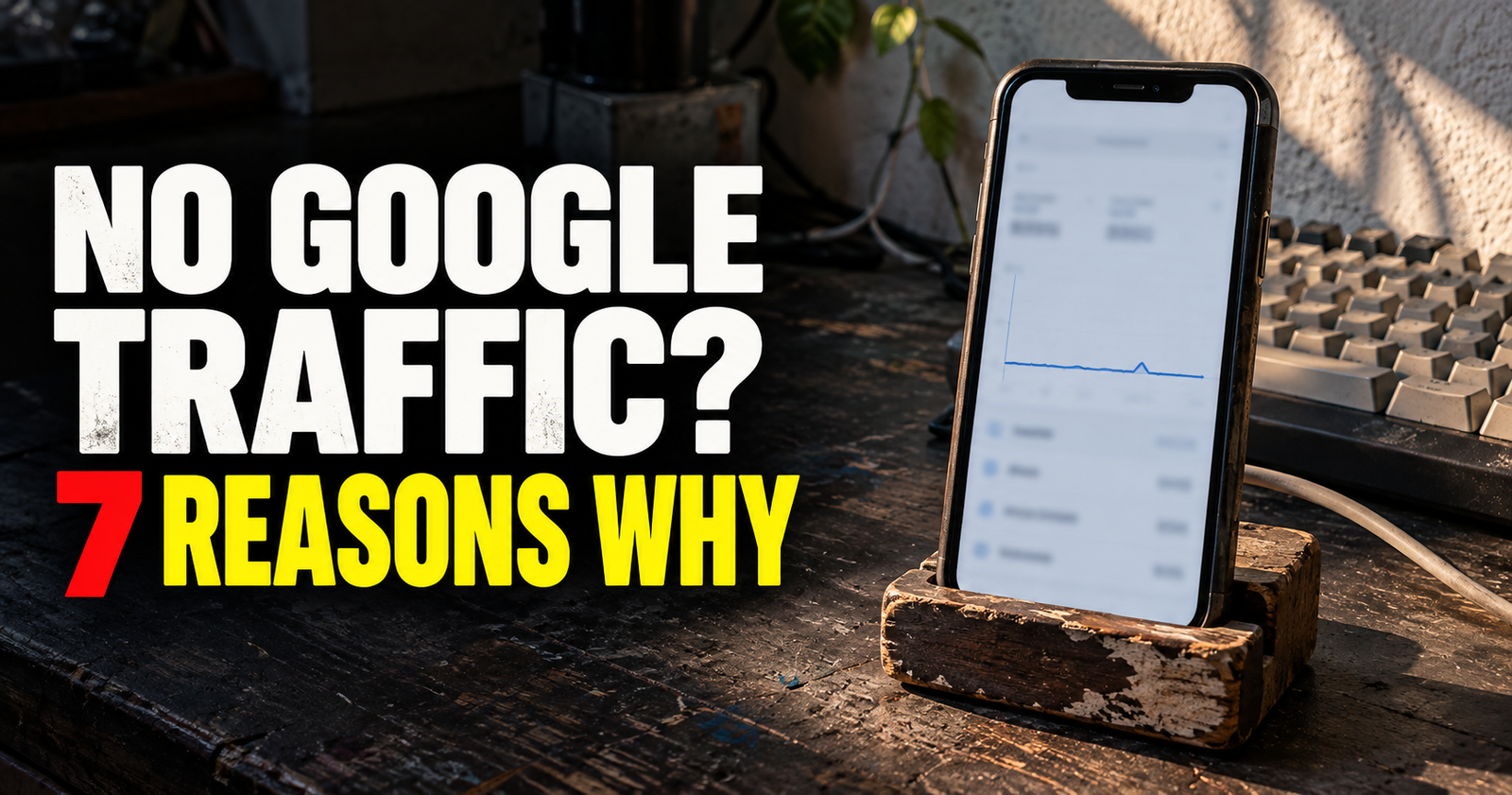
Your first 100 visitors from Google rarely arrive because one article suddenly goes viral.
They usually show up slowly. A few clicks from one page. A handful from another. A new article begins earning impressions. An older article gets its first click after sitting quietly for weeks. Then, if the site is built with purpose, those little signs begin to connect.
That is the part people miss when they are starting out. Google traffic is not usually a switch that flips. It is proof that your website is becoming useful enough, clear enough, and connected enough for Google to put it in front of real people.
If I were starting from zero, I would not chase a huge traffic number first. I would aim for the first 100 search visitors because it forces you to build the habits that keep working after the milestone is gone.
What the first 100 visitors actually tells you
One hundred Google visitors is not a finish line. It is evidence.
It tells you that at least some pages are being found, shown for relevant searches, and chosen by real people. You are no longer guessing whether your content can reach anyone.
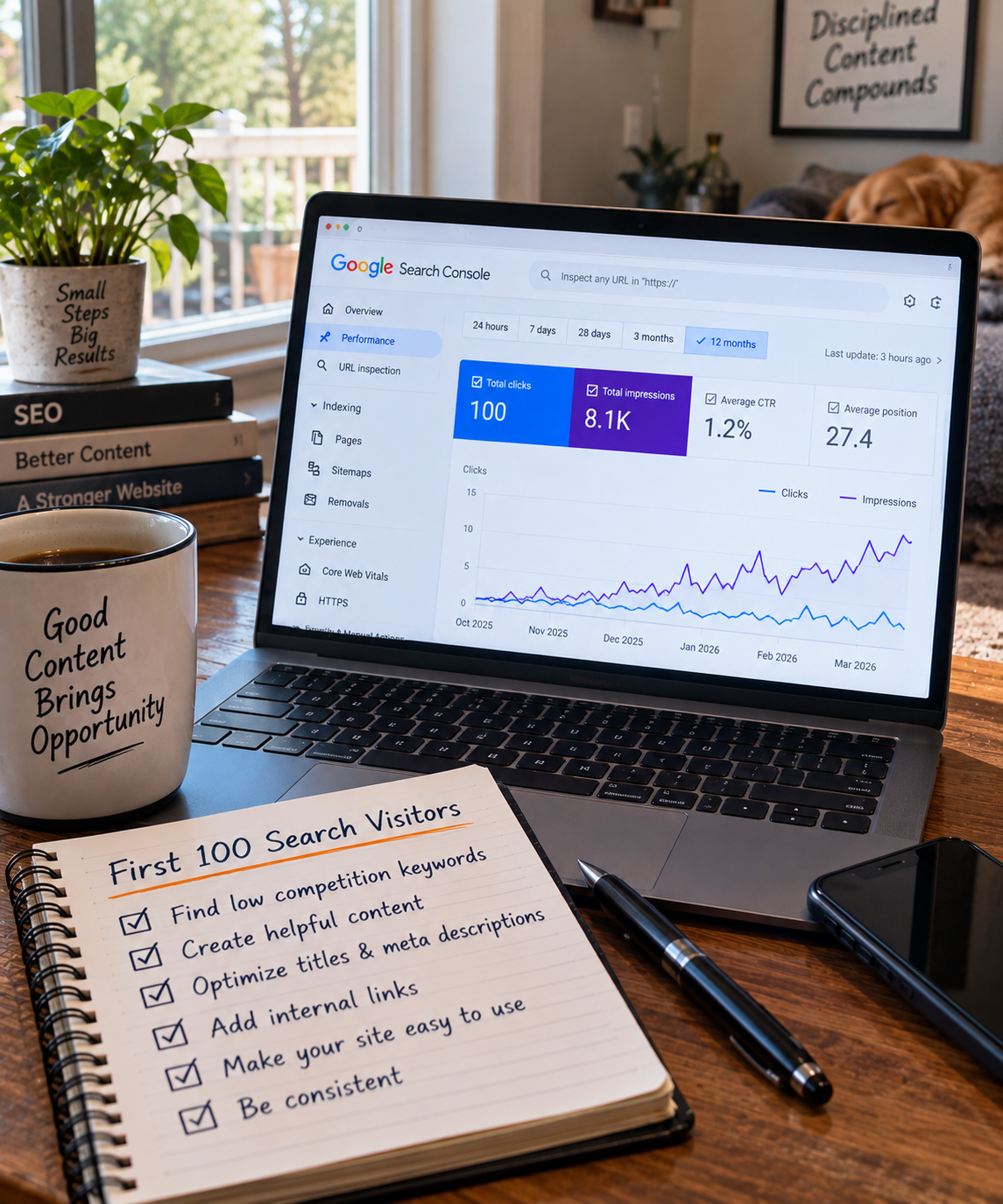
That does not mean every page is ranking. It does not mean you should stop improving the site. It means you have something more valuable than a theory: actual search behavior to study.
At that point, you can see:
- Which topics Google understands your site covers.
- Which pages are earning impressions.
- Which queries are beginning to bring clicks.
- Which titles are convincing people to choose your result.
- Which content deserves more support.
The first 100 visitors are not about bragging rights. They are your first useful set of clues.
Do not begin with “How do I get traffic?”
Start with “Who am I trying to help?”
That sounds less exciting, but it changes everything.

A site about “SEO tips” is too vague to guide content decisions. A site helping new website owners understand why they are not showing up in Google is much clearer. A site helping small businesses improve their local service pages is clearer. A site helping beginner gardeners grow tomatoes in hot summers is clearer. The broader principles behind choosing a clear site focus are covered in this beginner SEO site guidance.
The clearer the problem, the easier it is to choose topics that work together.
Before writing, I would be able to finish this sentence:
“My website helps this kind of person solve this kind of problem.”
If the answer keeps changing from article to article, the site will feel scattered. If the answer stays consistent, your first few pages begin reinforcing each other.


Pick topics people can actually find you for
New websites usually do not win their first traffic from the broadest possible keyword.
Trying to rank a brand-new page for “SEO,” “best credit cards,” “home insurance,” or “weight loss” is like opening a small booth at a giant convention and expecting everyone to skip the huge displays.
Your early opportunity is usually a specific question with a clear need.
Instead of “SEO,” think:
- Why is my new website not showing up on Google?
- Can a new website rank without backlinks?
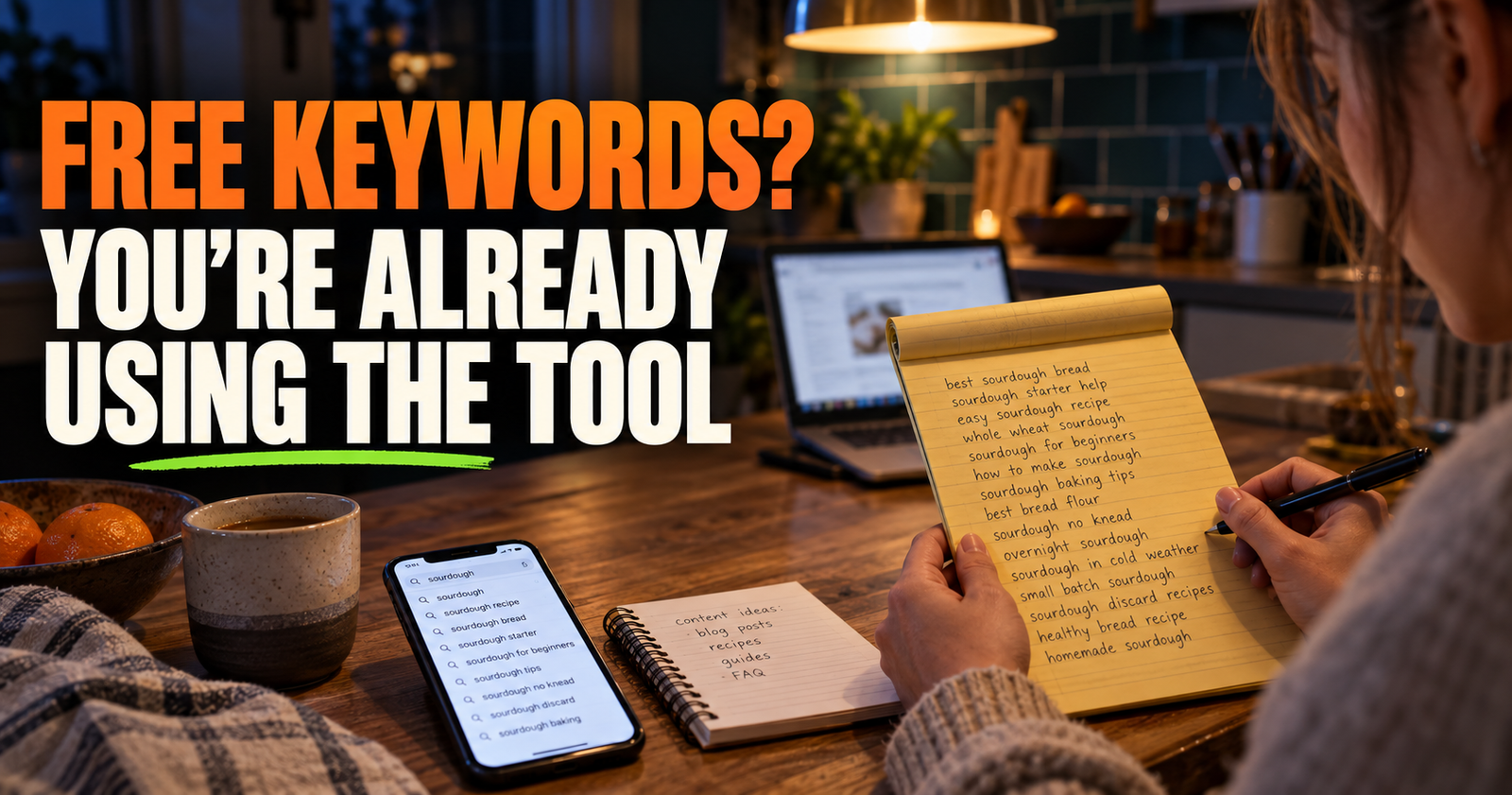
- How do I find keywords without paying for tools?
- What does indexed but not ranking mean?
Those searches may be smaller, but they are easier to answer precisely. They also connect naturally into a useful group of content.
The point is not to find a keyword with no competition at all. The point is to find a question you can answer better and more clearly than the pages already available.
Build a small group of related pages, not a pile of posts
One good article can earn traffic. A connected group of articles gives that article support.
If you publish an article about finding keywords, it makes sense to follow it with articles about search intent, keyword competition, content planning, and how long SEO takes. A reader who needs one answer often needs the next answer too. For readers starting with keyword selection, ranking a new website is a useful next step before building out the supporting articles.
That relationship matters.
I would rather publish six connected articles than twenty random posts. The connected group gives readers a path, gives you natural internal-link opportunities, and helps establish what your site is trying to be useful for.
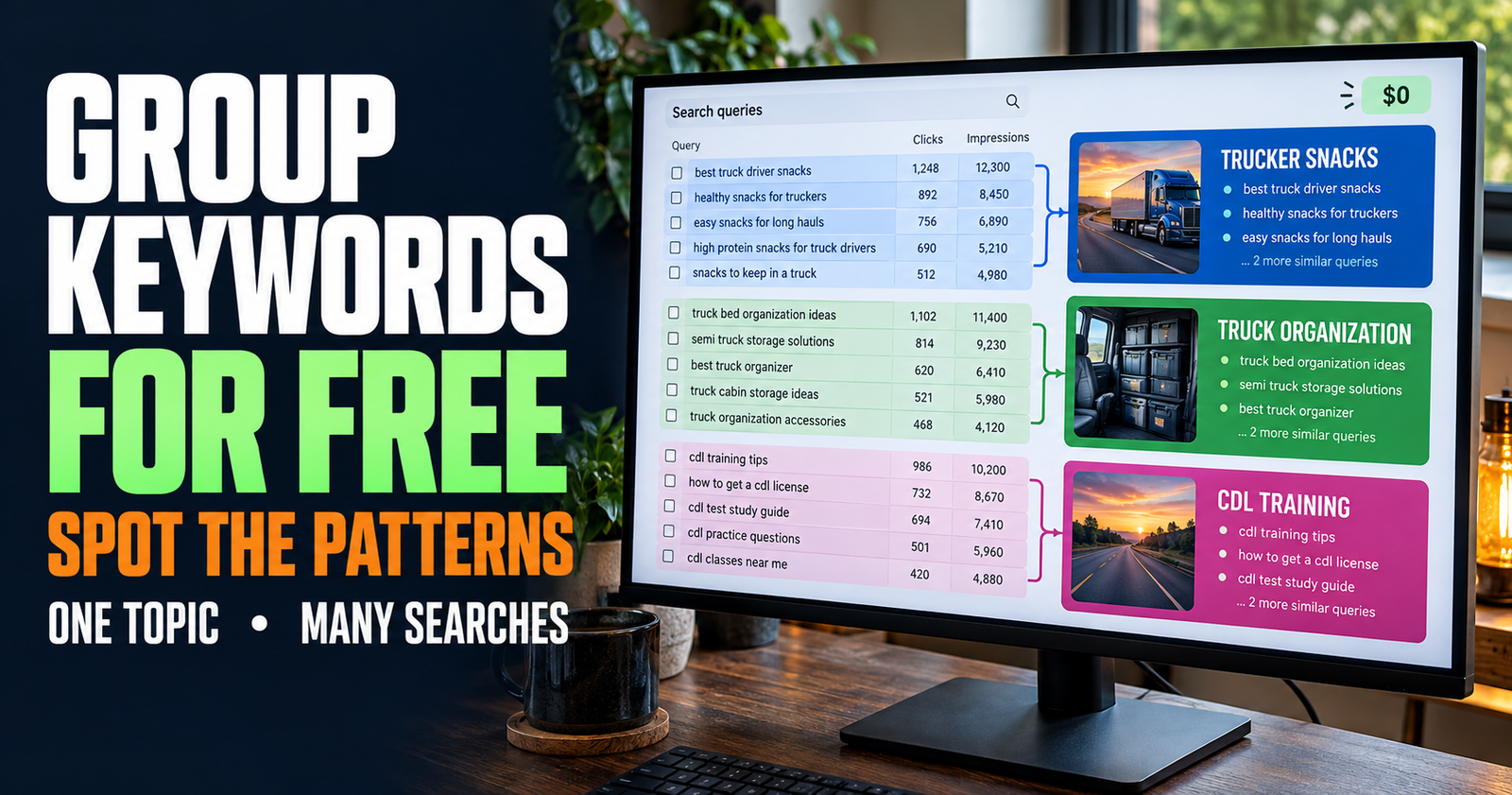
Building an SEO content cluster for a new website does not mean writing the same article six different ways. It means covering the related decisions a reader makes while solving one larger problem.

Give each article one clear job
Before you write a post, define the one question it owns.
For example:
An article about search intent explains what the searcher wants and how to recognize it.
An article about keyword competition helps someone decide whether a topic is realistic for a newer site.
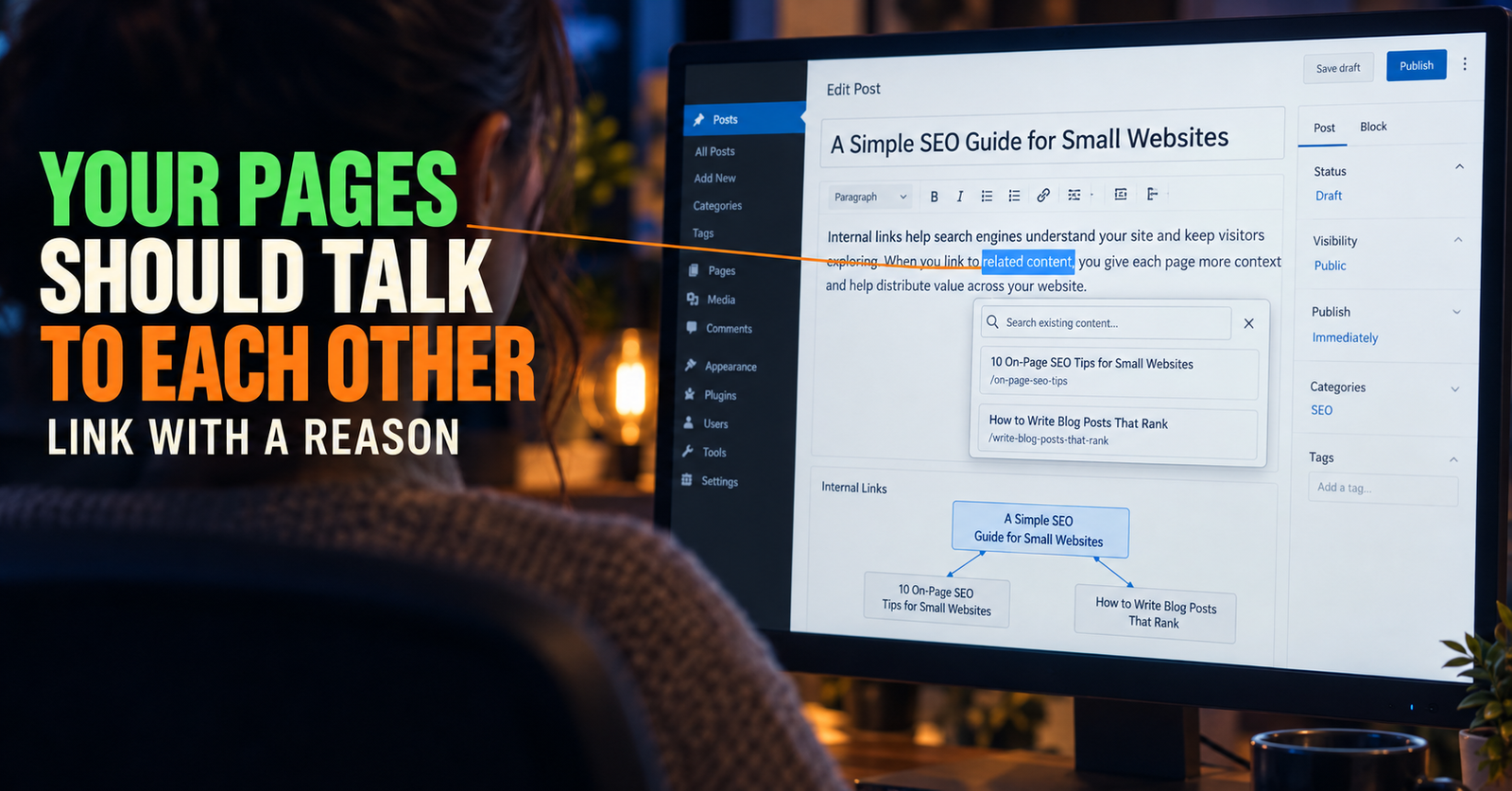
An article about internal links explains how related pages should connect.
Those are related topics, but they are not duplicates.
This protects you from a common beginner mistake: creating several articles that all promise “how to get more traffic” but answer the question only a little differently. When pages overlap too much, readers get confused and search engines can have a harder time deciding which page should be the main answer.
A clear job also makes the writing better. You are no longer trying to cover every SEO question in one page.
Make the opening earn its place
The first few paragraphs need to confirm that the reader found the right page.
Do not begin with a long history lesson. Do not spend three paragraphs defining a term the reader already searched for. Answer the immediate question, explain why it happens, and show what the article will help them do.
If someone searches “why is my new website not showing up on Google,” they are probably worried the site is broken. The opening should tell them that new sites often take time to be discovered, but they should also check indexing, crawlability, and whether the page gives Google a clear reason to show it.
That is a useful beginning because it meets the reader where they are.
A strong opening does not need to be flashy. It needs to remove uncertainty.
Make the page easier to read than the pages around it
A useful page can still lose readers if it feels like a wall of text.
Most people reading search results are trying to solve a problem quickly. They scan first. Then they slow down when they find the section that answers what they need.
That is why I use clear headings, short paragraphs, meaningful examples, and numbered steps when the reader needs a process.
Skimmable does not mean shallow.
It means someone can quickly find the part about indexing, titles, click-through rate, or internal links without digging through a thousand words of throat-clearing.
The deeper explanation is still there when they need it. It is just organized like someone wants to be helped, not like someone wants to prove they know big words.
Do the basic on-page work without obsessing over it
You do not need an elaborate SEO plugin score to publish a good article.
For each page, I would make sure the basics are in place:
- A title that clearly matches the question.
- A URL that is short and understandable.
- A direct opening that answers the problem.
- Clear headings that organize the real subquestions.
- A helpful meta description that explains why the page is worth opening.
- A few relevant internal links.
- Images that support the article instead of filling space.
- A page that is easy to read on a phone.
That is enough to put your energy where it matters: making the answer genuinely useful.
I do not write for a plugin light turning green. I write so the person who arrives from Google does not feel like they need to keep searching.

Get indexed before worrying about rankings
A page cannot earn Google traffic if Google has not found or indexed it.
After publishing, make sure the page is available to crawl, included in your sitemap when appropriate, and not accidentally blocked or set to noindex. You can inspect the URL in Google Search Console if you need to check whether Google knows about it.
Then give it time.
New pages may not appear immediately. A new domain may take longer to earn consistent visibility. That is normal, and it is not a reason to assume the article failed after two days.
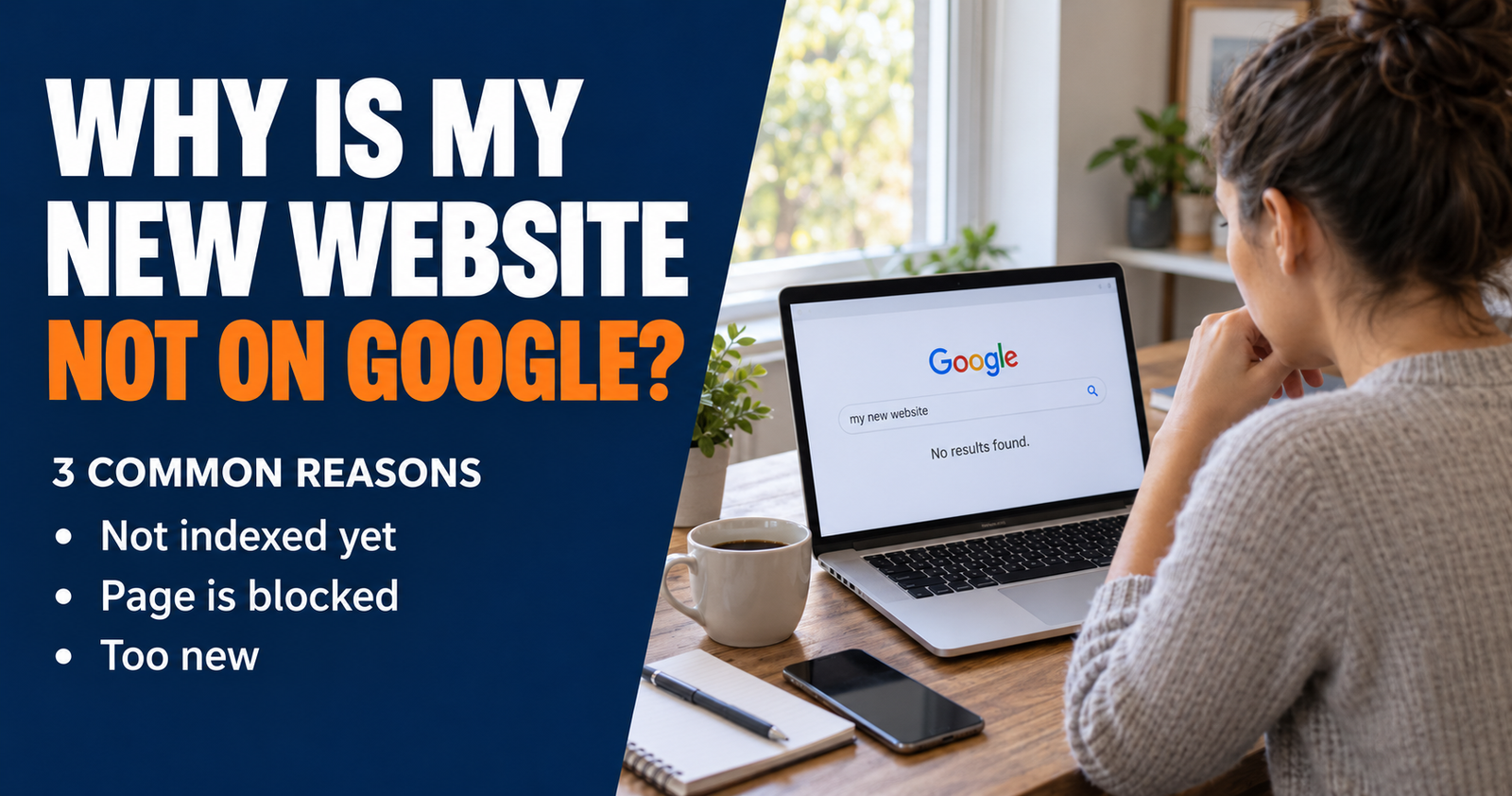
If your site is still invisible, this guide on why a new website may not be showing up in Google walks through the difference between an indexing problem and the normal waiting period before a page starts earning impressions.
Internal links are how you stop good pages from getting buried
A new article should not be published and left alone.
When I publish a new page, I look for older articles where the new page is genuinely the next helpful step. Then I add a natural link inside the relevant section.
For example, a guide about finding keywords can point readers toward a page about judging keyword competition. A guide about content clusters can point readers to a page about using internal links. A page about Google Search Console impressions can naturally lead into a page about impressions with no clicks.
That gives readers more help, but it also makes your site easier to navigate.
You do not need to force ten links into every article. You need the right links, placed where the reader is likely to need them.

A page with no meaningful route from the rest of your site can become an orphan page, even if the content itself is strong. That is one reason orphan pages are worth checking as a small site grows.
Use Search Console as soon as you have data
Search Console becomes useful long before your site is getting huge traffic.
At first, the numbers may be small. That is okay. You are looking for signals.
Open the Performance report and pay attention to:
- Pages beginning to earn impressions.
- Queries that are close to your intended topic.
- Pages with impressions but very few clicks.
- Queries where you appear on page two or three.
- Unexpected searches that reveal what Google thinks a page is about.
These early signals can help you make better decisions than a generic keyword list ever could.
For example, an article may begin showing for several related long-tail questions you did not put in the headline. If those questions genuinely fit the article, you may be able to improve a section or heading to answer them more clearly.
That is not keyword stuffing. It is paying attention to the people Google is already trying to connect with your page.
Do not confuse impressions with visitors
A page can have lots of impressions and no clicks. It can also get a few clicks from surprisingly few impressions.
Impressions mean your result appeared. Clicks mean someone chose it. Both matter, but they tell different parts of the story.

If you are getting impressions but no clicks, do not immediately assume your content is bad. Check the query, average position, search intent, and the results sitting above you. Your page may be too low to be noticed, it may have a vague title, or it may be appearing for searches that do not quite match. A useful next step is to evaluate a search result’s CTR using those same pieces of context.
The goal is not to force a click. The goal is to make the page the clearest honest choice for the right searcher.
Improve the pages that are already close
Your first 100 visitors often come from pages that are already showing signs of life.
A page with 300 impressions and three clicks may be a better opportunity than a brand-new page with zero impressions. It has already told you Google sees some relevance.
I would review that page carefully.
Does the title make a specific promise? Does the first section fulfill it? Are there obvious questions missing from the article? Is the information stale? Does the page have enough internal support from related posts?
A thoughtful update to a page that is already close can be more valuable than publishing another random article.
The key is to improve the existing page rather than create a second page that answers nearly the same question. If you keep adding similar posts instead of strengthening the first one, you can create your own competition.
Do not make every decision based on the biggest keyword
A huge keyword can be tempting because the search volume looks exciting.
But the first 100 visitors often come from smaller, clearer questions. Those visitors can be more valuable too, because they are more likely to find exactly what they needed.
A person who searches a detailed question has already told you what kind of help they want. Your job is to answer it fully.
This is where smaller sites can compete. You may not outrank a giant brand for a broad head term right away, but you can become a better answer for a specific problem the giant brand barely addresses.
That is a real path to early traffic. It is not a shortcut, but it is a path you can actually walk.
What not to do while you are waiting
The waiting period is where a lot of good websites get wrecked by impatience.
I would not do these things:
- Rewrite the same title every few days.
- Publish five near-identical articles around one keyword variation.
- Buy spammy backlinks.
- Add links to unrelated pages just to increase the link count.
- Delete a new article because it has not ranked after a week.
- Chase every Search Console fluctuation like it is an emergency.
- Stuff exact-match keywords into every heading.
None of that creates the kind of site people trust. It usually creates a mess that needs fixing later.
A realistic first-100-visitor plan
If I wanted to build the first 100 Google visitors as a new website owner, this is the order I would use:
- Define one clear problem the site will help solve.
- Plan a small group of related articles around that problem.
- Publish the main guide and several focused supporting posts.
- Make each page useful, readable, and direct.
- Add internal links as the content group grows.
- Check that pages are indexed and crawlable.
- Use Search Console to watch for impressions, queries, and early clicks.
- Improve the pages already showing relevant signs of life.
- Keep publishing connected articles instead of chasing unrelated topics.
- Give the work enough time to compound.
The first 100 visitors may arrive in a trickle. That is fine. The goal is to build a site where the next 100 are easier than the first.
How to know you are moving in the right direction
Early progress does not always look like a big traffic graph.
Sometimes it looks like an article receiving its first few impressions. A page moves from position 70 to position 28. A title change earns a handful of clicks. One article starts bringing readers into a group of related posts.
Those are real signs.
Keep your attention on the direction of the site, not the drama of any single day. A useful page, a clear topic, and a well-connected structure are not exciting shortcuts. They are the work that gives a small website something solid to grow from.
Alden Whitaker writes practical, plain-English SEO guides for Make It Found that help small website owners make smarter content decisions without getting lost in agency jargon.