

A good click-through rate in Google Search Console is not one magic percentage.
Anyone who tells you that every page should get a 5%, 10%, or 20% CTR is leaving out the part that matters most: where the page ranks and what the search results look like around it.
A page in the first organic position can earn a much higher percentage of clicks than a page in position eight. A page under four ads, a map pack, shopping listings, a featured snippet, and a video carousel may get fewer clicks even when it ranks reasonably well.
That is why I do not look at CTR as a grade. I use it as a clue.
What click-through rate means in Search Console
Click-through rate, usually called CTR, is the percentage of impressions that turned into clicks.
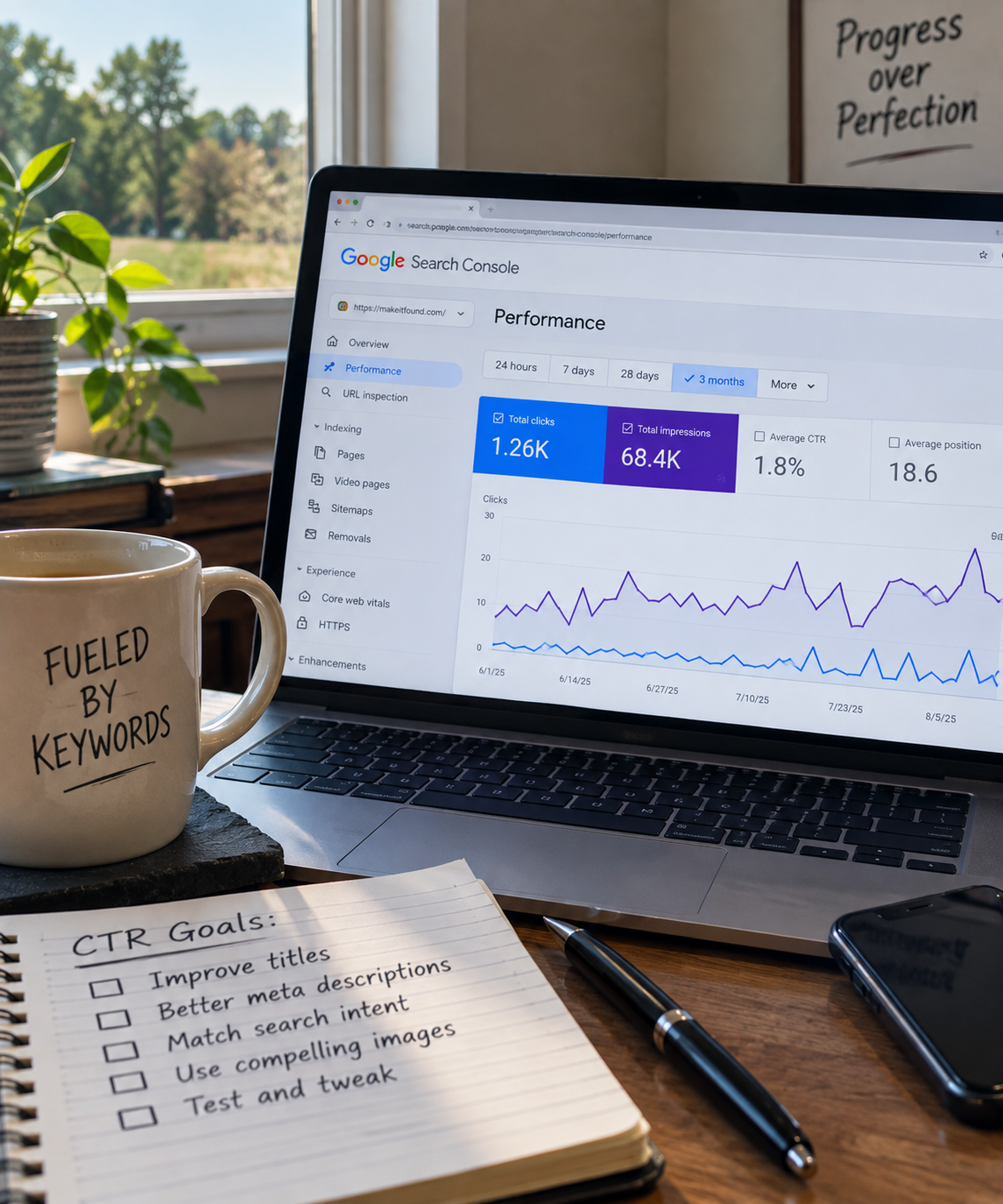
The formula is simple:
Clicks ÷ impressions × 100 = CTR
If your page appeared 100 times and received five clicks, its CTR is 5%.
That does not automatically tell you whether the page is doing well. To understand that number, you need to know what search terms created the impressions, where the page appeared, and what the searcher saw before they reached your result.

If you are new to the metric itself, Google Search Console impressions are the first number to understand. CTR only makes sense once you understand that an impression is not the same thing as a person seeing and considering your result.
The honest answer to “What is a good CTR?”
A good CTR is one that makes sense for your average position, search intent, and search-results page.
That may sound less exciting than a universal benchmark, but it is much more useful.
A page ranking near the top with 2% CTR may deserve a closer look. A page ranking around position 12 with 2% CTR may be doing just fine. A page with a 25% CTR on only four impressions is not enough data to celebrate or make decisions around.
The strongest comparison is usually your own page over time.
If a page used to get 3% CTR and now gets 6% while appearing for the same kinds of searches, that is meaningful. If a page gets 1% CTR but sits in a crowded result at an average position of 27, the number is not the first problem I would fix.


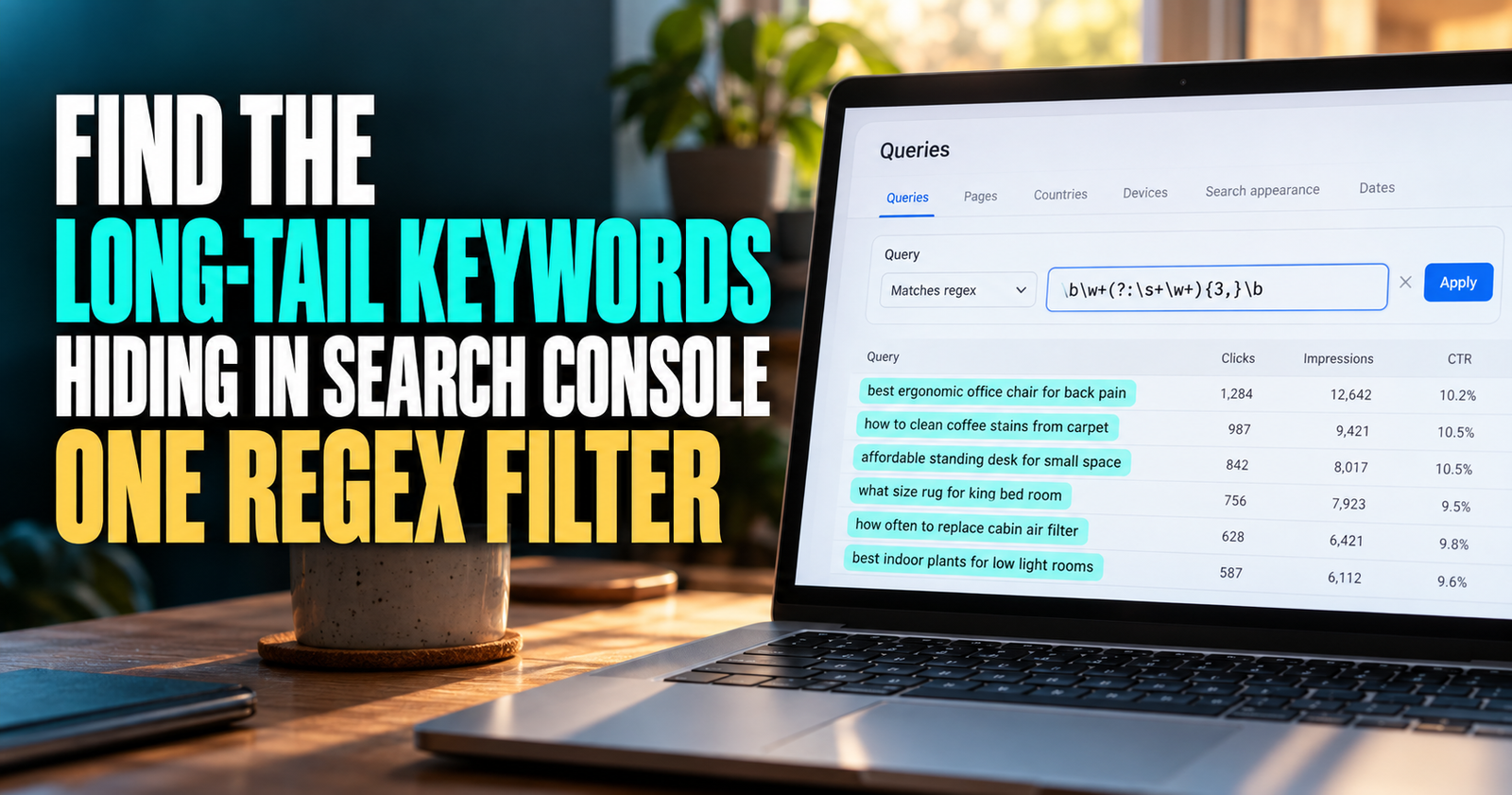
Position changes CTR more than most people realize
Searchers do not read every result on the page. Most clicks go to the results that are visible quickly and seem to answer the question best.
A result at the top has an enormous advantage. That is true even before you factor in ads and special search features.
This is why a low CTR often does not mean your title is bad. It may simply mean the page is not visible enough yet.
Before rewriting anything, open Search Console and check:
- The exact query.
- The page’s average position for that query.
- The number of impressions.
- Whether the position has been improving or falling.
- Whether the search results are crowded with features above the normal listings.
A page with low clicks and low average position needs stronger overall relevance before it needs cleverer wording.
Why the same CTR can be good for one page and bad for another
Imagine two pages:
Page A ranks around position 2 for a clear question and earns a 2% CTR.
Page B ranks around position 25 for a broad question and earns a 2% CTR.
Those are not the same situation.
Page A is close enough to earn attention. Its title, snippet, intent match, or search-result competition may be holding it back.
Page B is being shown but is not yet near enough to the top for many searchers to choose it. Improving the page may help, but a new title alone is unlikely to suddenly create a flood of clicks.
Always compare CTR with position. Separating those two numbers is how people end up making the wrong changes.


Search intent affects CTR too
The title can be clear and still lose clicks if the page is not what the searcher wants.
Someone searching “best WordPress SEO plugin” may want comparisons, pricing, screenshots, pros and cons, and current recommendations. Someone searching “how to add internal links in WordPress” may want a straightforward process.
If your result promises one thing while the searcher wants another, the click will go elsewhere.
That is why I check the actual searches behind a page before making changes. A page that shows up for the wrong terms may have low CTR because it should not be trying to win those terms in the first place.

Search intent is the difference between using the right words and answering the right question.
When a low CTR is worth fixing
I would look closer when a page has all three of these signs:
- It has a meaningful amount of impressions.
- It ranks relatively close to the top results.
- It is showing for queries the article genuinely answers.
That is where a better title, stronger page promise, or more useful opening can make a real difference.
For example, “SEO Tips for Beginners” is vague. “DIY SEO for Beginners Who Want to Get Found Online” tells a reader who the page is for and what problem it helps solve.
The goal is not clickbait. The goal is giving the right reader a clear reason to choose you.
When you should leave CTR alone
Do not make changes just because the percentage feels low.
Leave it alone for now when:
- The page has very few impressions.
- The page ranks far down the results.
- The search terms are not a close match.
- The page is new and Google is still testing where it belongs.
- The impressions come from a crowded results page where organic listings are pushed down.
Early data is noisy. A page with ten impressions and no clicks has not told you much yet.
How to improve CTR without making your titles cheesy
The best titles make a specific, honest promise.
They usually work because they do one or more of these things:
- Name the real problem.
- Make the intended reader obvious.
- Show that the page answers a practical question.
- Add useful context without stuffing extra keywords.
- Match the wording people use when they search.
Avoid titles that sound inflated, vague, or panicked. “You Won’t Believe This SEO Secret” may get attention in a social feed, but it does not build trust in Google search results.
A good title should make someone think, “That looks like exactly what I need.”


Your meta description can help, but it is not fully under your control
A well-written meta description gives Google useful text to consider for the search snippet. But Google may show a different part of the page if it thinks that better matches the search.
That means your title and opening paragraphs matter just as much.
I still write a useful meta description because it helps clarify the page’s promise. I just do not pretend it is a guaranteed advertisement that Google will always display.
Check the whole search result before changing your page
Search the query yourself before deciding your CTR is terrible.
Look for:
- Ads.
- Local map results.
- Shopping cards.
- Featured snippets.
- Video blocks.
- “People also ask” boxes.
- Large brands with strong title recognition.
Sometimes a lower CTR is simply the reality of that search-results page. You can still improve the page, but you should not blame yourself for a number without seeing the competition for the click.
What I would change first
If a page has relevant impressions, decent positions, and weak CTR, I would start small:
- Rewrite the title so the outcome is clearer.
- Make sure the opening answers the searcher’s question immediately.
- Tighten the meta description around the page’s real benefit.
- Add missing information that competitors clearly cover better.
- Link to the page from closely related articles so it has stronger context on the site.
- Give Google time to recrawl and reassess the updated page.
That is a better process than changing the title every few days and hoping the number jumps.
CTR is a decision tool, not a vanity metric
A high CTR is great, but it is not the whole story.
A page can earn a strong CTR from very few impressions and still bring in little traffic. Another page can have a modest CTR on thousands of impressions and be a far more valuable traffic source.
I care more about the combination of impressions, clicks, average position, query relevance, and whether the visitor gets a genuinely helpful answer.
When you use CTR that way, it becomes a useful signal instead of another dashboard number that makes you second-guess good work.
Frequently asked questions
Is 1% CTR good in Google Search Console?
It can be. A 1% CTR may be normal for a page ranking low, appearing in a crowded results page, or receiving broad exploratory impressions. Compare it to position and query relevance before judging it.
Is a high CTR always good?
Not always. A high CTR on a very small number of impressions may not mean much. It can also signal a strong title that needs enough impressions and rankings to bring meaningful traffic.
Why did my CTR drop even though clicks stayed the same?
Impressions may have increased. If Google starts showing your page for more searches or in lower positions, CTR can fall while clicks remain steady or even rise.
How long should I wait after changing a title?
Give Google time to recrawl the page and enough time for new impressions to build. Do not judge a title change on a couple of days of data.
Alden Whitaker writes practical, plain-English SEO guides for Make It Found that help small website owners make smarter content decisions without getting lost in agency jargon.