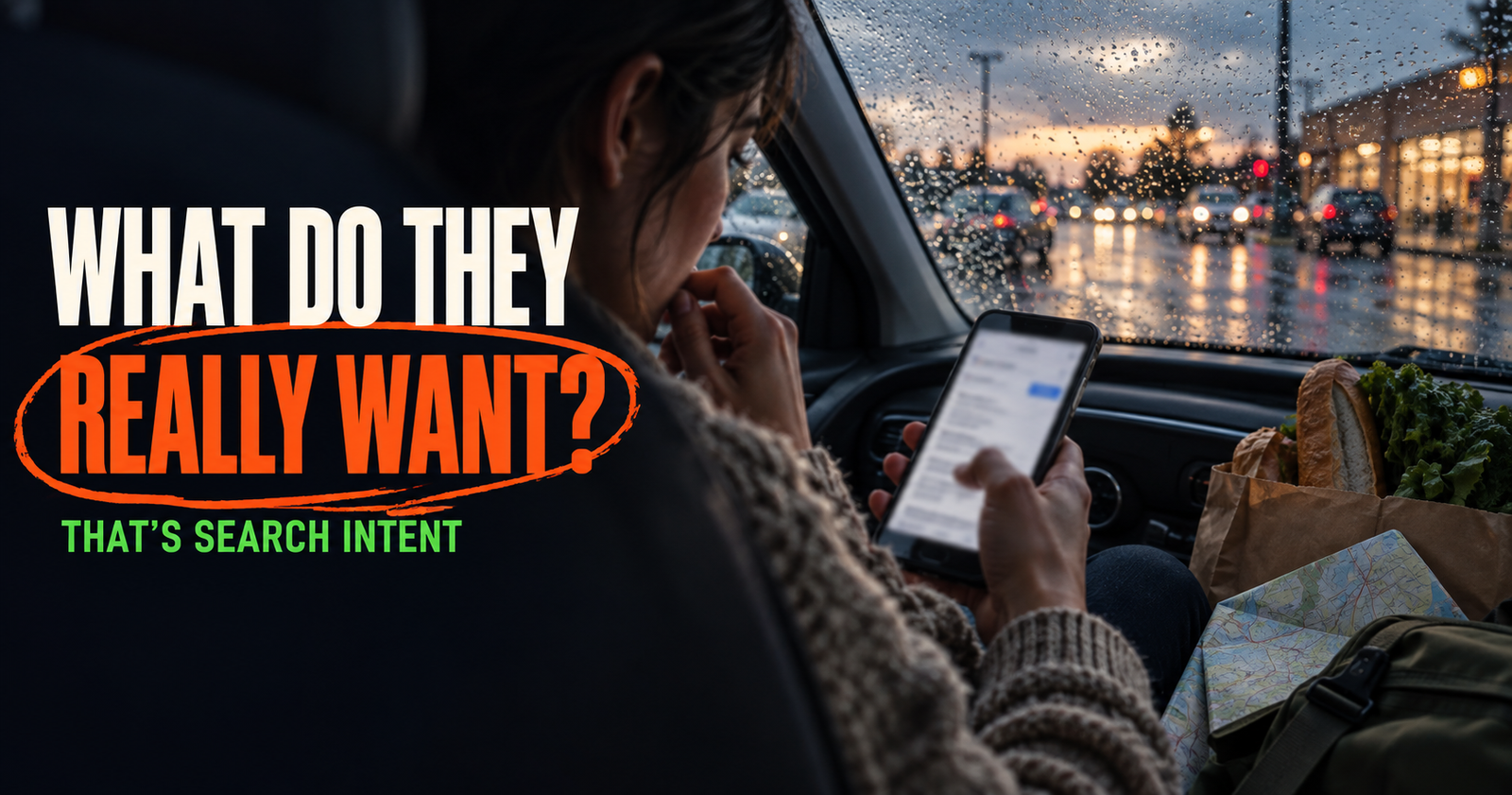
Search intent is the real reason somebody typed a phrase into Google.
It is not just the keyword. It is the job the person is trying to get done.
That difference is bigger than it sounds. A page can use the right words, have a good title, be technically sound, and still struggle because it is giving the searcher the wrong kind of answer.
I see this as one of the biggest reasons small websites accidentally write good articles that never become good search results. They solve a problem, just not the problem the person had when they searched.
Search Intent Is the “Why” Behind the Search
Take the phrase “best dog food for puppies.” A puppy food selection guide can illustrate the kind of product-focused answer this searcher may expect.
The person may want product recommendations. They may want to compare ingredients. They may want affordable options. They may be worried about a sensitive stomach. They might even be standing in a store aisle and need a quick answer.
Now compare it with “how much should I feed my puppy.”
Both searches involve puppy food. But the first person is choosing a product. The second person is trying to feed the puppy correctly.
One page should not try to do both jobs halfway.
Search intent helps you decide what page to create, what the opening should promise, what information belongs on the page, and what should be saved for a separate article.
Google’s basic guidance is to create helpful content for people and use the words people use to find it. Search intent is where those two ideas come together.
Why Search Intent Matters More Than Repeating a Keyword
A keyword tells you what was typed. Search intent tells you what the person expects to find when they click.
If someone searches “how to fix a dripping faucet,” they want instructions. They are probably not looking for a page that only lists plumbers in their city.
If someone searches “plumber near me,” they usually do not want a 3,000-word DIY repair guide. They want a local business they can call.
If someone searches “best cordless drill for homeowners,” they likely want buying help. A page explaining how a drill works may be interesting, but it misses the decision they came to make.
This is why keyword stuffing does not solve ranking problems. Repeating the phrase “best cordless drill for homeowners” ten times does not turn an article into a useful comparison.
The page has to match the moment the person is in.
The Four Main Types of Search Intent
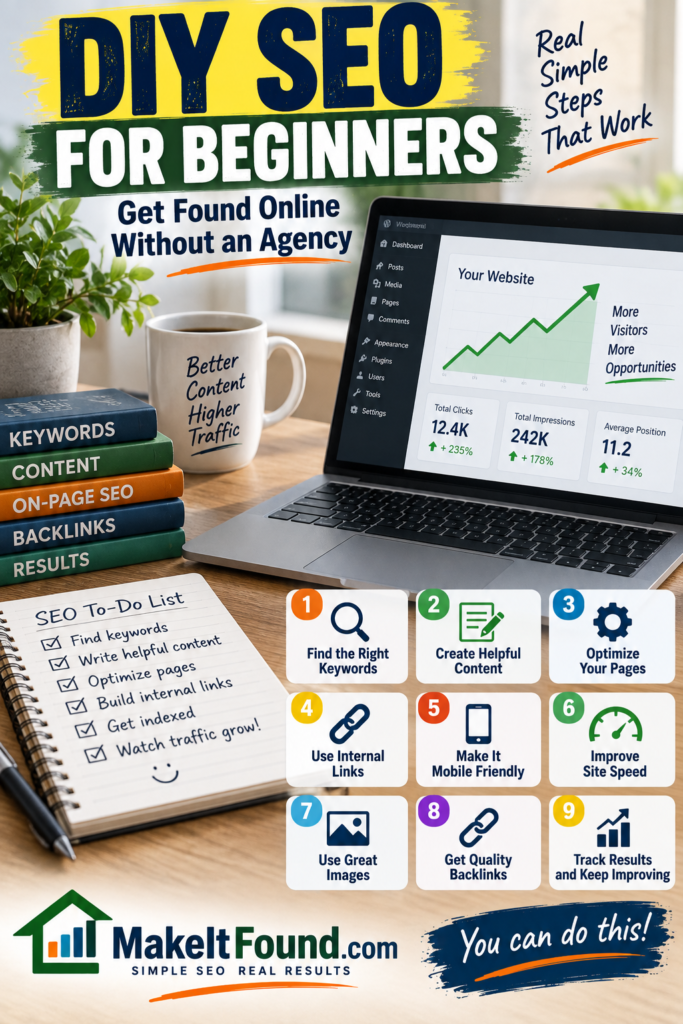
Most searches fit into one of four practical groups. They can overlap a little, but understanding these categories makes planning content much easier. The beginner SEO guide shows how these intent categories affect real page choices and examples.
Informational intent
The person wants to learn something or solve a problem.
Examples include:
- Why is my well pump running constantly?
- How long does SEO take for a new website?
- Can tomatoes recover from frost damage?
- What does a noindex tag do?
Informational pages should answer the question early, explain what is going on, and give useful next steps.
Navigational intent
The person is trying to get to a specific website, brand, account, or page.
Examples include:
- Facebook login
- YouTube Studio
- Lowe’s credit card payment
- Make It Found SEO guide
You usually cannot create a useful article to compete with a navigational search for another company. The searcher already knows where they want to go.
For your own brand, navigational searches matter because your homepage and important pages should make it clear who you are and what you offer.
Commercial investigation intent
The person is researching before choosing or buying.
Examples include:
- Best electric mouse trap
- Mailchimp vs ConvertKit
- Is a metal roof worth it?
- Best RV battery for boondocking
These searches need comparison, tradeoffs, limitations, pricing context when relevant, and help choosing. A vague list of products without explaining who each one fits is usually not enough.
Transactional intent
The person is ready to take an action, often to buy, book, download, join, or contact someone.
Examples include:
- Buy a live animal trap
- Emergency plumber near me
- Order custom engraved gifts
- Download a meal-planning template
A transactional page should make the next action easy. It should not bury the product, service, price range, location, or contact details under a long general article.
The Same Word Can Have Different Intent
This is where keyword research gets interesting.
Words like “best,” “review,” “cost,” “near me,” “how to,” “vs,” “ideas,” and “why” often hint at intent. But they do not guarantee it.
Someone searching “roof repair cost” may be trying to estimate a project, compare options, or find a contractor. Someone searching “chicken coop ideas” may want inspiration photos, free plans, or actual coops to buy.
The only dependable way to understand the intent is to look at the results Google is currently showing.
The search results are not a command telling you to copy what everybody else made. They are evidence about what people have historically found useful for that search.

How I Check Search Intent Before Writing
Before I choose a keyword, I search it in Google and look for patterns.
I pay attention to the first page, but I am not just counting who ranks. I am asking what kind of page each result is.
- Are the top results articles, product pages, local business pages, videos, forums, or tools?
- Do the titles promise instructions, comparisons, answers, pricing, or product recommendations?
- Are the results aimed at beginners, experienced people, shoppers, or local customers?
- Is there a clear problem being solved?
- What important question is the current set of results not explaining very well?
That last question is where a smaller website can find its edge.
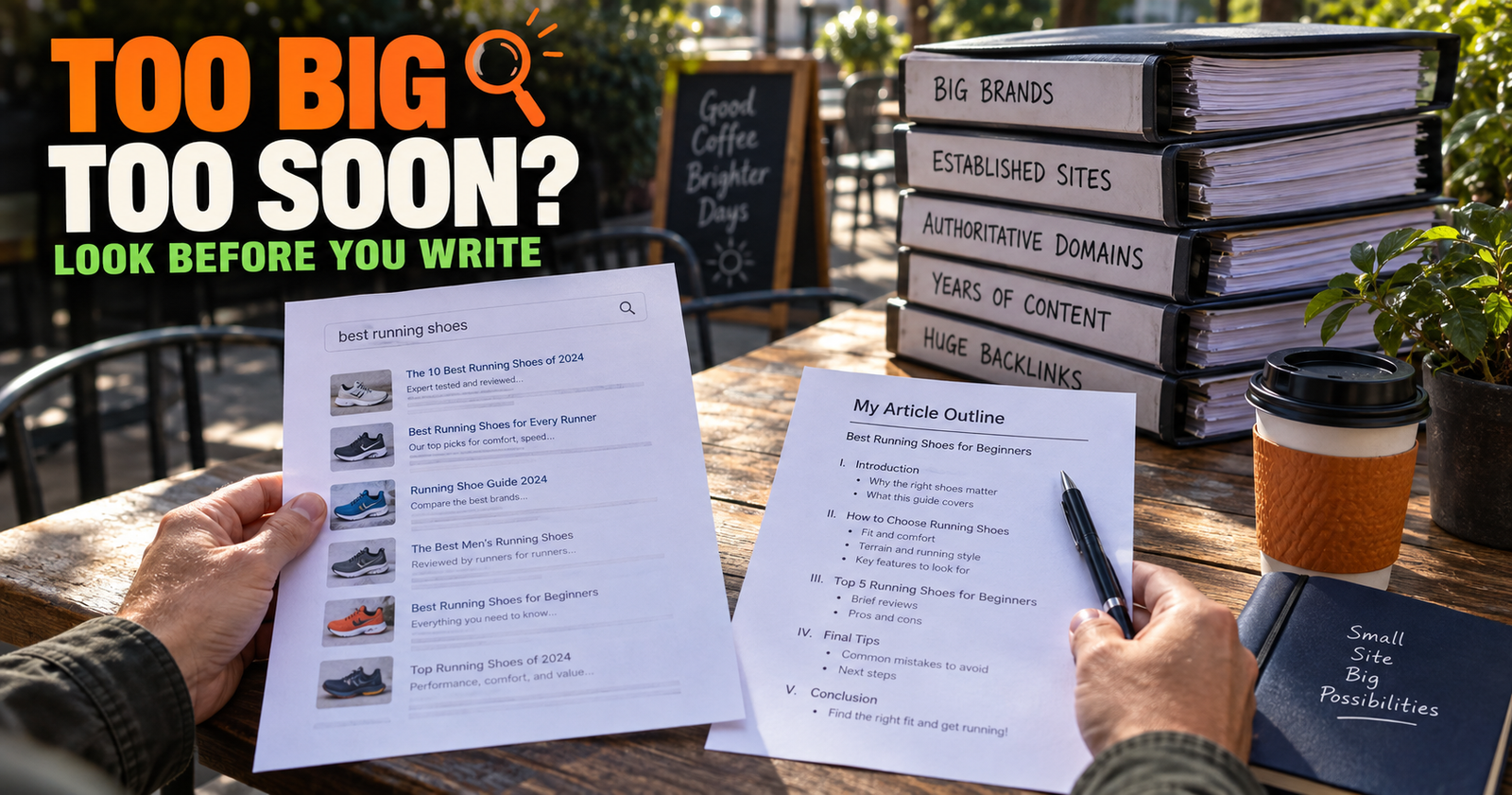
A new site may not beat a giant company by making the same broad page with fewer resources. It can still create the clearer answer for a specific person with a specific problem. That decision also requires assessing keyword competition for a new site before investing time in the topic.
Search Results Tell You What Type of Page to Build
Imagine you want to target “how to start a garden.”
If Google shows mostly beginner how-to guides, your page probably needs to be a straightforward beginner guide. It should cover location, soil, simple crops, watering, timing, and the common mistakes that make people quit after one season.
If Google showed mostly local garden-center pages, the intent might be more about finding plants and supplies nearby. A general guide would not match as well.
Now imagine the phrase “best raised garden bed.”
If the results are mostly comparisons, buying guides, and product pages, a general article about building a raised bed is probably not what the searcher wants. They are trying to choose one.
A page can be excellent and still lose when it is standing in the wrong line.
Match the Page to the Searcher’s Stage
Search intent is also about timing.
A person early in the process may search “what is a pressure tank.” They are trying to understand a system.
A person farther along may search “pressure tank clicking on and off.” They likely have a problem and need troubleshooting.
A person ready to act may search “well pump repair near me.” They want help now.
These three searchers may eventually need the same business, product, or information. They do not need the same page today.
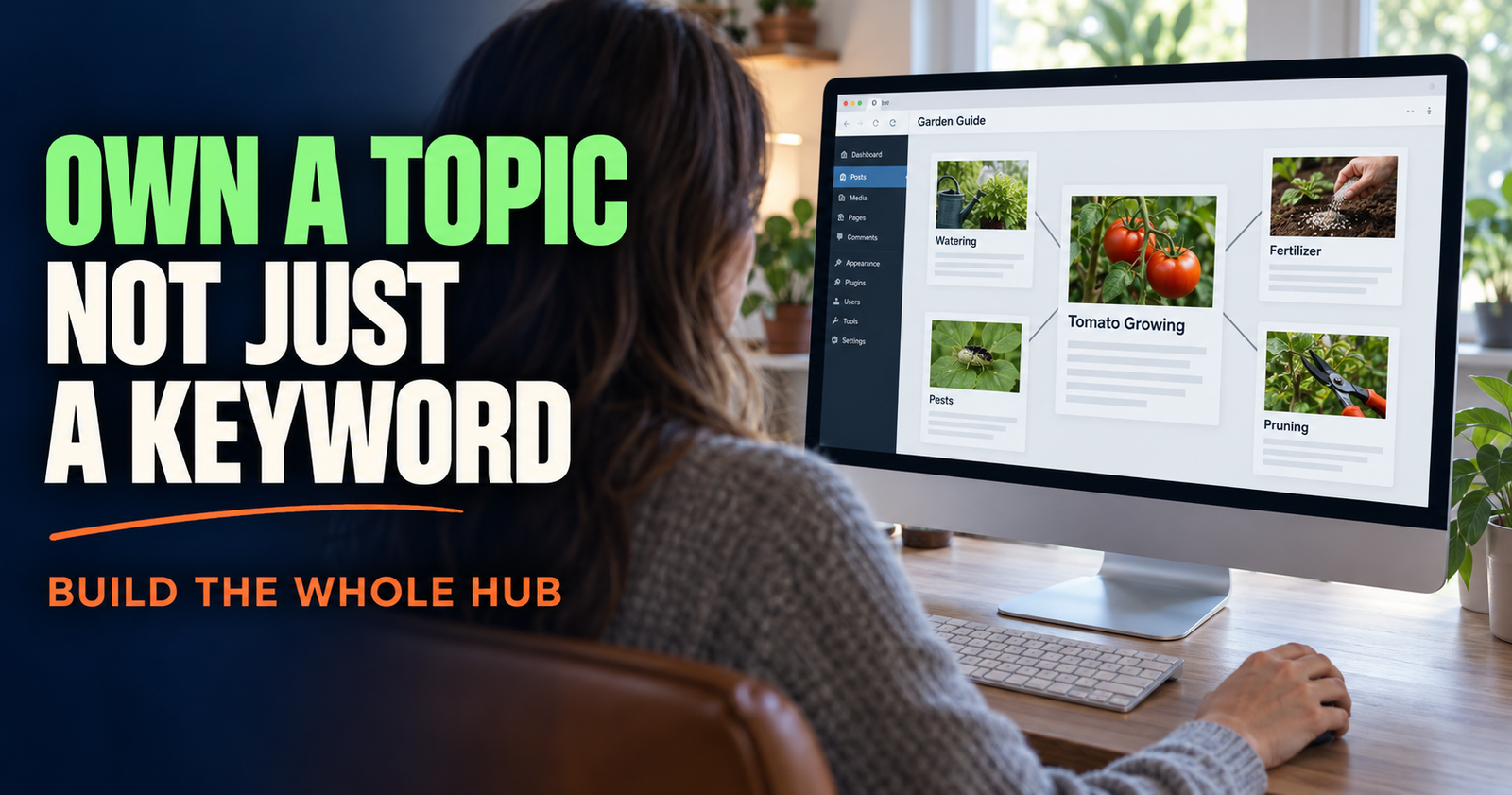
This is why a good website has different kinds of content. Broad beginner guides help people understand. Problem-solving guides help them diagnose. Comparison pages help them choose. Service or product pages help them act. Taken together, those formats can support organizing content around one audience when they serve the same audience and larger problem.
Trying to cram all four stages into one page often makes the page less helpful for everyone.
What Search Intent Looks Like for Small Businesses
Small businesses often miss opportunities because they only think about service pages.
A plumber may have pages for drain cleaning, water-heater repair, and sewer work. Those are important.
But a homeowner often begins earlier with searches like “why does my toilet keep running,” “what causes low water pressure,” or “is a dripping faucet wasting water.”
Helpful informational pages can introduce the business to people before they are ready to call. A clear local service page can then be there when they are ready to hire someone.
The important part is keeping the roles clear.
An informational article should honestly help the reader. It should not pretend every small problem requires hiring you.
A service page should make it easy to understand the service, location, and next step. It should not pretend to be a neutral DIY guide.

The Biggest Search Intent Mistakes
The most common mistake is writing for the topic instead of the question.
“Solar panels” is a topic. “How many solar panels do I need for an RV?” is a question.
“Puppy training” is a topic. “How do I stop a puppy from biting hands during play?” is a question.
“SEO” is a topic. “Why is my website indexed but not ranking?” is a question.
Specific questions give you a clearer promise to fulfill.
Another mistake is leading with the wrong information. A person searching for a product comparison does not need a long definition before they can see the choices. A person searching for a definition does not need a shopping list in the first paragraph.
The page should earn the click quickly.
Search Intent Helps Prevent Keyword Cannibalization
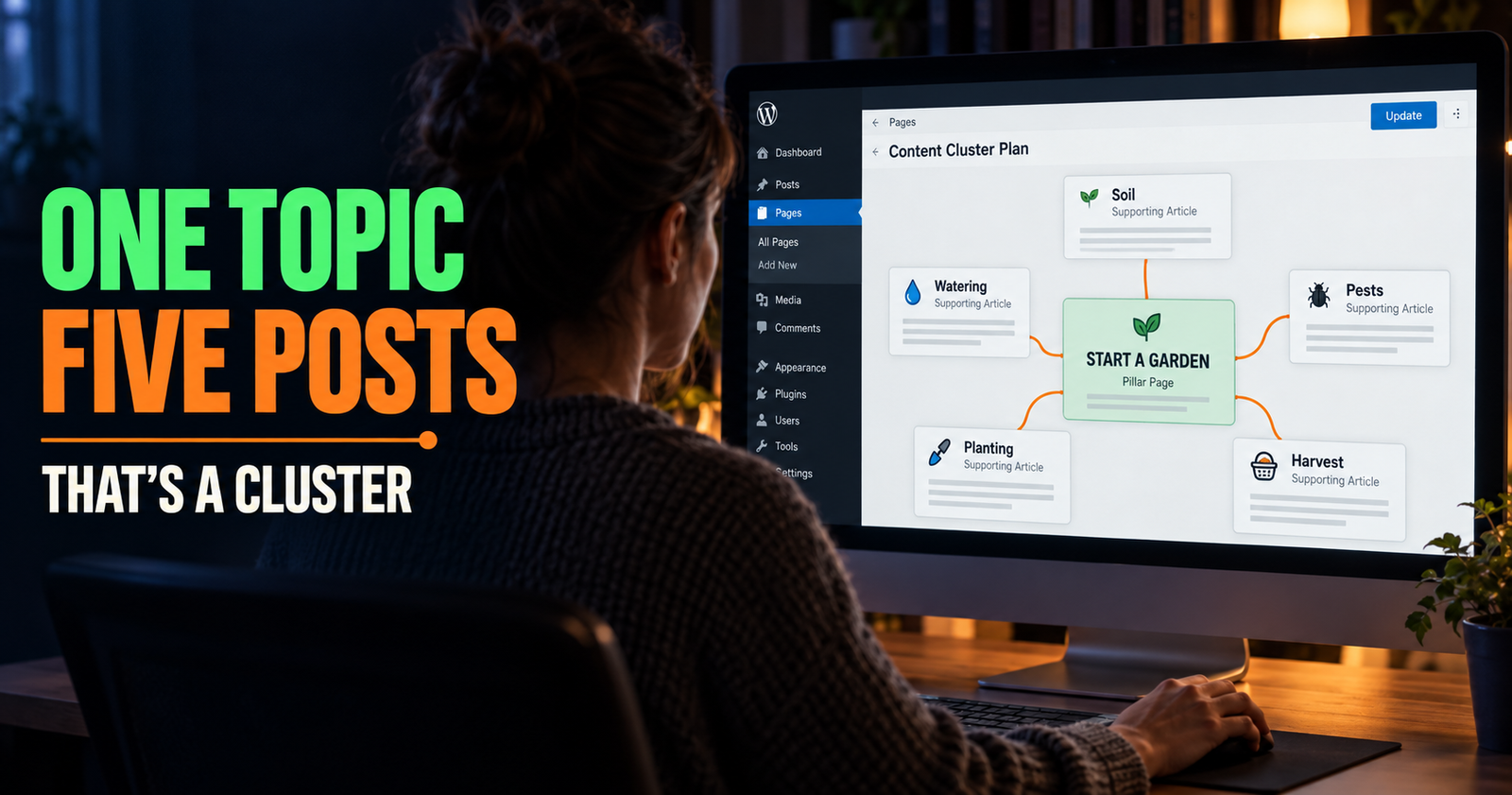
Keyword cannibalization happens when several pages on your own site are trying to rank for the same or nearly the same search. A useful way to prevent that overlap is to organize related pages around one topic before deciding which articles to publish.
It is usually not caused by using a keyword twice. It happens when pages have no clear difference in purpose.
For example, these pages could overlap badly:
- How to Improve Website Rankings
- How to Get Higher Google Rankings
- Easy Ways to Rank Better on Google
Those sound like three separate articles, but they may all be trying to answer the same broad question.
Now compare that with these:
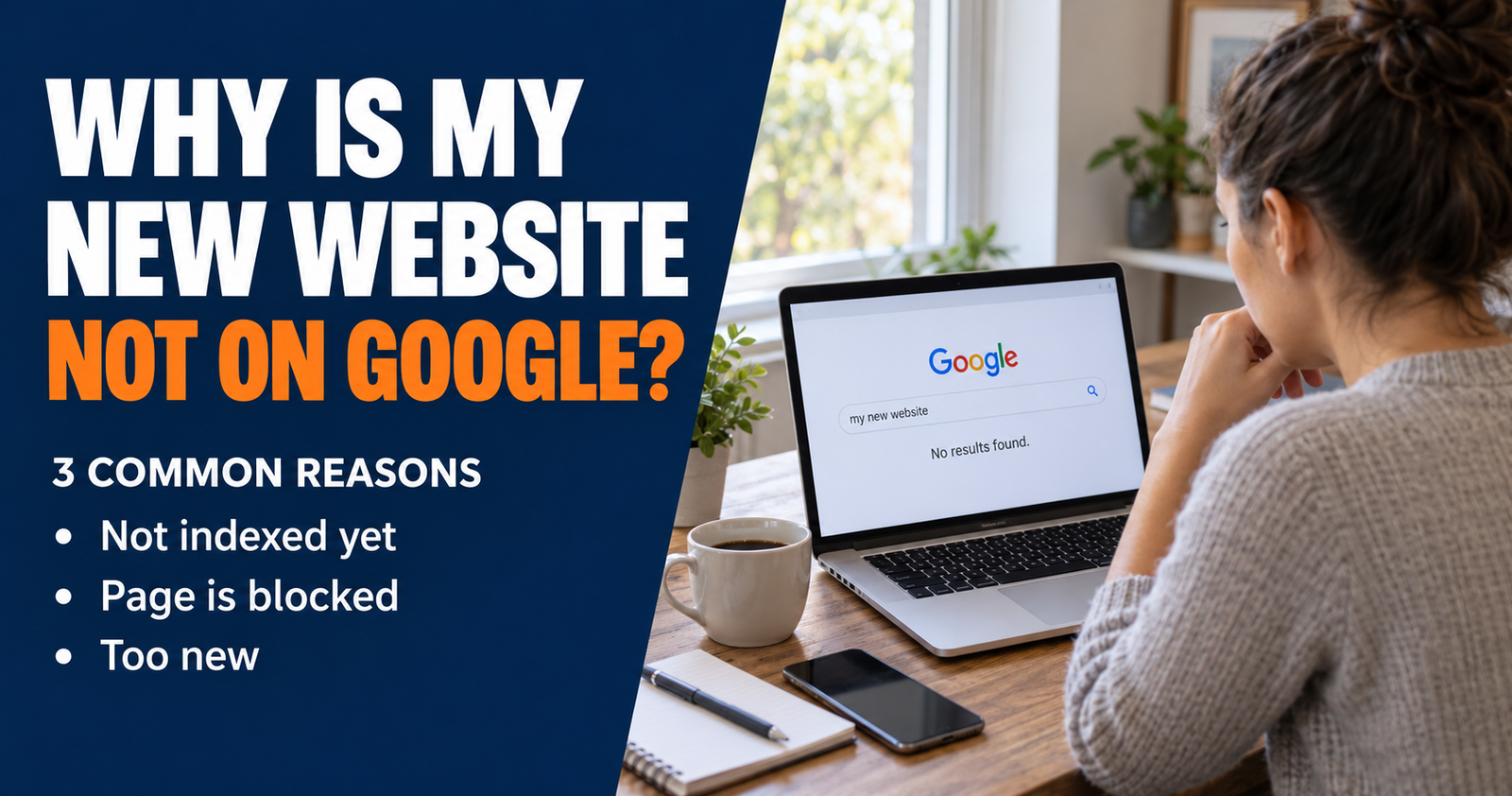
- Why Is My New Website Not Showing Up on Google?
- Website Indexed but Not Ranking What to Check First
- Can a New Website Rank Without Backlinks?
Those are related, but each page solves a different problem at a different point in the reader’s journey.
That is the kind of separation you want before publishing.
When You Should Create a New Article Instead of Adding a Section
This is a useful decision to make before every new post.
Create a new article when the question has a different search intent, needs a full answer, or would reasonably have its own search results page.
Keep it as a section when it is a short follow-up that a reader would naturally expect inside the same guide.
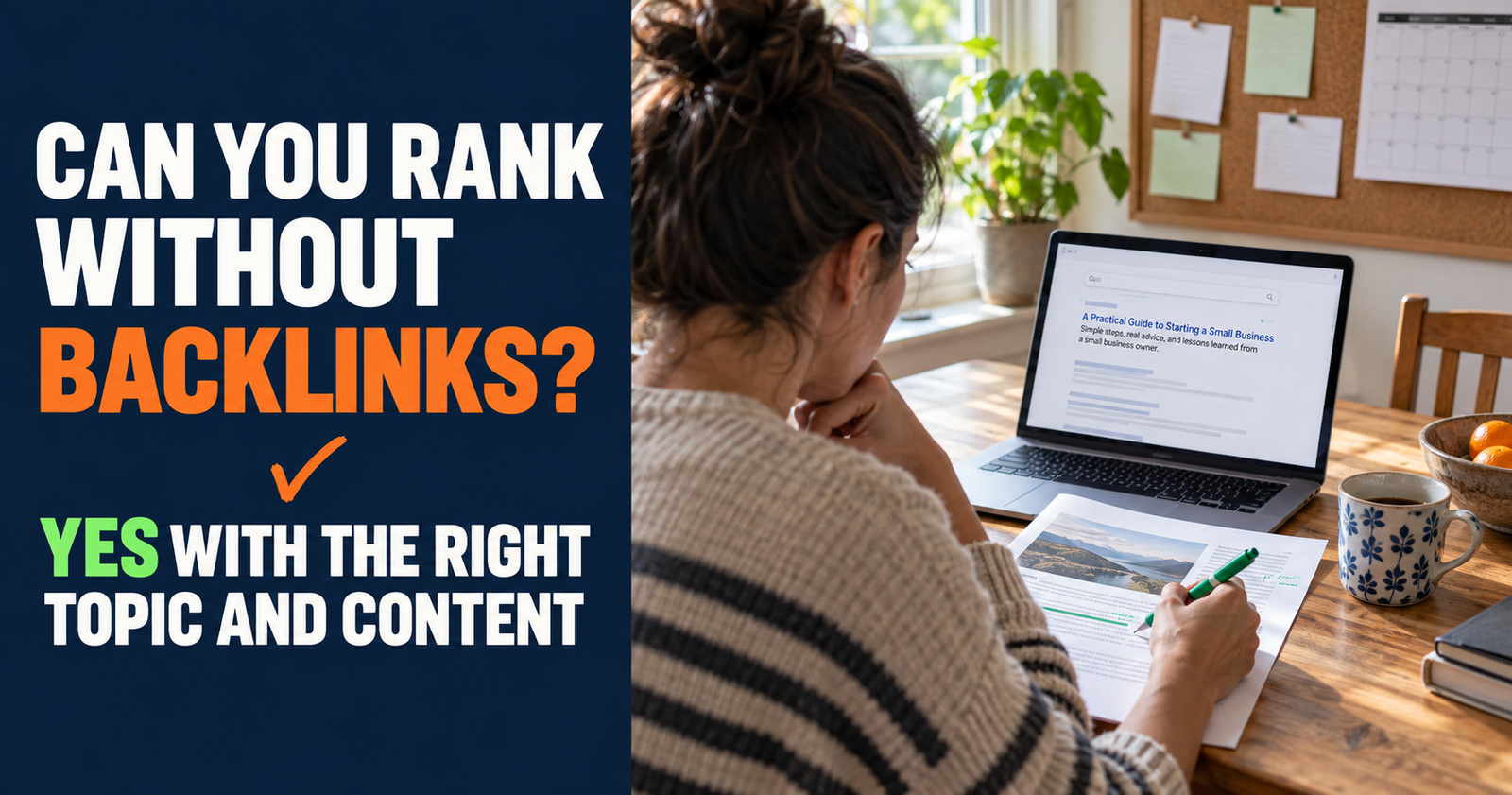
For example, “Do backlinks still matter?” belongs in a larger article about whether a new website can rank without backlinks.
“How can I tell if a keyword is too competitive?” is its own article because it is a separate decision that needs its own process.
The better you get at separating these jobs, the more organized your site becomes.
Use Search Intent to Improve Pages That Are Already Live

Search intent is not only for new articles. It is one of the best ways to improve an article that is indexed but not getting traction. The same principle is central to deciding whether to improve an article that is indexed.
Open Search Console and look at the queries bringing impressions to that page. Then search those phrases and compare what Google is showing with the page you created.
Maybe the article needs a clearer opening. Maybe the title promises the wrong thing. Maybe the people searching want a comparison but the page is only an explanation. Maybe the page is close, but it skipped the practical question people care about most.
The article on why an indexed page may still be invisible in search helps you diagnose that next step.
Do not rewrite a page just because a ranking is slow. Update it when you can clearly make it a better fit for the person searching.
A Quick Intent Check Before You Publish
Before publishing any page, ask these questions.
- What is the searcher trying to accomplish right now?
- What kind of result are they likely expecting?
- Does my title make the same promise the page delivers?
- Does the opening answer their immediate concern?
- Would I be satisfied if I found this page in their situation?
- Is this page distinct from the other pages on my website?
If you can answer those honestly, you are already ahead of a lot of keyword-first content.
A keyword gets a page noticed. Search intent gives that page a reason to be clicked, read, and remembered.
Alden Whitaker writes practical, plain-English SEO guides for Make It Found that help small website owners create pages for the real person behind the search, not just the phrase in a keyword tool.